Basilica Of The Holy Trinity
Modern Catholic basilica in Fátima
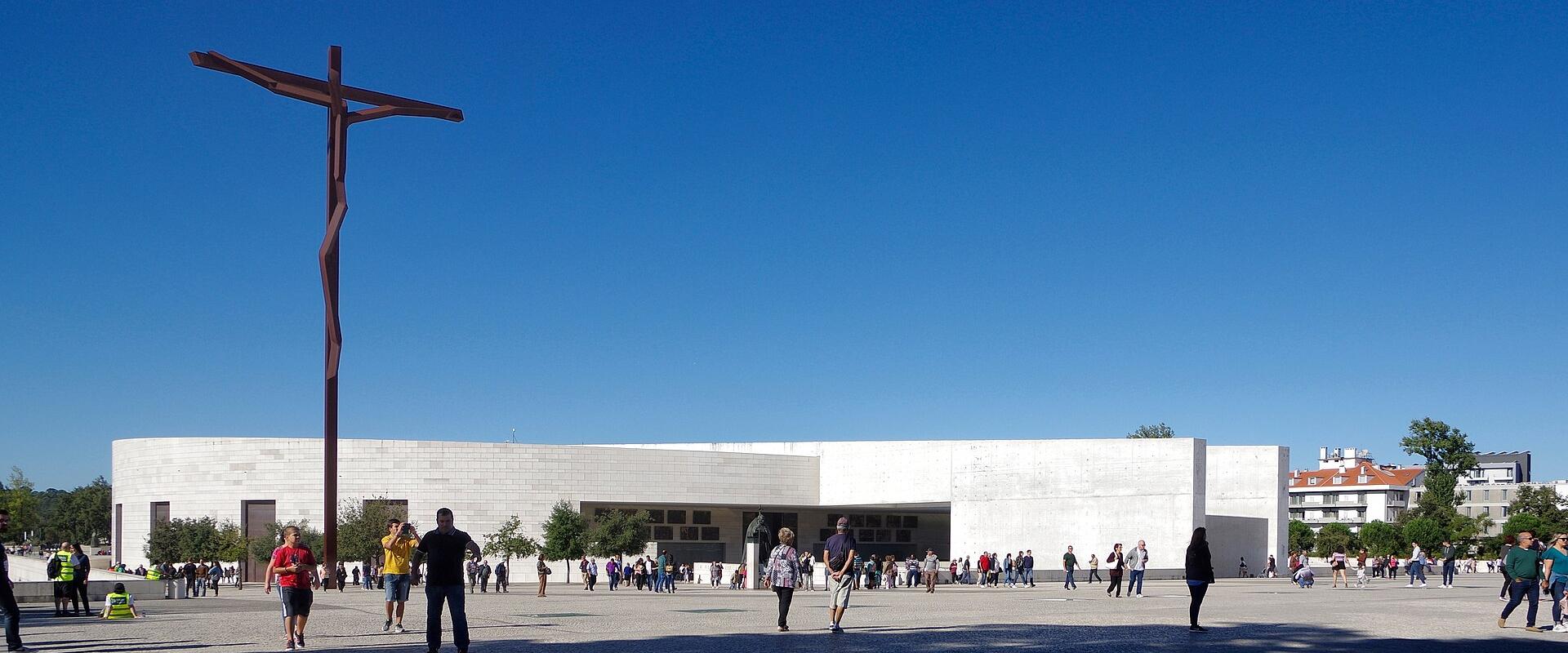
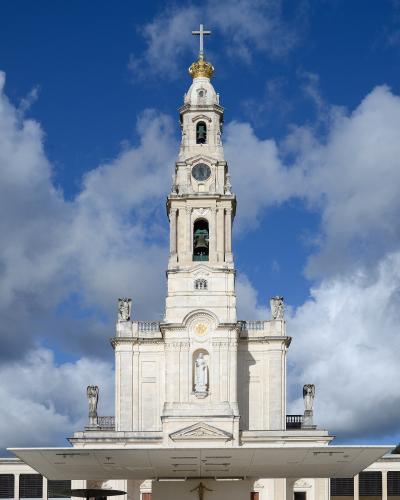
Fátima is the greatest place of Catholic pilgrimage in Portugal, and its sanctuary is organised around a vast open esplanade, a space large enough to hold hundreds of thousands of people. At one end stands the old Basilica of Our Lady of the Rosary, with its tall tower and neo-Baroque facade, and at the other, facing it across the open space, stands a very different building: the Basilica of the Holy Trinity, a huge circular church of the 21st century. The contrast between the two is one of the most striking things about the sanctuary.
The need for a new church grew with the numbers of pilgrims. The older basilica and the little Chapel of the Apparitions could not hold the crowds that came for the great pilgrimages of 12 and 13 May and 12 and 13 October, which mark the dates of the apparitions of 1917, and Mass was often held outdoors. In the late 20th century, the sanctuary decided to build a large covered space, and an international competition was held. The winning design was by the Greek architect Alexandros Tombazis, and the building was consecrated on 12 October 2007. It was designed with a capacity of more than eight thousand seated worshippers, making it one of the largest churches in the world by capacity, and it can hold many more with standing space.
The shape is a wide, shallow circle, with a low profile that fits the esplanade and does not compete with the old basilica. Inside, the effect is of enormous openness. There are no columns blocking the view, and the roof is supported by a structure of concrete and steel that spans the space, with natural light entering from above and from the sides. Rows of pews curve around a central altar so that everyone has a clear view of the ceremony. The decoration is deliberately restrained, with plain walls and contemporary art, among which the large sculpture of the crucified Christ and the stained-glass windows stand out. The atmosphere is calm and modern, in contrast to the richly decorated church opposite.
The basilica has been the setting for significant events in the sanctuary's life. Pope Benedict XVI celebrated Mass here in 2010, and in 2017, during the centenary of the apparitions, Pope Francis canonised the shepherd children Francisco and Jacinta Marto at Fátima, the youngest non-martyred saints in the church's history. Mass is held in several languages throughout the day, and pilgrims often kneel on the long path across the esplanade, a traditional act of devotion.
The basilica is free to enter, and the sanctuary is open all day. Visitors should dress modestly and keep quiet during services. Because the site is large, with long walks across the esplanade, comfortable shoes are important, and shade is limited in summer. The basilica suits pilgrims and those interested in modern religious architecture.
Categories
More photos coming soon
Nearby Attractions
Other places to visit in Fátima
Frequently Asked Questions
Quick Facts
Best Time to Visit
Spring (April-May) and autumn (September-October) offer mild weather and vibrant spiritual events; off-peak months are quieter for reflection and sightseeing.