History: Bracara Augusta to the Rome of Portugal
Braga's story begins with the Romans, who founded Bracara Augusta around 16 BC and made it an important administrative centre of northwestern Iberia. Remains of the Roman city, including baths and parts of houses, have been excavated in the modern centre. In the fifth century the city became the capital of the Suebi, a Germanic people who established a kingdom here, and it was an early centre of Christianity in the peninsula.
After the Christian reconquest, Braga became the seat of a powerful archdiocese, and its archbishops long claimed primacy over the churches of Iberia. The cathedral was begun in the eleventh century, before Portugal existed as a kingdom, and the parents of Afonso Henriques, the first king of Portugal, are buried there. Over the following centuries the archbishops filled the city with churches and palaces, and the saying that Lisbon plays, Porto works, Coimbra studies and Braga prays still sums up the city's reputation. In the eighteenth century Braga gained much of its baroque and rococo character, especially through the work of the local architect André Soares.
The Historic Centre
The Sé de Braga is the place to start. Its architecture spans Romanesque, Gothic, Manueline and baroque styles, and the cathedral treasury and chapels, visited on a guided route, include the Gothic Chapel of the Kings with the tombs of Henry of Burgundy and Teresa of León. Around it lie narrow streets of shops, cafés and churches. The medieval wing of the old Archbishop's Palace overlooks the Jardim de Santa Bárbara, a small formal garden of clipped box hedges and seasonal flowers that is one of the most photographed corners of the city.
Nearby, the Avenida da Liberdade and the Praça da República form the modern heart of Braga, with the Arcada and its historic cafés. Look out for the Palácio do Raio, an eighteenth-century rococo mansion with a façade of blue azulejo tiles and carved granite, now home to an interpretation centre about the city's charitable Misericórdia. The Arco da Porta Nova, an eighteenth-century city gate, marks the western entrance to the old centre.
Bom Jesus do Monte and Sameiro
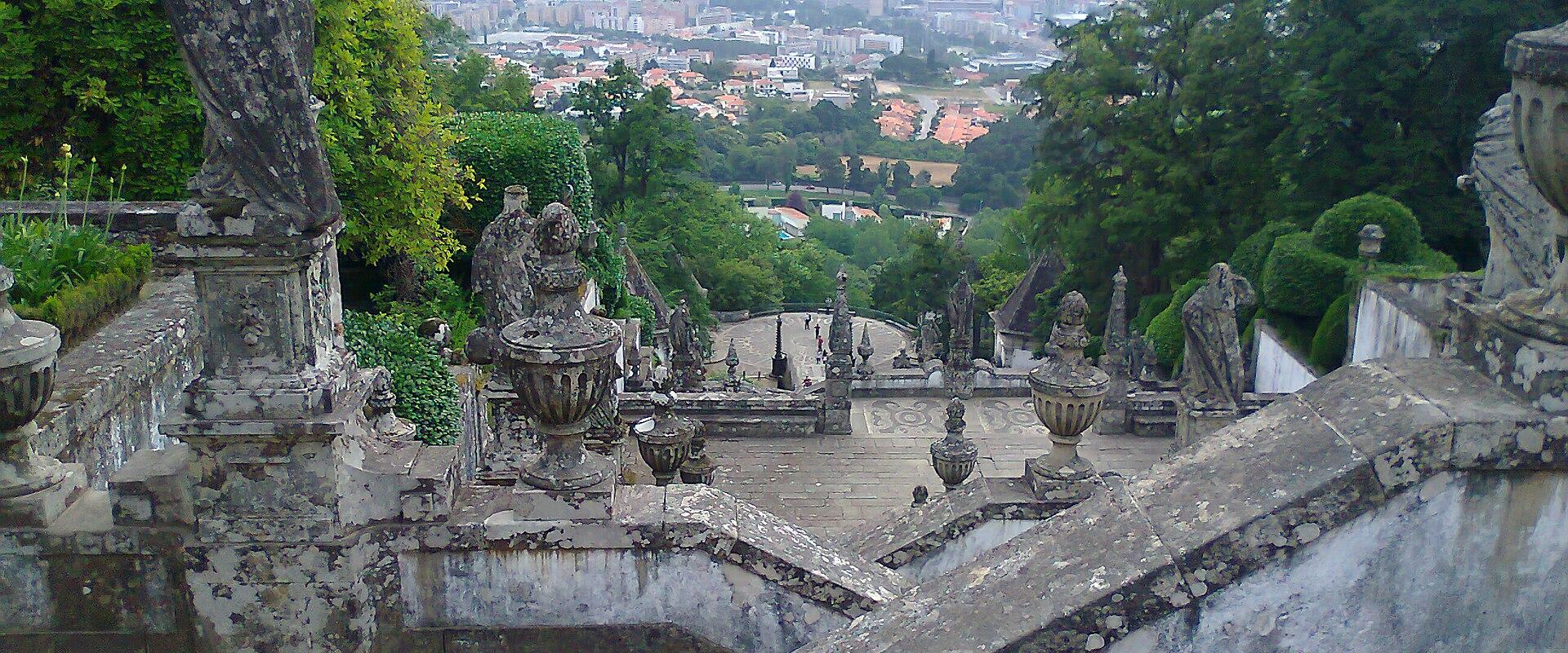
About five kilometres east of the centre, the sanctuary of Bom Jesus do Monte rises above the parish of Tenões. A monumental baroque stairway, with chapels, fountains and statues representing the senses and the virtues, climbs the hillside in a series of zig-zag flights to a neoclassical basilica. The ensemble is a masterpiece of the Sacred Mount tradition and was inscribed as a UNESCO World Heritage Site in 2019. Pilgrims traditionally climb the stairs, but visitors can also take the Elevador do Bom Jesus, opened in 1882 and powered by water counterweights, or drive to the top. The wooded park around the basilica has walking paths, a small lake and hotels.
A short drive further up, the Santuário do Sameiro is a large Marian sanctuary begun in the second half of the nineteenth century and one of the most visited pilgrimage sites in Portugal. Its broad esplanade offers wide views over Braga and the surrounding valleys.
Festivals
Braga's Holy Week, the Semana Santa, is the most famous in Portugal, with candlelit processions, decorated streets and religious ceremonies that draw visitors from across the country. In June the city celebrates São João with music, street parties and fireworks.
Getting There and Practical Tips
Braga has direct train connections with Porto, a journey of about an hour, and fast trains to Lisbon. By car it is roughly 50 kilometres from Porto on the A3 motorway, and Porto airport is the nearest international gateway. The historic centre is compact and walkable. City buses run from the centre to Bom Jesus, where you can ride the funicular or climb the stairs, then continue to Sameiro by car or on foot along the hillside road. Allow at least a full day for the city and its sanctuaries, and consider a half-day trip to Guimarães, about twenty-five kilometres away.
Best time to visit
April to June and September to October for comfortable sightseeing; Holy Week brings Braga's famous Easter processions.
What to see in Braga
Our picks first.
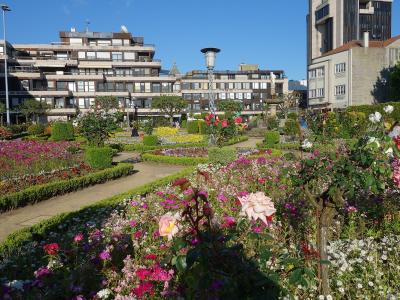
Jardim de Santa Bárbara
Formal flower garden beside the medieval wing of Braga's Archbishop's Palace
Free Gardens · Historic Districts
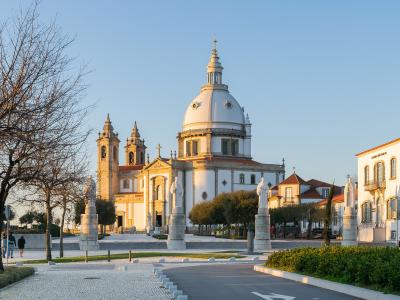
Santuário do Sameiro
Hilltop Marian sanctuary with wide views over Braga and the Minho
Free Hills & Valleys · Historic Churches
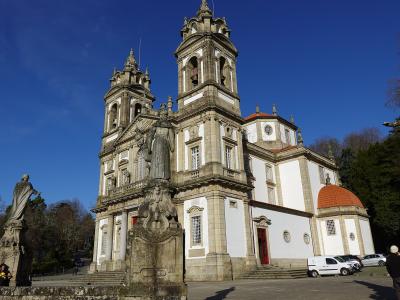
Bom Jesus do Monte
UNESCO-listed baroque stairway and basilica on a hill above Braga
Free History & Heritage · Natural Wonders
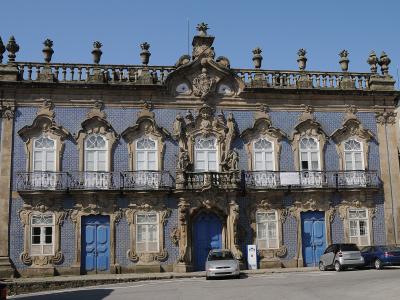
Palácio do Raio
Rococo mansion with a blue-tiled façade by André Soares
Cultural Experiences · History & Heritage
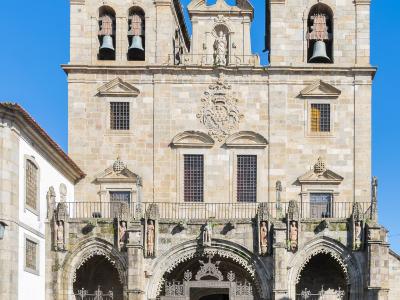
Sé de Braga
Portugal's oldest cathedral, begun before the kingdom itself
Cathedrals · Historic Churches
Braga by interest
The same sights, grouped by what you came for.
Planning a visit to Braga
Itineraries that include Braga
Good to know
- Currency
- EUR
- Language
- Portuguese
Quick Facts
Book your stay
Questions people ask
More places in Minho
Minho
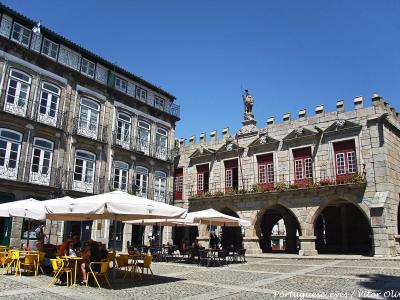
Guimarães
UNESCO birthplace of Portugal with castle and medieval center
Minho
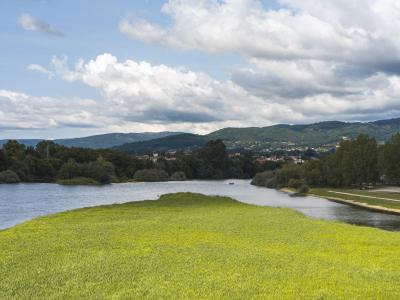
Ponte de Lima
Portugal’s oldest town with Roman bridge and riverside charm
Minho
Monção
Border town with fortress, spa, and Alvarinho wine culture
Minho
Castro Laboreiro
Mountain village with ancient castle and wild landscapes