

Calcareous Tufa Formations
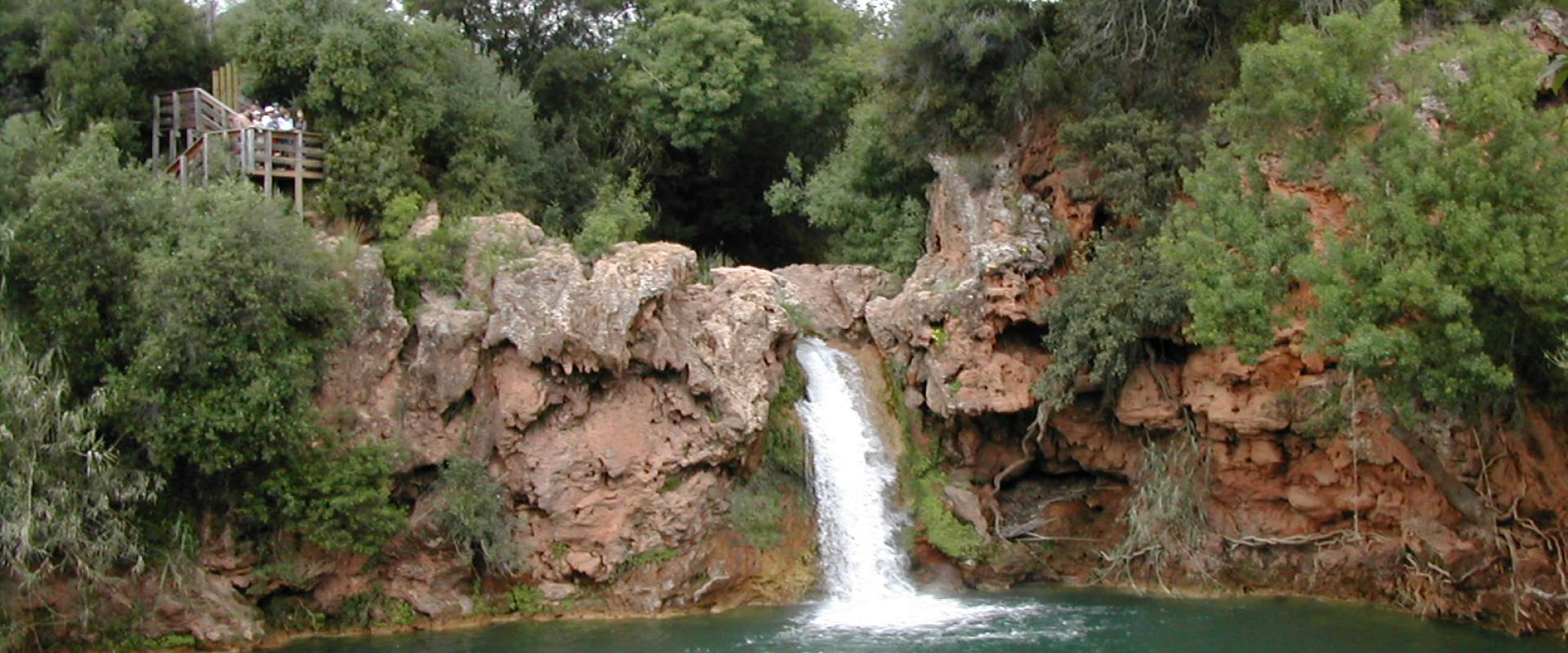
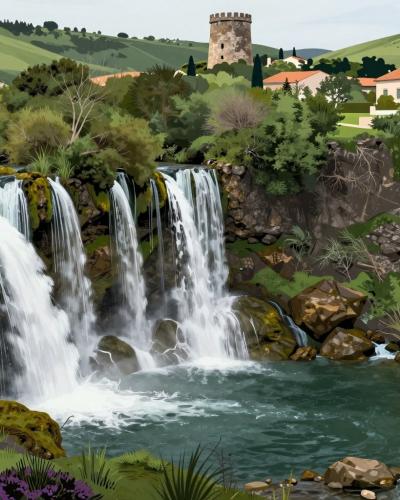
Calcareous tufa waterfall in Tav
The waterfall at Pego do Inferno, in the hills north-west of Tavira in the Algarve, owes its look to a geological process that is easy to see and easy to miss: the slow building of tufa. Tufa is a soft, porous rock made of calcium carbonate that is laid down from water. In limestone country, rainwater and streams dissolve calcium from the rock. When that mineral-rich water emerges at the surface, in a spring or at a waterfall, it loses carbon dioxide to the air, and the calcium carbonate comes out of solution and is deposited. Moss, algae, and the roots of plants often provide the framework, and over centuries the mineral coating encases them, leaving a crust of spongy stone.
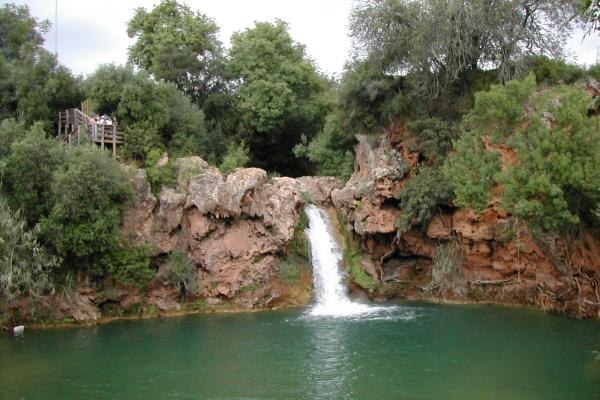
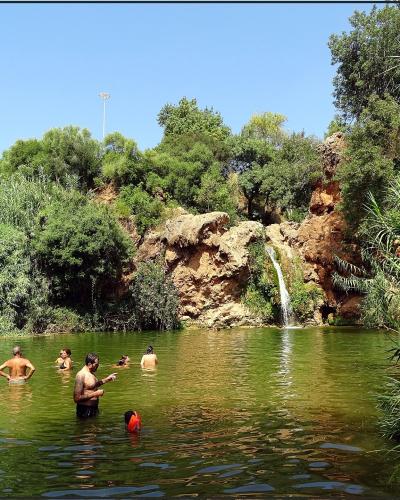
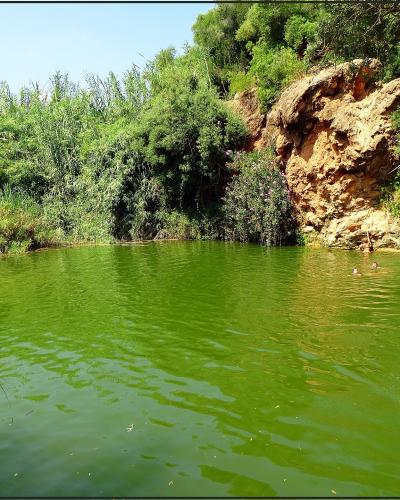
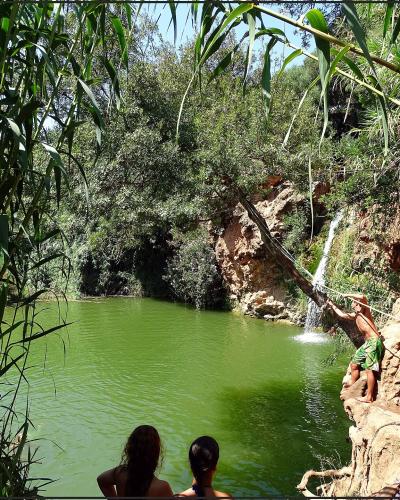
At the pool, the result is a series of curtains, ledges, and mounds of pale, rough rock over which the stream flows. The waterfall itself is modest, only a few metres high, but it falls into a round plunge pool of deep green water, said to be several metres deep, and the surroundings are draped in moss, ferns, and hanging plants that grow in the constant moisture. The tufa has formed natural dams and shelves, so the stream steps down the hillside in miniature cascades. The stone is pale grey and cream, and where water continues to run, it is slightly slippery and covered in green. Because tufa builds from living vegetation, the formation is still growing, though extremely slowly.
The name of the place, Pego do Inferno, or Hell's Pool, goes with local stories. Legends tell of a carriage and horses that disappeared into the deep water, and the dark pool and surrounding rocks encourage such tales. Calm in the daytime, the site is peaceful, with the sound of water and birdsong, and it is a surprising feature in a part of the Algarve better known for beaches.
Access is a matter to check. The path leads through orange and lemon groves and down a wooden staircase, and the access arrangements have at times been informal or uncertain, so ask locally for the current situation and respect any signs and private land. The tufa is fragile, and visitors should not climb on or break it. Wear shoes with good grip, since rocks near the water are slippery, and take water and rubbish bags.
The site suits curious walkers, photographers, and anyone interested in geology. The best time is after winter and spring rain, when the water flows strongly.
Categories
More photos coming soon
Nearby Attractions
Other places to visit in Pego do Inferno
Frequently Asked Questions
Quick Facts
Best Time to Visit
Late spring to early autumn (May–September) offers warm weather and ideal water levels for swimming and hiking at Pego do Inferno.