
Pena Palace
Colorful Romanticist palace atop Sintra hills
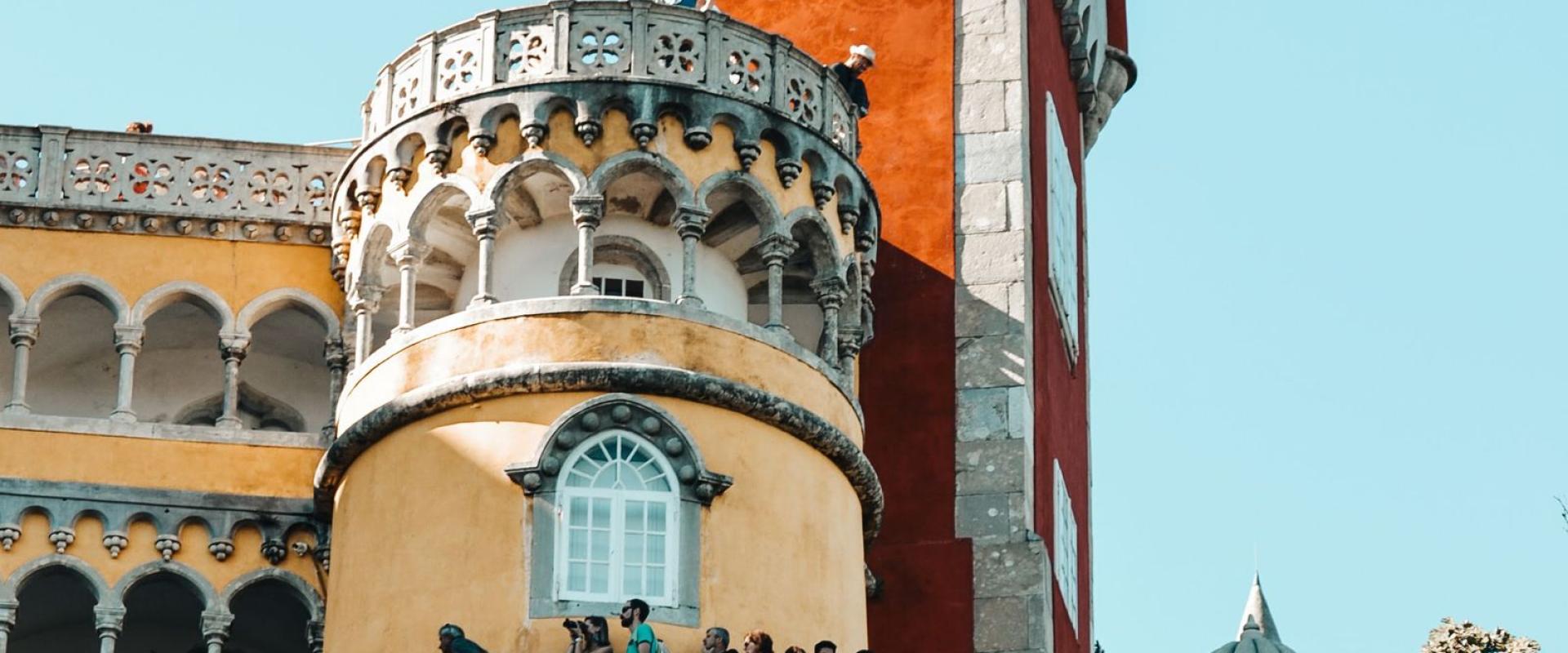
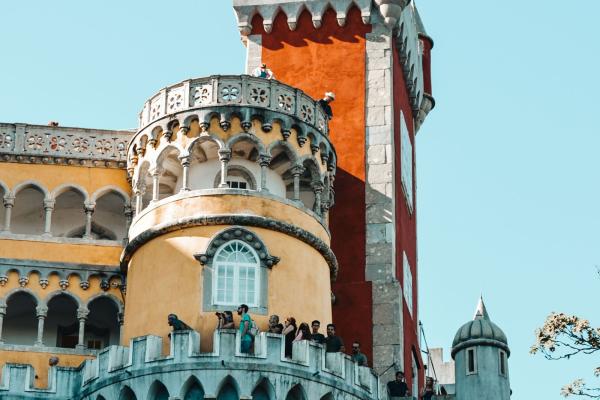
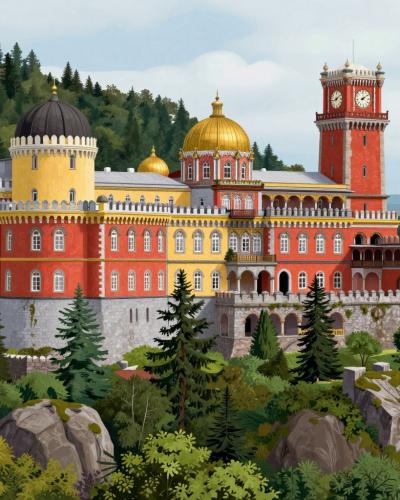
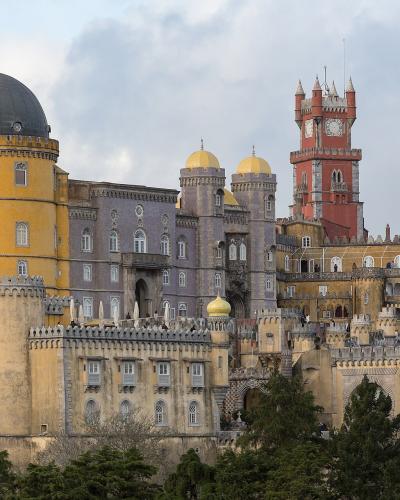
The Palácio da Pena is the most colourful building in Portugal, a fantasy of yellow, red, and blue walls, domes, and battlements on a rocky summit above Sintra. It was created in the mid-19th century by Ferdinand II, the German-born husband of Queen Maria II, who bought the ruins of a 16th-century Hieronymite monastery on the hilltop and commissioned a new royal summer residence. The architect was Baron Wilhelm Ludwig von Eschwege, working to the king's detailed wishes, and the result is a mix of Romantic styles that draws on Gothic, Manueline, and Moorish forms.
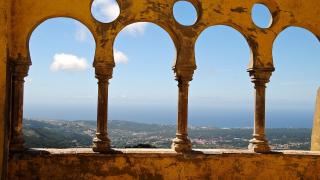
Some of the original monastery survives, including the cloister and chapel, and these older parts are woven into the new construction. The palace's exterior has many details to find: a clock tower, a massive archway with a sculpted triton, and ornamental tiles on many walls. Inside, the rooms are preserved largely as they were when the royal family left in 1910, with furniture, paintings, and decorative objects arranged as in daily use. Queen Amélie, the last queen of Portugal, was among the last to stay here. The terraces offer long views over Sintra, the Atlantic coast, and on clear days toward Lisbon.
The surrounding Parque da Pena is a large, wooded garden that Ferdinand planted with trees from around the world. Winding paths lead to ponds, ferns, tall conifers, a small chalet, and viewpoints, and the walk through the park is a pleasure in its own right. The Chalet da Condessa d'Edla, built for the king's second wife, Elise Hensler, and the Cruz Alta viewpoint, the highest point in the area, are among the places that can be reached on foot. Sintra's cultural landscape, including the palace, was inscribed by UNESCO in 1995.
Visiting takes planning. Pena is the most popular sight in Sintra, queues can be long in summer, and the hill is often wrapped in mist even when the coast is sunny, so bring a light jacket. Booking in advance helps, and an early start gives a better chance of a calm visit. The climb from the town is steep, and shuttle buses and taxis serve the route. Allow at least half a day for the palace and park.
It suits architecture lovers, families with children who enjoy fairy-tale settings, photographers, and anyone interested in the Portuguese royal family and the Romantic movement.
Categories
More photos coming soon
Nearby Attractions
Other places to visit in Sintra
Frequently Asked Questions
Quick Facts
Best Time to Visit
Spring (March-May) and autumn (September-November) offer mild weather, lush gardens, and fewer crowds for exploring Sintra’s palaces and hiking trails.