







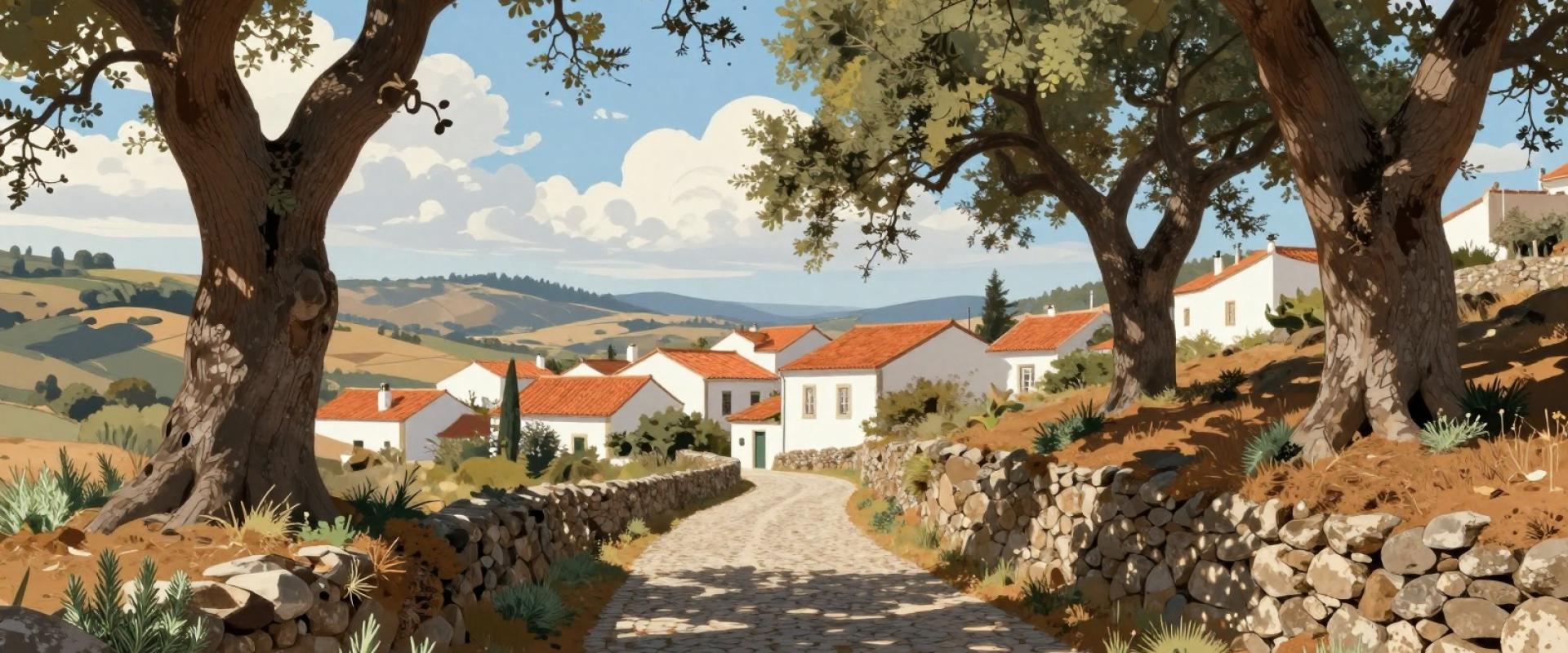
AI-generated illustration
Discovering Castelo Novo
One-day general exploration of Castelo Novo
1 day
•
Easy difficulty
•
Est. €33
Day 1: Exploring the Historic Village of Castelo Novo
A day dedicated to exploring the charming, historic village of Castelo Novo in the Beira Baixa region. This itinerary focuses on the village's medieval heritage, panoramic views, and local gastronomy. Note: As Castelo Novo is a small rural village, this itinerary assumes access via private car or organized tour, as public transport is limited.
-
09:00
Arrival and Orientation
Arrive in Castelo Novo. Park near the village center. Take a brief walk to orient yourself and admire the traditional stone architecture of the village.
-
10:00
Visit the Church of São Pedro
Explore the main parish church, a significant historical landmark in the village. Admire the interior details and the surrounding plaza.
-
11:30
Scenic Walks and Miradouros
Walk through the narrow, cobblestone streets of the old town. Visit the local viewpoints (miradouros) for panoramic views of the surrounding Serra da Estrela foothills and the Tagus valley.
-
12:30
Traditional Lunch at a Local Tasca
Enjoy a hearty lunch at a local tavern (tasca). Try regional specialties such as 'cozido à portuguesa' (Portuguese stew) or fresh local cheese and bread.
-
14:30
Heritage and Craftsmanship
Visit local artisan workshops or small museums if open, focusing on traditional crafts like pottery or weaving common in the Beira Baixa region.
-
15:30
Coffee and Cake Break
Relax at a local café with a slice of 'Bolo Rei' or local pastry and a coffee, soaking in the slow-paced village atmosphere.
-
16:30
Surrounding Nature Walk
Take a gentle walk along the paths surrounding the village, enjoying the rural landscape and quiet countryside.
Meals:
Lunch at Local Tasca in Castelo Novo , Snack at Village Café
Where to stay: Castelo Novo is small; consider staying in nearby Idanha-a-Nova or Penamacor for more accommodation options, or book a rural tourism house (Casa de Campo) in Castelo Novo if available.
Getting around: A car is highly recommended for this itinerary. Public transport to and within Castelo Novo is very limited. If using public transport, check local bus schedules from Idanha-a-Nova.
Practical Information
Visiting Castelo Novo, a historic village in the Castelo Branco district, requires careful logistical planning due to its remote location in the interior of Portugal. The best time to visit is during the spring (April to June) or autumn (September to October). During these months, temperatures are mild, ranging from 15°C to 25°C, making walking tours comfortable. Summer months can be excessively hot, with temperatures often exceeding 30°C, while winters are cold and damp, potentially limiting outdoor exploration.
Transportation is the most significant challenge for this itinerary. Castelo Novo is not well-served by direct public transport from major hubs like Lisbon or Porto. There are no direct trains to the village. The most practical approach is to drive, as the village is isolated and public bus connections are infrequent and often unreliable for tourists. If you do not have a car, you must rely on long-distance buses from Castelo Branco or Covilhã, which may require multiple transfers and result in significant travel time. Once in Castelo Novo, the village is compact and walkable, but distances to surrounding natural attractions like the Serra da Estrela require a vehicle.
Accommodation options are limited compared to Lisbon or Porto. You will find a few guesthouses and rural tourism units in and around the village. Booking in advance is essential, especially during weekends and local festivals. Staying in Castelo Novo allows for an immersive experience in a preserved medieval environment, but amenities such as late-night dining or extensive shopping are scarce. Consider staying in nearby towns like Castelo Branco if you require more varied dining or service options, though this adds commute time.
Budget considerations should account for the lack of cheap public transit. If driving, factor in fuel and potential parking fees. Food costs are generally moderate, but options are limited, so carrying snacks for day trips is advisable. Pack sturdy walking shoes for cobblestone streets, layers for changing weather, and sunscreen for summer visits. Essential tips include checking bus schedules well in advance, as they may change seasonally, and carrying cash, as some smaller establishments may not accept cards. Respect the village’s quiet atmosphere and historical significance by staying on marked paths and supporting local businesses.
Book your stay
More Itineraries
7 days
Alentejo Highlights Tour
Seven-day tour of Alentejo's historic towns and cork oak landscapes
View Itinerary →
7 days
Algarve Highlights Tour
7-day tour of Algarve's cliffs, beaches, and historic towns
View Itinerary →