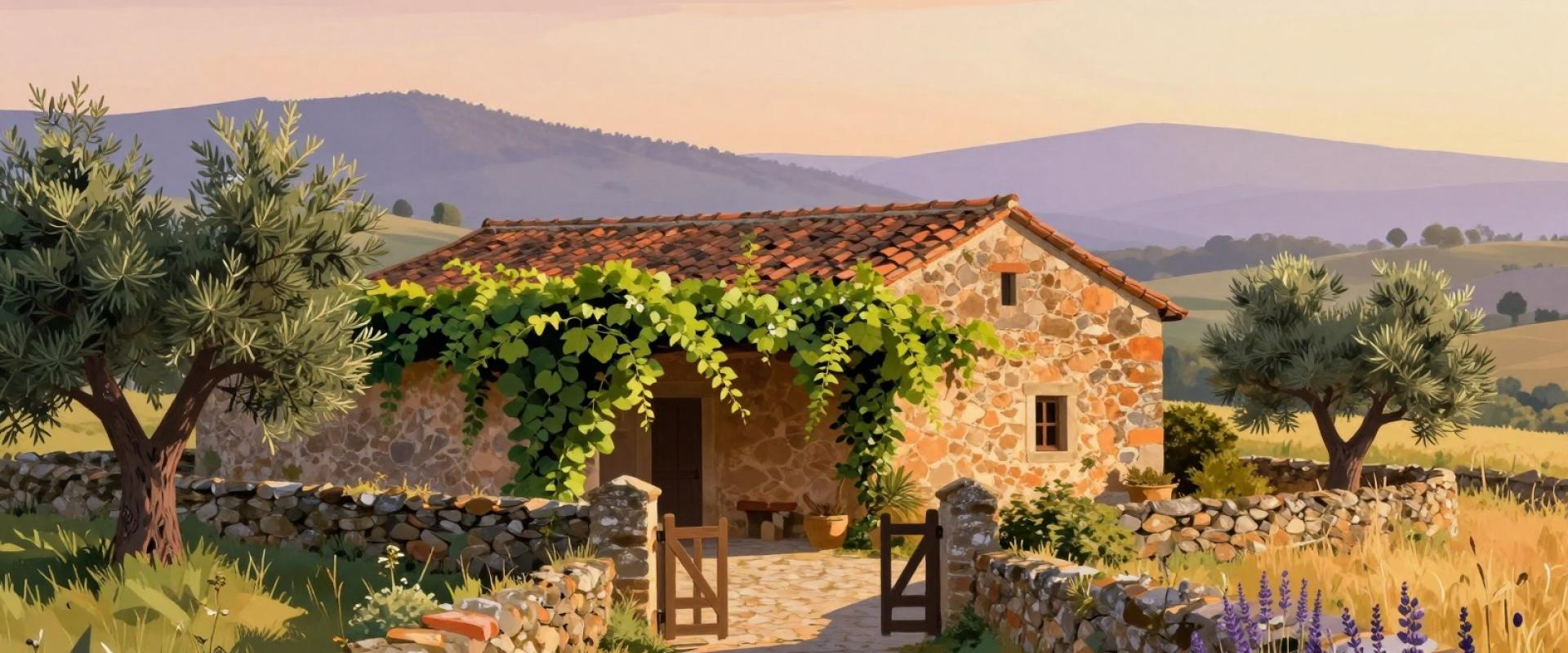
A quinta is a Portuguese country estate, often a working farm or vineyard, and many now take guests. The word covers a wide range. Some are polished wine hotels with a restaurant and pool, others are a family house with a few rooms, so read what you are booking rather than going by the name.
How rural stays are classified
Portugal's official labels tell you more than the word "quinta" does:
- Turismo de Habitação: historic houses, such as palaces and manor houses, which can be in the country or a town.
- Agroturismo: a stay on a working farm.
- Casa de campo: a country house.
- Turismo de aldeia: houses in a village.
- Hotel rural: a small hotel in a rural setting.
TURIHAB, an association of owners, markets many of these houses under the Solares de Portugal brand. In 2022 it represented 123 houses. Examples in the north include Casa de Juste in Lousada and Quinta do Mosteiro in Ponte da Barca.
Douro wine estates
The Douro is where a quinta stay is easiest to arrange, because many estates have added rooms alongside their winemaking. Three well-known ones:
- Quinta do Vallado, near Peso da Régua: one of the Douro's oldest estates, founded in 1716, with a wine hotel spread across an 18th-century house and modern buildings.
- Quinta da Pacheca, at Cambres: an 18th-century manor known for rooms built in the shape of giant wine barrels, with a winery visit included for hotel guests.
- Quinta Nova de Nossa Senhora do Carmo: a converted 18th-century manor house with a small number of rooms, a restaurant and a pool, overlooking vineyards and the river.
These are not budget stays, and rates change by season, so check each estate's site. Harvest time, usually around September, is the busiest period.
Other regions
- Minho: the green north, with many manor houses and small farms, and the heart of Vinho Verde country. It's a natural place to look for Turismo de Habitação.
- Alentejo: large estates, cork oak and whitewashed buildings on wide, open land.
- Serra da Estrela: stone houses and mountain villages, where winter is cold, so check what heating the property has.
Getting there
Most quintas need a car. Public transport rarely reaches them, and the last stretch is often a narrow lane, so ask about the road and parking if you are not a confident driver.
The Douro has an extra complication: from 3 November 2026 to 24 March 2027, trains are suspended between Marco de Canaveses and Régua for electrification, with buses instead. Wheelchairs and bicycles are not carried on those buses. If you plan to arrive by rail in that period, ask your estate about a pick-up from Régua or Pinhão.
Before you book
Older houses often have stairs, uneven floors and no lift, so ask about step-free access if you need it. Wi-Fi can be weak in remote places. Small houses may have no staff on site at night, so confirm your arrival time. Ask directly about meals, as many places serve breakfast only, and the nearest restaurant may be a drive away.