


18th-century Baroque Fountain
18th-century Baroque fountain in Castelo Novo
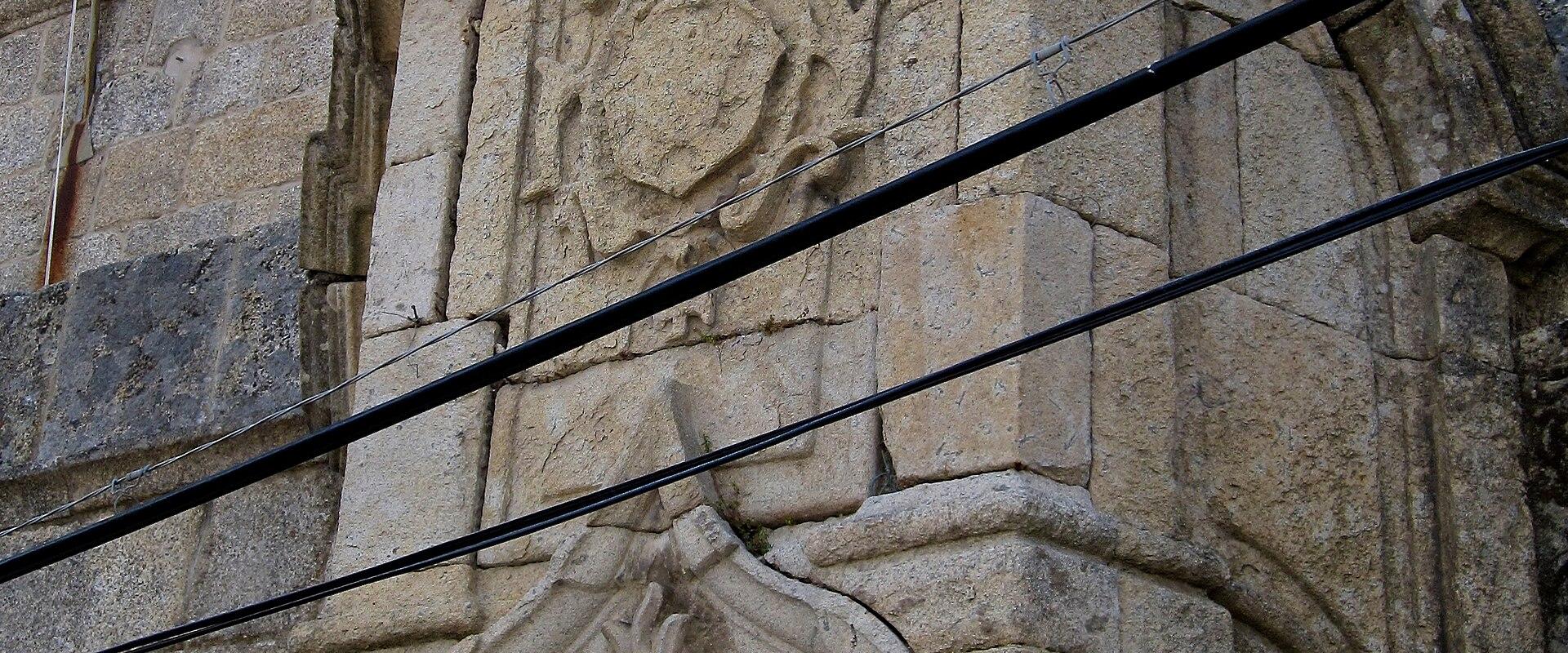
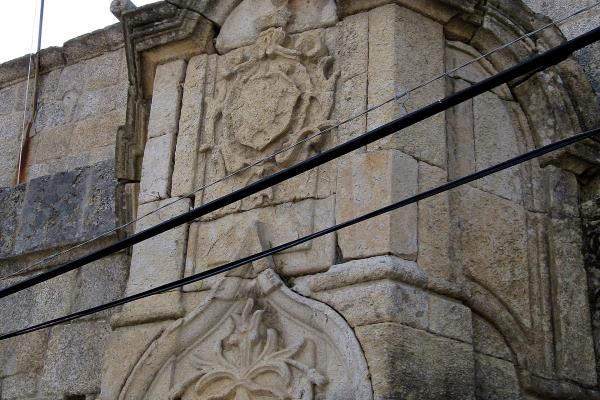
In a village built on a mountain slope, a good water supply was a matter of pride, and in Castelo Novo the main public fountain, the Chafariz da Bica, shows how seriously the community took it. It stands in the Largo da Bica, in the old centre, and it dates from the 18th century, the period of King João V, who reigned from 1706 to 1750 and used the wealth of Brazilian gold to fund many public works and monuments across Portugal. The king's coat of arms is carved on the fountain, a sign of royal patronage and perhaps of the town's status.
The fountain is in the Baroque style but is restrained, like many provincial works of the time. It has a rectangular backing wall of granite, framed by two pilasters, with a pediment decorated with a cross at the top. The royal arms form the central emblem, and the basin below collects the water that flows from the spout. A fine staircase leads down to the basin, with ornamental vases on the balustrades, so that the whole composition acts as a small stage. The staircase is the part that people tend to remember, since it makes the fountain feel like a piece of urban design rather than a simple utility.
Fountains like this were meeting places. Women came for water, animals were watered, and news was exchanged, so the fountain was a social centre as well as a source of drinking water. Today the water is usually still flowing, and the square keeps some of that role, with locals stopping to chat and visitors pausing to rest. Next to it stand granite houses with balconies and the former town hall with its arcaded upper floor, and a short walk uphill brings you to the ruins of the castle that gave the village its name.
Castelo Novo lies on the slopes of the Serra da Gardunha, in the municipality of Fundão, and is one of the Historic Villages of Portugal. The surrounding hills are famous for cherries, which bloom in spring and ripen in early summer, and the chestnut woods are lovely in autumn.
The fountain suits photographers, architecture enthusiasts, and anyone strolling through the village. It takes only a few minutes to see, but it makes a good place to start or end a walk, with the sound of running water and the view over the roofs.
Categories
More photos coming soon
Nearby Attractions
Other places to visit in Castelo Novo
Frequently Asked Questions
Quick Facts
Best Time to Visit
Spring (April-June) and autumn (September-November) offer mild weather, lush landscapes, and fewer crowds for exploring Castelo Novo’s historic sites and trails.