

Azulejo‑decorated Train Stations In Porto
1916 station with 20,000 historical azulejo tiles
São Bento is the station that most people have in mind when they talk about tiled railway stations in Porto, and its entrance hall is among the most photographed interiors in Portugal. It stands in the middle of the city, a short walk from the cathedral and the Ribeira, and it was built on the site of an old Benedictine convent, the Convento de São Bento de Avé-Maria, which was demolished in the late 19th century. The architect, José Marques da Silva, designed a building in the French Beaux-Arts style, with a stone facade and a mansard roof, and the station opened in 1916, although work continued for some years.
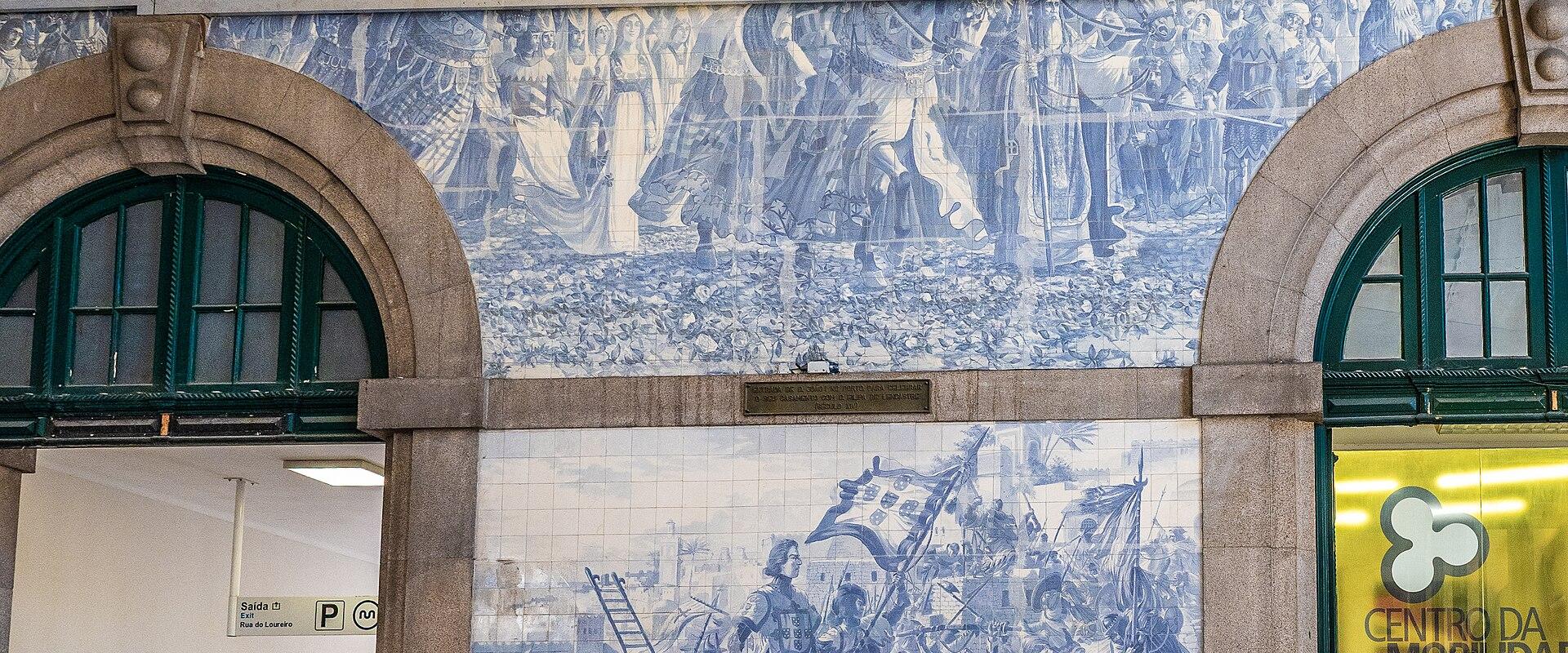
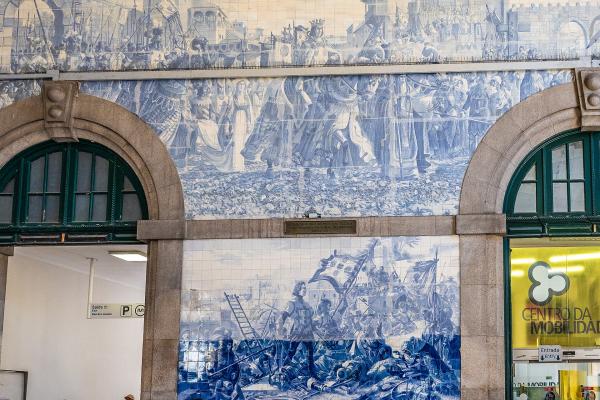
The great hall is covered with tiles to a height of several metres. About twenty thousand azulejos, covering more than five hundred square metres, form huge blue and white panels with touches of other colours, and they are the work of the painter Jorge Colaço, who produced them between 1905 and 1916. Colaço was one of the best-known tile painters of his time, and he used the medium to tell stories on a grand scale. The upper panels depict scenes from Portuguese history, including episodes from the reign of João I and his marriage to Philippa of Lancaster in Porto, the conquest of Ceuta in 1415, and the early life of Prince Henry the Navigator, who was born in the city. The lower panels show scenes of rural life and local festivals, with ox carts, vineyards, and pilgrimages in the countryside around Porto.
The composition is carefully arranged, with figures in motion and dramatic skies, and the large scale, combined with high windows, gives the room a ceremonial feel. Travellers pass beneath it as they buy tickets and wait for trains, so the hall remains a living public space rather than a museum. It is quietest early in the morning and late in the evening, and at midday the hall can be crowded with groups.
The station has regional and suburban services, and the Metro stop of the same name sits nearby, making it easy to reach. Other stations in the region also feature tiles, such as Pinhão on the Douro line, whose panels show wine harvest scenes and are also by Colaço.
The visit takes only a few minutes, costs nothing, and suits anyone with an interest in art, design, or Portuguese history. Pair it with the nearby cathedral and a walk down toward the river.
Categories
More photos coming soon
Nearby Attractions
Other places to visit in Porto
Frequently Asked Questions
Quick Facts
Best Time to Visit
May to September offers warm, sunny weather ideal for sightseeing and riverfront activities; spring and early autumn are especially pleasant and less crowded.