




Azulejo‑tiled Train Stations (Porto)
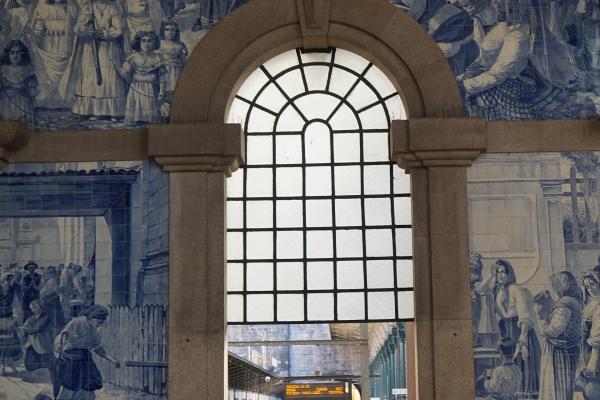
São Bento Station’s historic azulejo murals
São Bento is the station that has made Porto's tiles famous, and a visit is one of the simplest and cheapest pleasures in the city. It stands in the old town, a short walk from the cathedral and the Ribeira, in the Praça Almeida Garrett, and it operates as a real station, with regional and suburban trains running to Braga, Guimarães, Aveiro, and other destinations, and connecting by metro to the rest of the city. Thousands of people pass through it each day, and many of them barely glance at the walls, though visitors from around the world do.
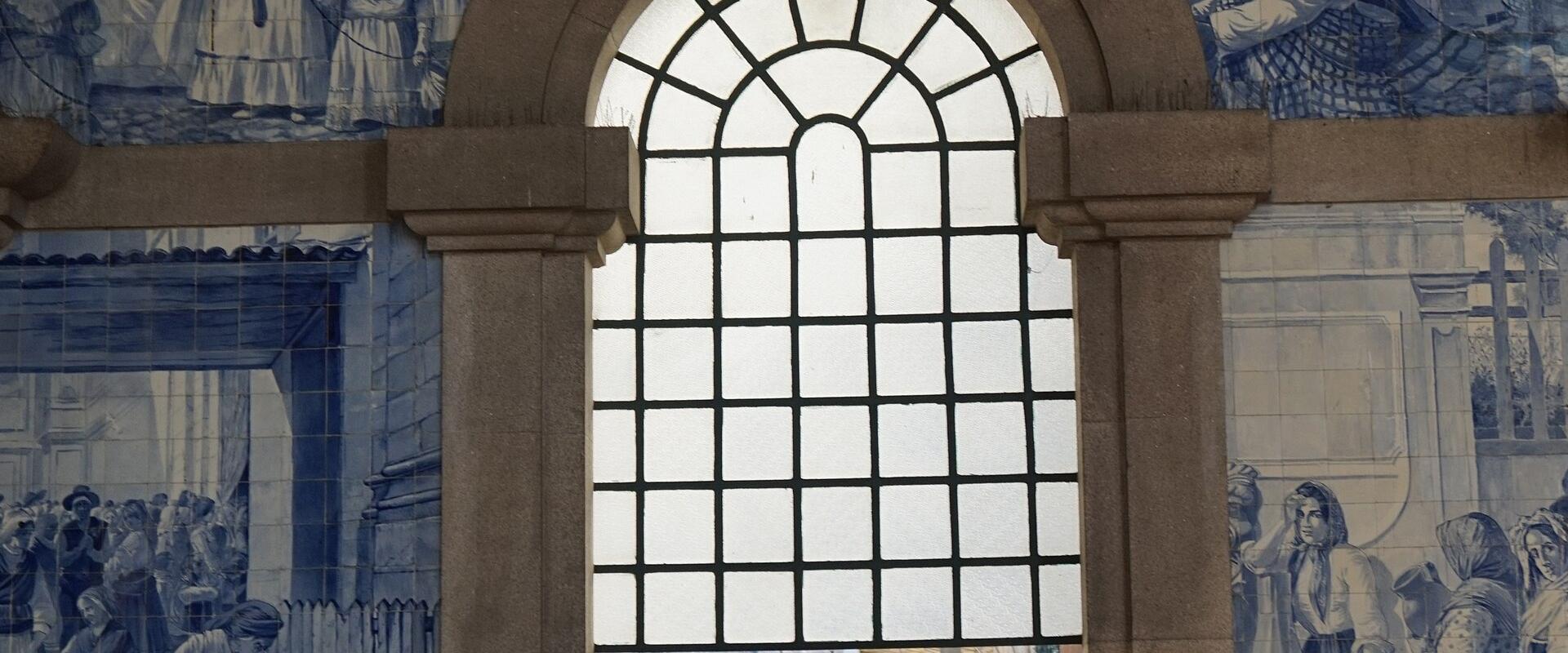
The facade is of grey granite in a grand French-influenced style, and gives little hint of the interior. The main hall, with its high ceiling, is lined to a considerable height with panels of blue and white tiles. More than twenty thousand azulejos, painted by Jorge Colaço in the first two decades of the 20th century, form two large friezes and several big scenes. The upper section tells episodes from Portuguese history and legend, with knights, kings, and battles painted in a lively, narrative style. The lower frieze shows country scenes from northern Portugal, with farmers, carts of oxen, spinners, and festival-goers in traditional dress, creating a kind of encyclopedia of regional life. The work is carefully composed, with energetic crowds and landscapes with wide skies, and the blue is accented with touches of yellow and brown.
The best way to appreciate the hall is to stand in the middle and turn slowly, then to step closer and look at individual figures. Details such as the horses, the costumes, and the trees repay attention, and the sheer size of the composition is impressive. The hall is busiest at midday, when tour groups arrive, so early morning or evening gives a more peaceful experience. The light from high windows brings out the colours, and photographs are allowed, though it is polite to move aside for passengers. The ticket hall and platforms are free to enter.
Other tiled stations in the north can make a rail journey more interesting. Pinhão on the Douro line has panels of the wine harvest by the same artist, and Aveiro's station facade is covered with local scenes. A day trip by train to either from São Bento is a pleasant way to see the region.
The station suits all visitors, and a stop of ten or fifteen minutes is enough.
More photos coming soon
Nearby Attractions
Other places to visit in Porto

Frequently Asked Questions
Quick Facts
Best Time to Visit
May to September offers warm, sunny weather ideal for sightseeing and riverfront activities; spring and early autumn are especially pleasant and less crowded.