Capela Dos Ossos (Chapel Of Bones)
16th-century chapel with walls of human bones
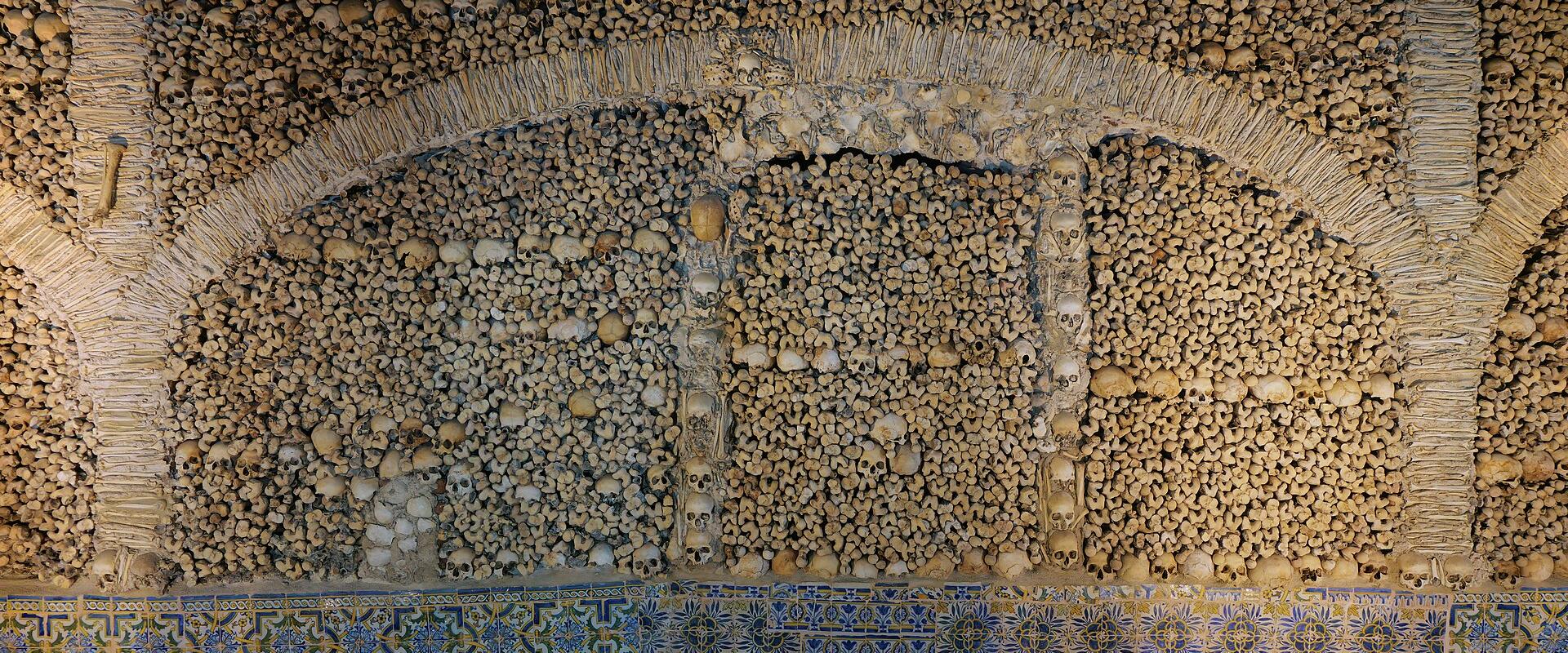
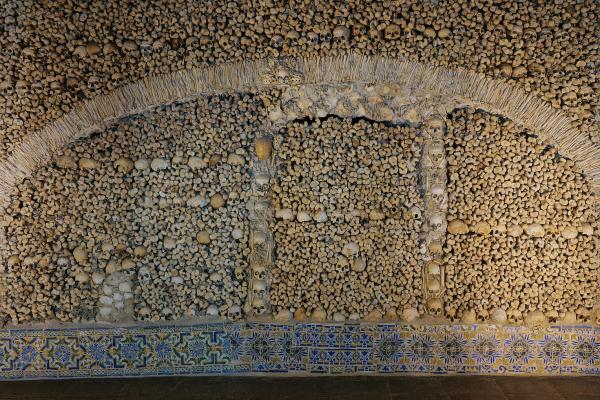
The Chapel of Bones in Évora is one of the most unsettling and unforgettable interiors in Portugal. It forms part of the church of São Francisco, a large Gothic and Manueline building in the centre of the old town, and it is entered through a doorway beside the main nave. The chapel is small, but its effect is overwhelming, since the walls, pillars and vaults are covered with human skulls and bones, arranged in neat patterns and rows.
The chapel was built by Franciscan friars in the 16th or early 17th century, in a period when ideas about death and the vanity of earthly life were central to religious thought. The immediate reason was practical: Évora's many cemeteries were overcrowded and took up land the town needed, so the monks collected the bones of several thousand people from graveyards and convents and used them to decorate the chapel. The tradition is that the remains of around five thousand people were used. But the purpose was spiritual rather than macabre. The aim was to confront visitors with the certainty of death, to encourage reflection on the fleeting nature of life and to inspire a more pious existence. The Latin phrase for this idea is memento mori, remember that you must die.
An inscription above the entrance puts the message in plain words: Nós ossos que aqui estamos, pelos vossos esperamos, which means We bones that are here, for yours await. It is the kind of sentence that stays with you. Inside, the pattern is carefully done: columns lined with skulls, ceilings covered with bones, and two bodies, an adult and a child, hung on the wall, about which various legends are told. The light is dim, and the atmosphere is hushed. Many visitors speak quietly, and some find the experience moving, while others find it disturbing.
Entry is by ticket at the church, and combined tickets that include the church and its small museum are usually available. The upper floor of the church houses a museum of religious items, and from its gallery there are good views over the old town. The chapel is small, so only a limited number of visitors can enter at a time, and in peak season, queues can form, so aim for early morning or late afternoon. Photography rules vary, so check the signs.
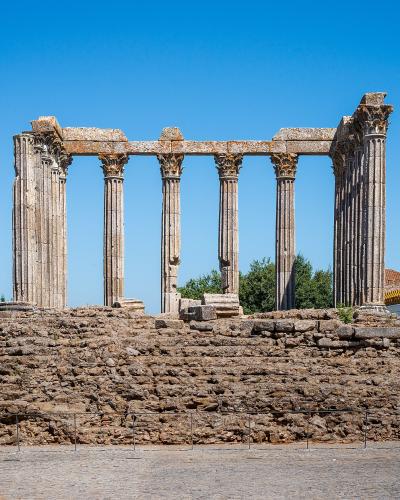
The site is located a short walk from the Roman temple, the cathedral and the central square, so it fits easily into a day in Évora. It is not suitable for everyone, particularly young or sensitive children, but for those interested in history, religion and the culture of death, it is a place of exceptional power. It suits curious, thoughtful visitors, and it takes only about half an hour.
More photos coming soon
Admission Fees
Admission
Pay at entrance; combined tickets available
Nearby Attractions
Other places to visit in Évora
Frequently Asked Questions
Quick Facts
Pay at entrance
Combined tickets available.
Best Time to Visit
Spring (March-May) and autumn (September-October) offer mild weather, lush countryside, and ideal conditions for exploring Évora’s historic sites and surroundings.