Dom Luís I Bridge
Double-deck iron bridge with panoramic Douro views
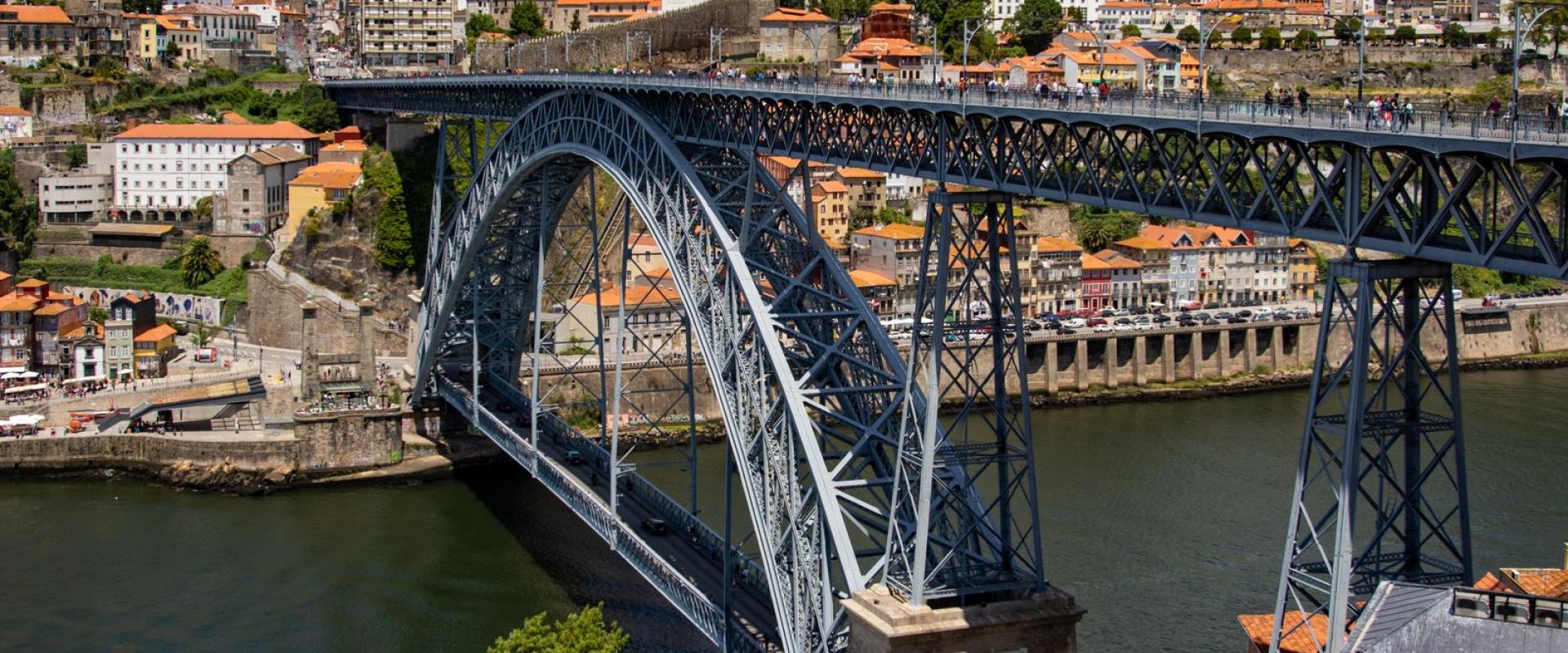
For anyone who wants to understand how Porto's riverside came to look the way it does, the Dom Luís I Bridge is the key. When it opened in 1886, it was the second major metal bridge across the Douro in the city, and it replaced an older crossing that had served for decades. The story of the three bridges that have stood on this spot or near it tells the story of Porto's modernisation.
The first fixed link between Porto and Vila Nova de Gaia was the Ponte das Barcas, a floating bridge of boats chained side by side, which existed from the late 18th century. In 1809, when French troops under Marshal Soult approached the city, thousands of panicked residents rushed onto it to flee to the south bank, and the bridge collapsed under the weight, drowning many. After that, a more durable crossing was sought, and in 1843, a suspension bridge, the Ponte Pênsil, was opened, held by wire cables and carrying a roadway. It served for over forty years, but its capacity and strength were limited as traffic grew. Its stone pillars still stand beside the Gaia end of the present bridge, a quiet reminder.
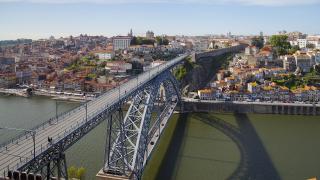
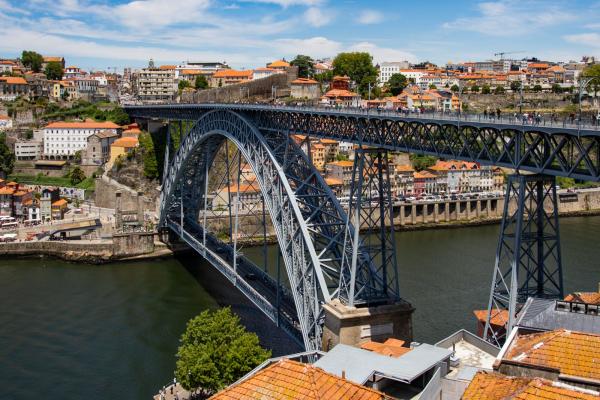
The present bridge was designed by Théophile Seyrig, a German-born engineer who had worked with Gustave Eiffel and who also designed the Maria Pia railway bridge upriver, and it was built by a Belgian company between 1881 and 1886. Its central feature is a great iron arch of about 172 metres, which, at the time of completion, was the longest of its type in the world. The arch carries the upper deck, which sits about 60 metres above the water, while the lower deck hangs from it at a lower level. This clever arrangement allows one structure to connect both the high ground and the riverbank on both sides. The upper deck originally carried trams and today carries the Porto metro and a footpath, and in 2005, the metro line was extended over it.
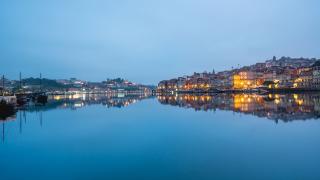
For visitors, the best way to appreciate the bridge is to walk it. The lower deck gives a closeness to the water, the quays and the boats, while the upper deck offers the sweeping view over the Ribeira, the Gaia port lodges and the river bend. Cross to the Gaia side and climb to the gardens of the Jardim do Morro for a view back at the bridge and the city, particularly at sunset. The monastery of Serra do Pilar, with its circular cloister, stands on the hill next to it and is a World Heritage site. Be careful with children on the upper deck, where trains pass close to the pedestrian path.
Crossing the bridge is free at any time. It suits everyone, and it takes only five to ten minutes to walk across, though you will want to linger.
Categories
More photos coming soon
Nearby Attractions
Other places to visit in Porto
Frequently Asked Questions
Quick Facts
Best Time to Visit
May to September offers warm, sunny weather ideal for sightseeing and riverfront activities; spring and early autumn are especially pleasant and less crowded.