







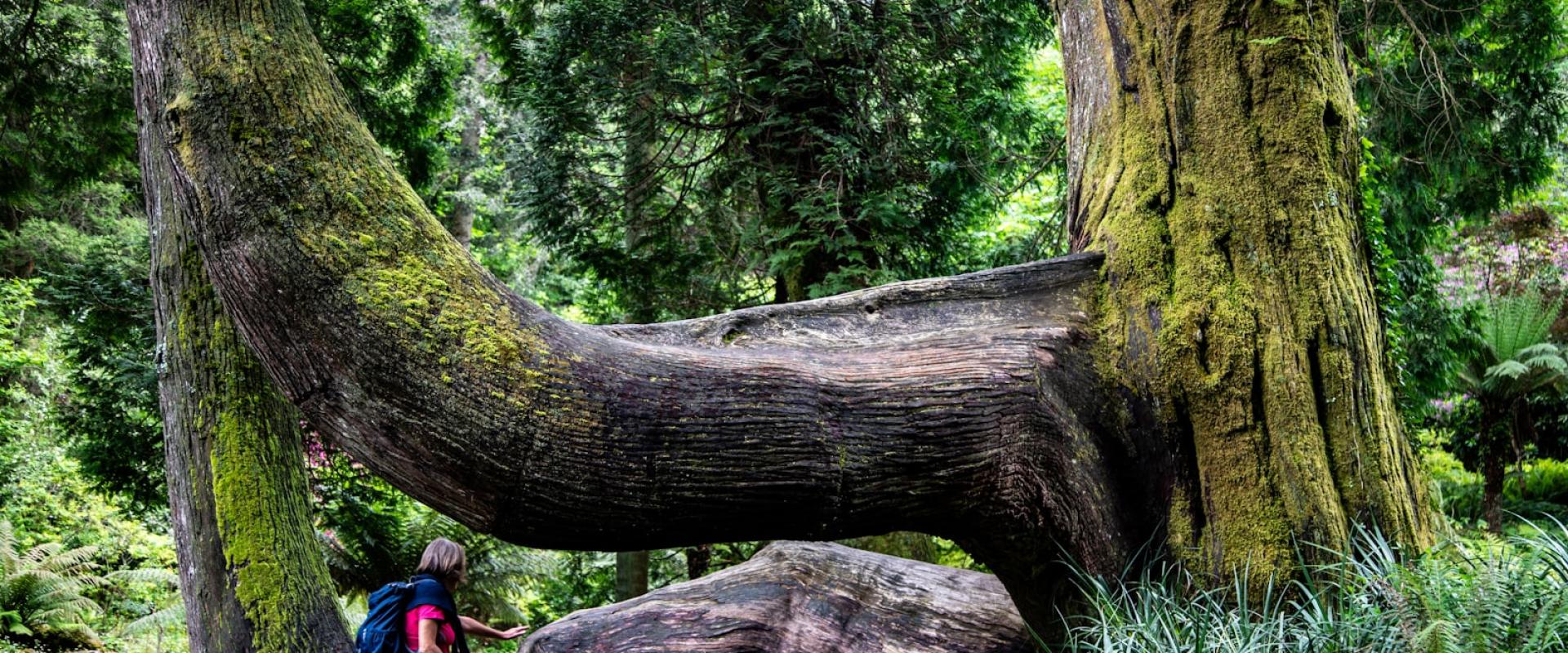
Fairy-tale Gardens With Giant Fern Trees And Footbridges (Sintra)
Fairy-tale gardens with giant ferns and footbridges
Sintra owes much of its fairy-tale reputation to its gardens. In the 19th century the hills around the town became a place for wealthy owners, kings, and enthusiasts to create romantic landscapes, with exotic trees, ponds, grottoes, and little bridges, and many of those gardens are open today. The mild, damp climate, the shelter of the hills, and the rich soil allowed plants from all over the world to grow, and the result is a collection of wooded parks that feel unlike any other in Portugal.
The Monserrate estate, a few kilometres west of the centre, is the best place to see giant tree ferns. The estate was developed in the mid-19th century by Francis Cook, a wealthy English merchant who later became a viscount, who restored the palace and planted the park with a huge variety of species. Walkways lead through a damp valley full of Australasian tree ferns, with trunks like pillars and fronds that form a green canopy overhead. Streams run underfoot, small stone bridges cross them, and there are separate gardens in Mexican, Japanese, and Mediterranean styles. The palace itself is an extravagant mix of Indian, Moorish, and Gothic styles.
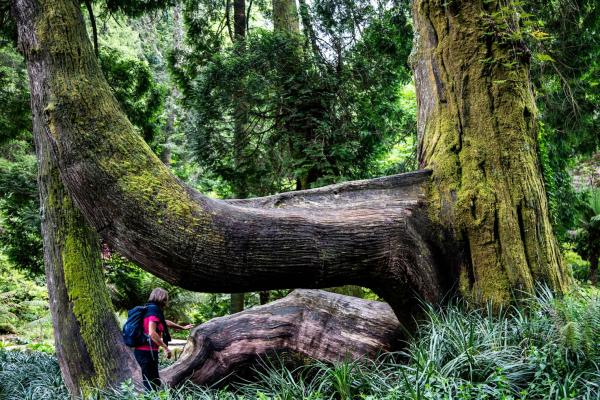
The Quinta da Regaleira, closer to the town, is a different kind of fantasy. Created in the early 20th century for a wealthy Brazilian-born landowner, António Carvalho Monteiro, with the help of the Italian set designer Luigi Manini, it has towers, grottoes, tunnels, and the spiralling Initiation Well, as well as shady paths among ferns and moss-covered rocks. Wooden and stone bridges link parts of the garden. The Pena Park, around the colourful palace on the hilltop, adds wooded valleys, ponds, and viewpoints, and the paths of the Vale dos Lagos give a quieter side to the same landscape.
The gardens are best seen on foot, at an unhurried pace. Mist is common, so the atmosphere can be very romantic, but views are often reduced. Comfortable shoes are essential, since paths are steep and may be slippery. Each garden has its own entrance charges and hours, so check ahead, and consider spending at least a day on two of them rather than rushing through all.
They suit garden lovers, photographers, families, and anyone who likes to wander among ferns and bridges.
Categories
More photos coming soon
Nearby Attractions
Other places to visit in Sintra



Frequently Asked Questions
Quick Facts
Best Time to Visit
Spring (March-May) and autumn (September-November) offer mild weather, lush gardens, and fewer crowds for exploring Sintra’s palaces and hiking trails.