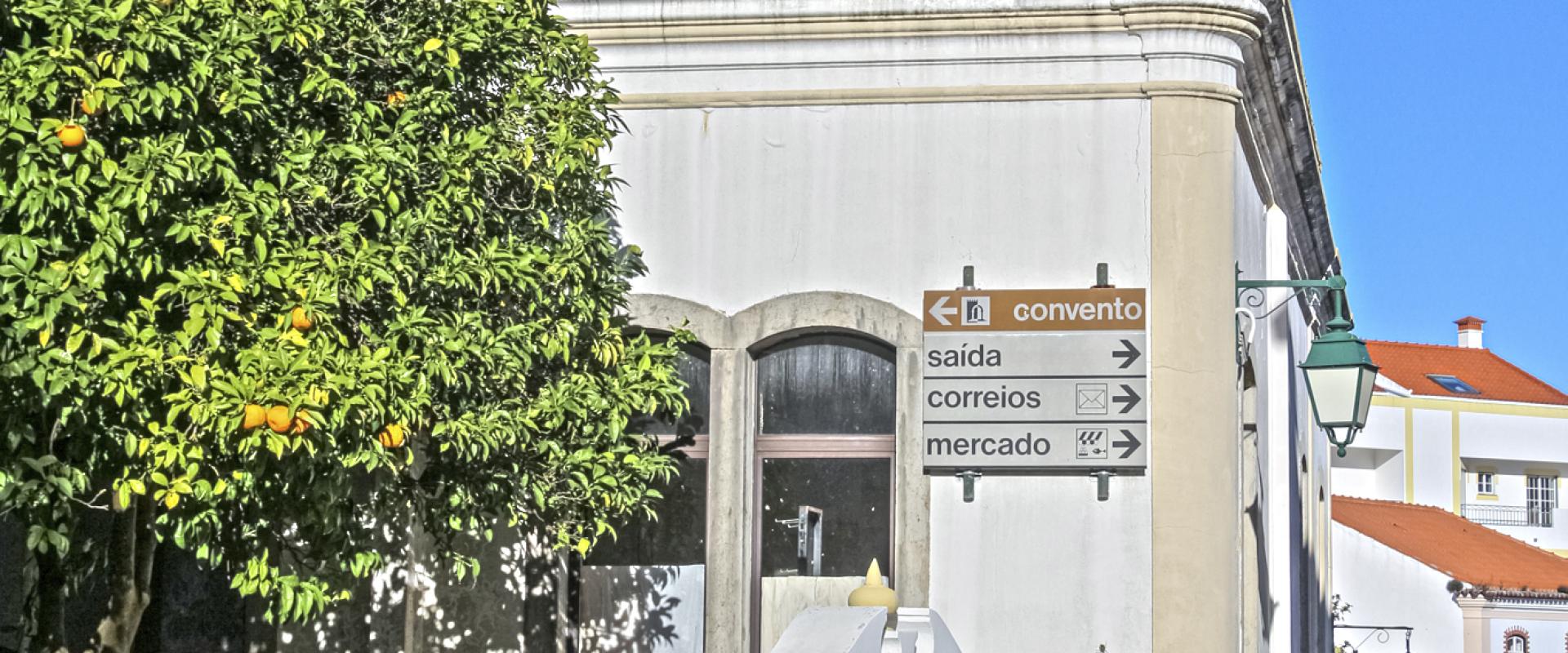
Galeria De St. António (Saint Anthony Gallery)
18th-century art gallery in Monchique
Monchique is a town high in the hills of western Algarve, a place that feels far from the coast even though the sea is only about twenty kilometres away. It lies on the lower slopes of the Serra de Monchique, a range of wooded hills that rises to 902 metres at Fóia, the highest point in the Algarve. The air is cooler here, the landscape is green with cork oak, chestnut, eucalyptus and arbutus, and the town has a character of its own, shaped by farming, woodworking and the use of the nearby hot springs. In the middle of this setting, a small gallery in an old chapel adds a cultural note.
The Galeria de Santo António occupies the former Ermida de Santo António, a small hermitage dedicated to Saint Anthony, on the steep street called the Calçada de Santo António. Such chapels, often built by local brotherhoods or devout families, were common in Portuguese towns, and this one is believed to date from the 18th century. Its religious use declined in the 19th century, and after that, the building went through a series of secular uses, including storage, before the town council restored it and gave it a new life as a cultural space. The transformation is typical of a growing trend in Portugal, where small, disused buildings are converted into galleries and community centres, keeping the architecture while giving it a purpose.
Today, the gallery hosts temporary exhibitions, mostly showing the work of local and regional artists, in painting, photography, sculpture and crafts, and occasionally holds small concerts and events. The space is intimate, with whitewashed walls and a simple interior, and the exhibitions change regularly, so a visit offers a different experience each time. Opening hours are not fixed and depend on the exhibition schedule, so ask at the tourist office or the town hall about what is on.
The town around the gallery is worth exploring. The parish church has a remarkable Manueline portal of the 16th century, with columns carved like twisted ropes, and the ruins of a Franciscan convent stand on a hillside above the town. Local specialities include smoked ham and sausages, honey, and medronho, a strong spirit made from the fruit of the arbutus tree. A few kilometres away, the spa village of Caldas de Monchique has springs with a history that goes back to Roman times, and the drive up to the summit at Fóia gives wide views over the coast.
The streets of Monchique are steep, so wear comfortable shoes, and bring a jacket, as the weather in the hills is cooler and wetter than on the coast. The gallery suits those who enjoy small cultural stops and want to see a different side of the Algarve, and it works well as part of a day in the mountains.
Categories
More photos coming soon
Nearby Attractions
Other places to visit in Monchique
Frequently Asked Questions
Quick Facts
Best Time to Visit
Spring (March-May) and autumn (September-November) offer pleasant temperatures and ideal conditions for hiking, spa visits, and exploring Monchique’s mountains.