


Lusitano Horse Fair
Annual Portuguese horse fair in Golegã
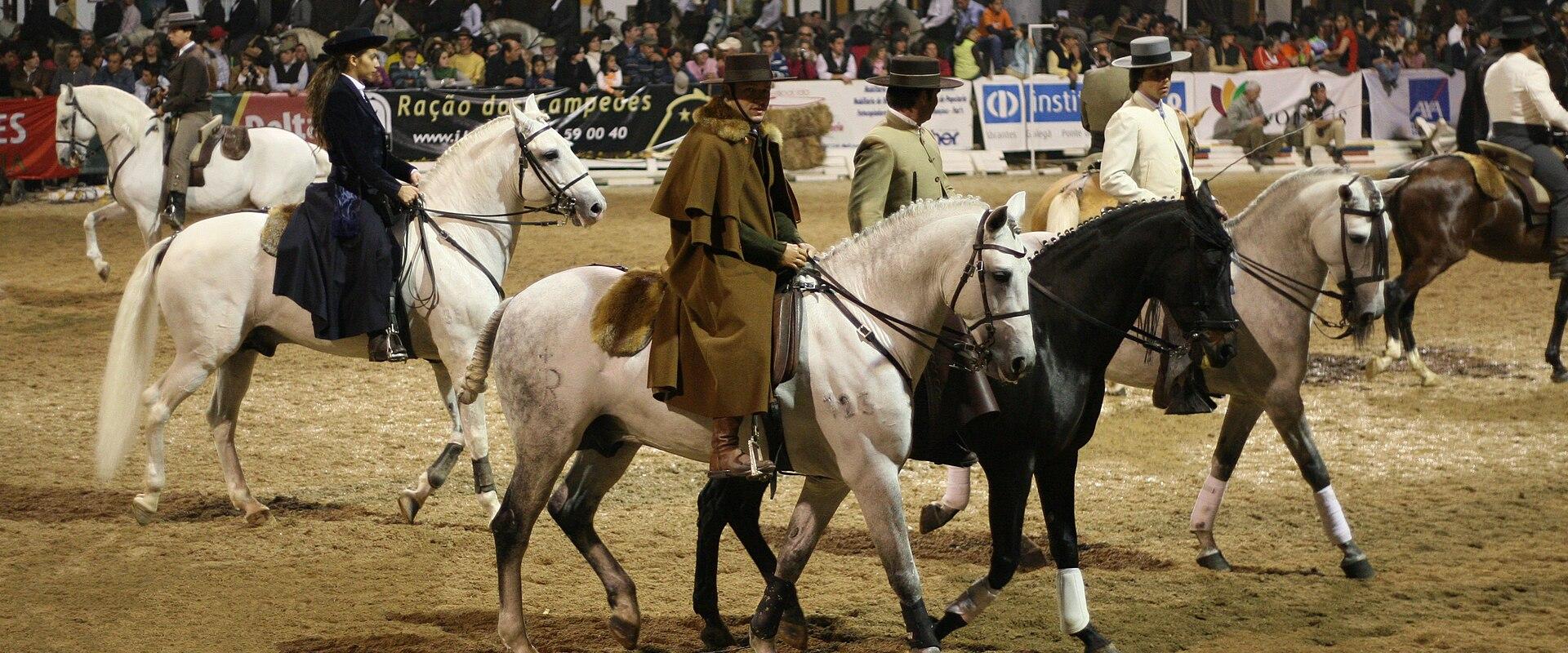
The Lusitano is the Portuguese national horse, and the fair at Golegã is where its admirers gather every year. The breed, developed on the Iberian Peninsula over centuries and closely related to the Spanish Andalusian, is medium in size, compact, and agile, with a proud carriage, a thick arched neck, and a calm temperament. It was bred for war and later for the bullring, where the mounted bullfighter, the cavaleiro, depends on its speed, courage, and responsiveness. It is also a mainstay of classical dressage, and the Portuguese School of Equestrian Art, based near Lisbon, uses Lusitanos for its displays. Stud farms in the Ribatejo and Alentejo regions have kept bloodlines going for generations, and the royal stud at Alter do Chão, founded in the 18th century, is a founding source of the breed.
Golegã, in the Ribatejo, calls itself the horse capital of Portugal, and the fair held here in November, known locally as the Feira de São Martinho, is the largest of its kind in the country. It lasts about ten days around the feast of Saint Martin on 11 November, a date long associated with the end of the farming year. Breeders bring stallions, mares, and foals to be judged and sold, and the main arena hosts a programme of competitions and demonstrations, including classes for Lusitanos in hand, riding displays, and events such as working equitation, a discipline that tests the horse in tasks from the cattle-herding tradition, and carriage driving. The sport draws competitors from several countries.
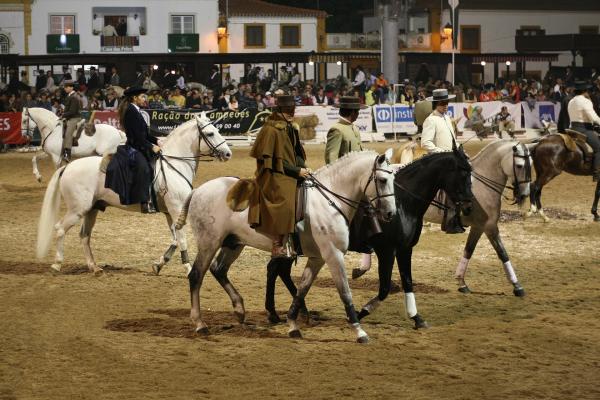
The fair mixes the equestrian and the social. Alongside the formal events, riders in traditional dress, carriage teams, and spectators fill the streets of the town. A custom linked to Saint Martin is the magusto, a gathering where chestnuts are roasted over open fires and shared with new wine, and stalls selling roasted chestnuts and local food are found throughout the fair. Evenings are filled with music, dancing, and conversation.
Admission to the town and the fair is free, though some competitions and seating may have charges. Accommodation is limited in Golegã itself, so many visitors stay in nearby towns such as Tomar, Torres Novas, and Santarém. November weather can be wet and cold, so bring waterproof clothing and sturdy shoes, since the streets can be muddy.
The fair suits horse lovers, families, photographers, and anyone interested in Portuguese rural traditions.
Categories
More photos coming soon
Hours & Fees
Hours
The fair takes place over ten days, centered around the feast of Saint Martin (November 11th).
Admission
Free admission
Nearby Attractions
Other places to visit in Golegã
Frequently Asked Questions
Quick Facts
Best Time to Visit
Spring (April-June) and autumn (September-November) offer mild weather and vibrant countryside; November is ideal for experiencing the famous horse fair.