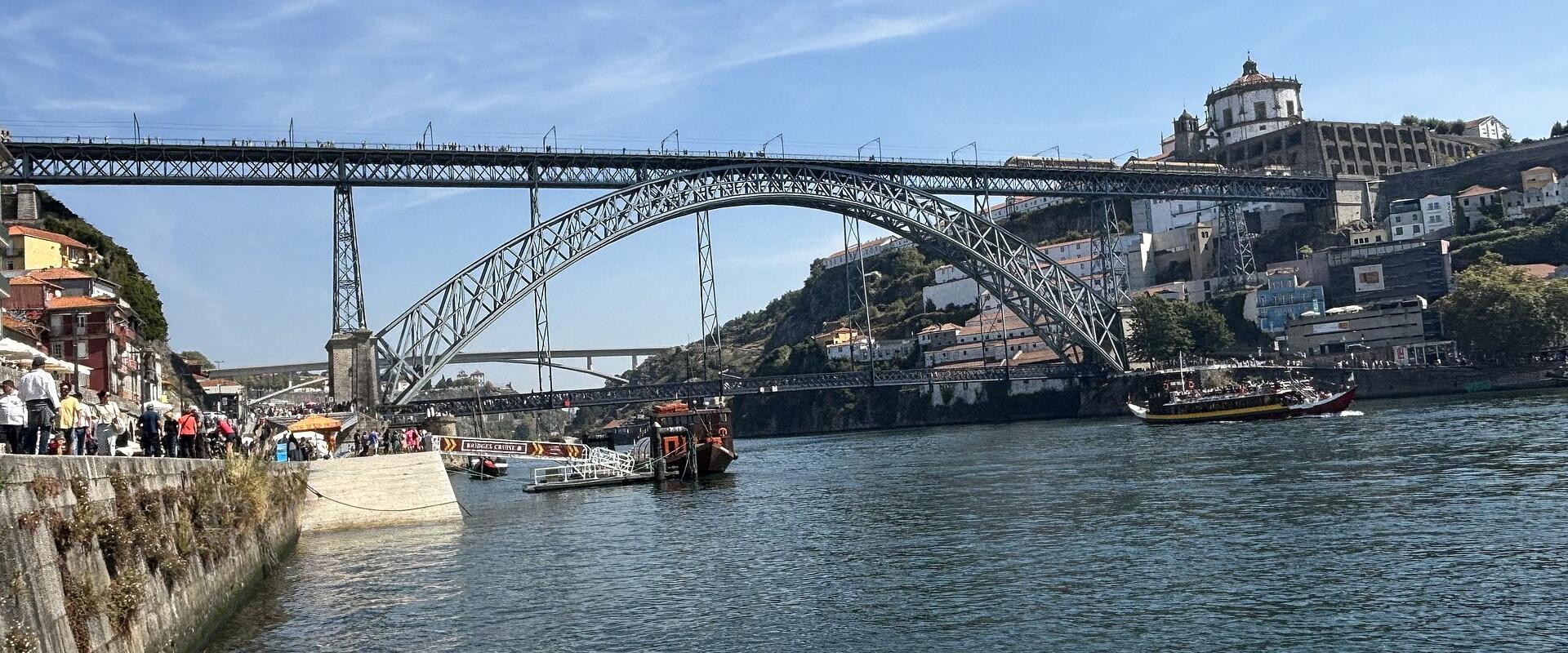
Main Bridge In Porto
Double-deck iron bridge linking Porto and Gaia
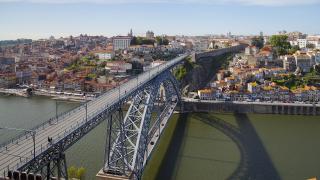
The Dom Luís I Bridge is the image of Porto that most people carry away with them: a double-deck iron arch striding across the Douro gorge between the Ribeira district and Vila Nova de Gaia. It opened in 1886 and was designed by Téophile Seyrig, a German-born engineer who had been Gustave Eiffel's business partner, and who also worked on the older Maria Pia railway bridge upriver. The span of the great arch is about 172 metres, and the upper deck sits some 60 metres above the water, so the scale is dramatic from any angle.
Before the bridge was built, the two banks were joined by a bridge of boats, a floating bridge that was both slow and unsafe, and which collapsed in a tragedy in 1809 when thousands of people fleeing the French invasion crowded onto it. The new bridge, named after the reigning king, finally gave the city a solid and permanent link, and it helped Porto and Gaia grow as one urban area. The ironwork, with its lattice patterns and its curving arch, is a showpiece of the 19th-century metal engineering that Porto was proud of.
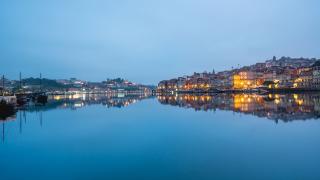
The two decks serve different purposes. The upper deck carries the Porto metro and a footpath, and walking across gives the best views: on one side the stacked houses of the Ribeira and the tower of the Clérigos church, on the other the port wine lodges of Gaia, with their painted names, and the river curving away toward the sea. The lower deck carries road traffic and a narrower pavement at water level, which has a more intimate relationship with the quays. Both are free, and both are open at all hours.
At the Gaia end of the upper deck, the gardens of the Jardim do Morro are a popular place to watch the sunset, and the former monastery of Serra do Pilar, with its round cloister, stands above. A cable car runs from the upper deck level down to the riverside, which offers a different perspective. On the night of the São João festival in June, the bridge is a favourite spot for watching fireworks, and in summer you may see young local divers leaping from the lower deck into the river, which is dangerous and not recommended.
Be careful on the upper deck, where the metro trains pass close to the footpath and the drop is steep. Take care with children and in windy weather. The best time for photographs is the late afternoon, when the sun lights the Ribeira, and at dusk, when the bridge is illuminated. The bridge suits everyone, from first-time visitors to residents, and no trip to Porto is complete without crossing it at least once.
Categories
More photos coming soon
Nearby Attractions
Other places to visit in Porto
Frequently Asked Questions
Quick Facts
Best Time to Visit
May to September offers warm, sunny weather ideal for sightseeing and riverfront activities; spring and early autumn are especially pleasant and less crowded.