


National Palace Of Sintra (Palácio Nacional De Sintra)
Medieval palace with iconic twin chimneys
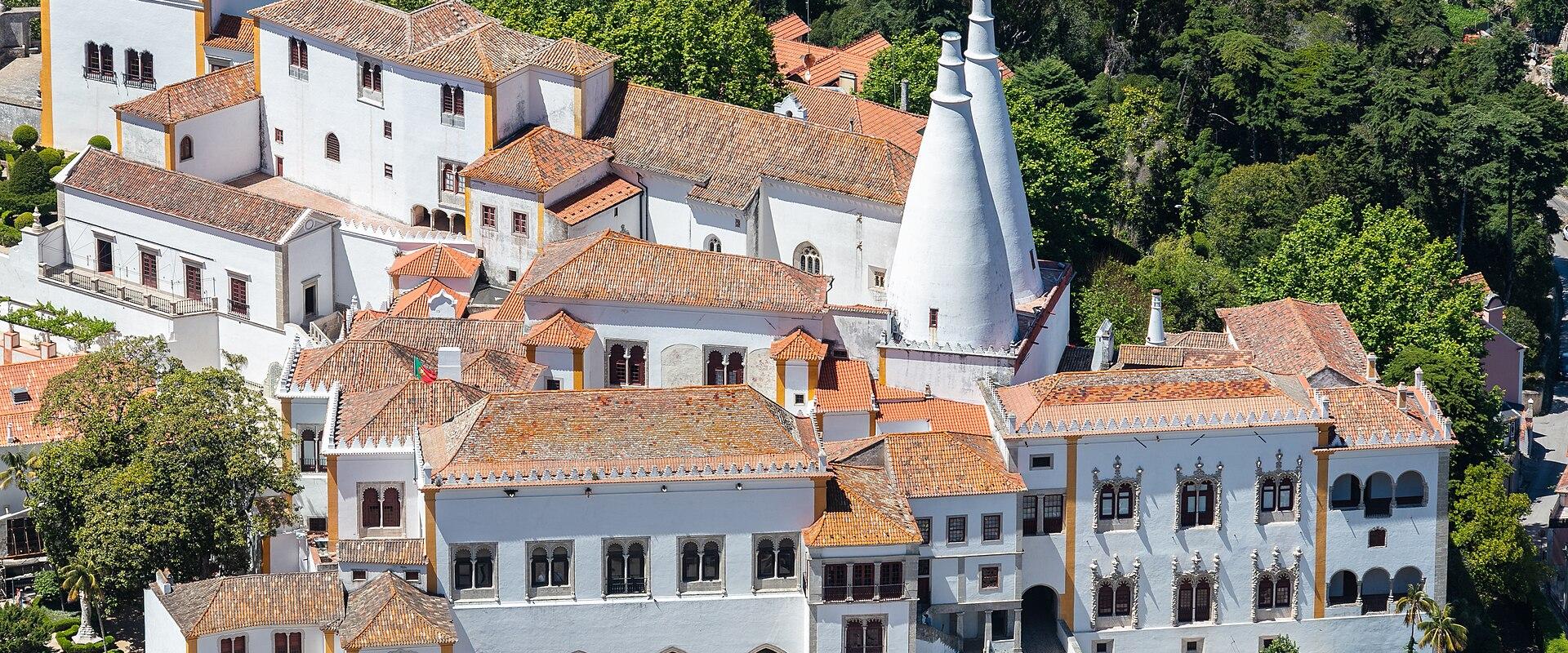
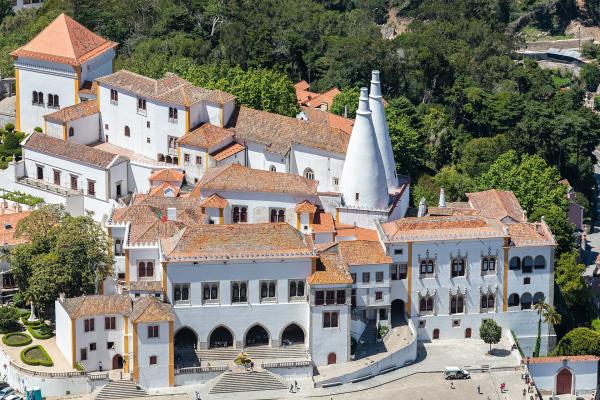
The Palácio Nacional de Sintra is the town palace, in the middle of the old centre, and its two huge white conical chimneys are the landmark of Sintra's skyline. Unlike the Pena Palace, which was built in the 19th century as a Romantic fantasy, this is a genuine medieval royal residence that was used and altered by kings for centuries, and it shows layers of Islamic, Gothic, Manueline, and later influences in its walls, ceilings, and tiles.
The site was a palace in the Muslim period, and after the Christian conquest it became a residence of the Portuguese kings. King João I made major additions in the late 14th and early 15th centuries, and King Manuel I rebuilt and extended it in the early 16th century, at the height of the Portuguese age of discovery. The combination of different building phases gives the palace an irregular, almost organic form, with rooms and courtyards added by successive monarchs, and the outside is plain and whitewashed with a simple Gothic and Manueline touch.
The interior is the real attraction. The Swan Room and the Magpie Room, with a ceiling painted with magpies, are among the best known. The magpie room is linked to a story of João I and his queen, Philippa of Lancaster, and gossip at court. The Sala dos Brasões, or Coat of Arms Room, has a domed wooden ceiling bearing the arms of the noble families of the kingdom, a statement of royal power. Hand-painted tiles in Mudéjar style are among the oldest in Portugal, and the floors, ceilings, and doorways reward a slow pace. The kitchen, under the two big chimneys, is a vast room designed for feeding a large court. King Afonso VI was kept prisoner in the palace in the late 17th century, and his room can be seen.
The palace sits in the middle of the small historic centre, so it combines easily with a walk through narrow lanes, a visit to a pastry shop for travesseiros, and the climb to the castle. A visit takes around an hour, so it is a good indoor option on foggy days, when the hilltop sights are harder to enjoy. Times, prices, and ticket arrangements change, so check before going.
The palace suits history lovers, families, and anyone interested in medieval and Renaissance architecture. Book early or go early in the day in summer, when the town is crowded.
Categories
More photos coming soon
Nearby Attractions
Other places to visit in Sintra
Frequently Asked Questions
Quick Facts
Best Time to Visit
Spring (March-May) and autumn (September-November) offer mild weather, lush gardens, and fewer crowds for exploring Sintra’s palaces and hiking trails.