

Sintra National Palace
Medieval palace with iconic twin chimneys
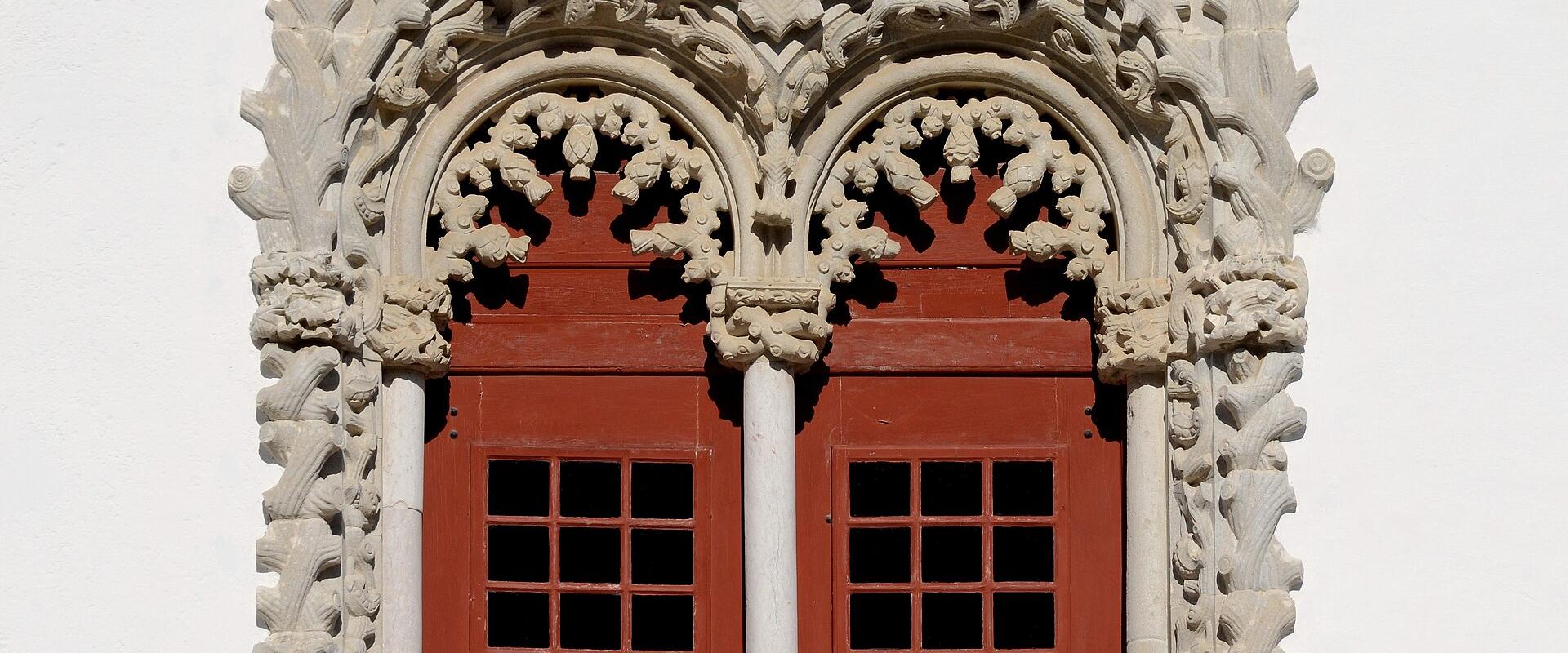
A visit to Sintra National Palace is a walk through rooms rather than a look at a facade, and the experience is shaped by details: ceilings painted with swans and magpies, tiles in patterns that go back to the Moorish tradition, and a kitchen with chimneys tall enough to be seen from the whole town. The building stands in the main square of Sintra, on the site of an older Muslim palace, and it was used by the kings of Portugal from the Middle Ages until the end of the monarchy in 1910. As it was altered by kings over centuries, it is an irregular, rambling building, and this makes the visit a series of surprises.
The route follows a one-way path through the main rooms. Early on, the Sala dos Cisnes, the Swan Room, the largest of the halls, has a ceiling of 15th-century wood panels painted with swans wearing golden collars, each in a different pose, and it was used for banquets and festivities. The Sala das Pegas, the Magpie Room, has a ceiling covered with painted magpies, each holding in its beak a ribbon with the words por bem, a phrase that tradition links with King João I, who was caught kissing a lady-in-waiting by his queen, and he ordered the magpies painted to silence the gossip in the court. A highlight is the Sala dos Brasões, the Coat of Arms Room, a domed chamber whose ceiling and walls display the arms of the royal family and the noble houses of Manuel I's time, with blue and white tiles below, a statement of power and loyalty.
The palace holds some of the oldest and finest azulejos in Portugal. The Hispano-Moorish tiles of the late 15th and early 16th centuries, made with a technique of raised outlines separating coloured glazes, cover walls and floors in intricate geometric designs, and in a few rooms they form complete surfaces of pattern that dazzle the eye. Other rooms show the palace's use as a royal residence, with a chapel, bedrooms, a Moorish-style courtyard with a fountain, and, in one room, the place where King Afonso VI was kept prisoner in the 17th century.
Last, the kitchen, with its two huge conical chimneys, about 33 metres high, is open to visitors, who can see the great hearths and the arrangement that allowed meals for hundreds to be cooked. A small garden can be visited as well. The visit takes about an hour, and tickets are sold at the entrance, with queues common in the middle of the day. Buying in advance online saves time, and the palace opens daily with a late-afternoon closing time. Because the rooms are small, visitors move in a stream and crowds can feel tight, so arrive when the doors open or late in the day.
Wear comfortable shoes, and allow time to enjoy the old town outside. The palace suits history lovers, art enthusiasts and families.
Categories
More photos coming soon
Nearby Attractions
Other places to visit in Sintra
Frequently Asked Questions
Quick Facts
Best Time to Visit
Spring (March-May) and autumn (September-November) offer mild weather, lush gardens, and fewer crowds for exploring Sintra’s palaces and hiking trails.