

Sintra Old Town (centered On The National Palace)
Oldest royal palace with iconic twin chimneys
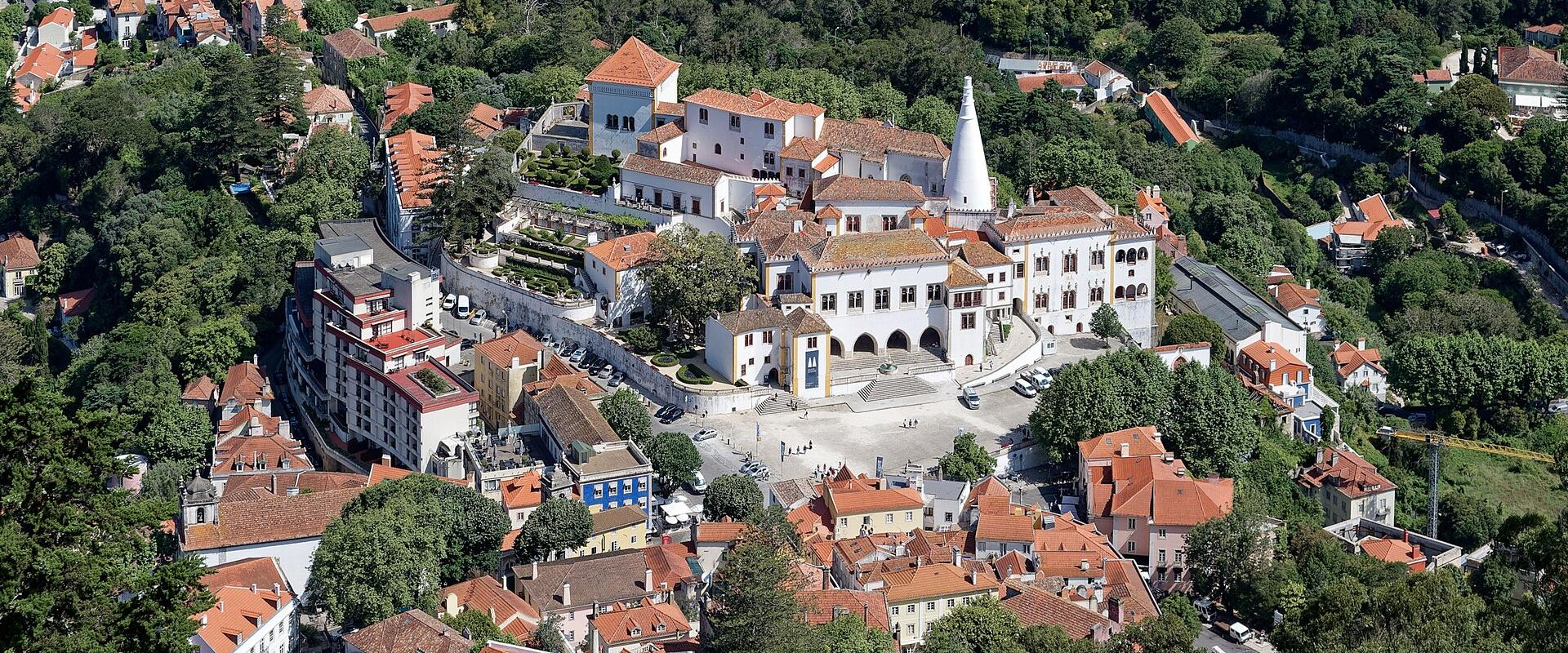
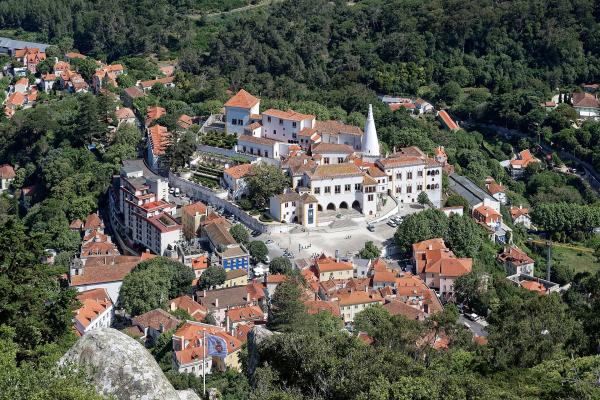
The National Palace dominates the old town of Sintra, and its two huge white chimneys, shaped like cones, have become the town's trademark. These are the chimneys of the palace kitchen, built to carry away the smoke of enormous fires, and they rise high above the roofs of the surrounding streets. The palace is the best-preserved medieval royal residence in Portugal and was used by the kings of Portugal almost continuously from the Middle Ages until the end of the monarchy in 1910.
Its history is layered. The site was already occupied in the Muslim period, when a palace stood on the spot, and after the Christian conquest in the 12th century, the kings of Portugal took it over. King Dinis made additions in the 13th century, but most of what you see was built by King João I in the early 15th century and by King Manuel I, who expanded and decorated the palace after the voyages of discovery had made Portugal rich. The result is a mixture of Gothic, Manueline and Moorish-influenced styles, with a rambling plan that grew as the court's needs changed. Because it was lived in for so long, each reign left something behind.
The rooms are the reason to go inside. The Swan Room, a large hall with a ceiling painted with swans, was used for banquets, and the Magpie Room is decorated with painted magpies, said to represent the court gossips, after an episode in which João I was caught kissing a lady-in-waiting by his wife, Queen Philippa. The most spectacular is the Coat of Arms Room, with a domed ceiling covered with the coats of arms of the noble families, a symbol of the crown's power at the time of Manuel I. The palace also has some of the oldest azulejo tiles in Portugal, in the Hispano-Moorish style, which cover walls and floors in patterns of blue, green and white. Later, Afonso VI, a king declared unfit to rule, was held prisoner in a room of the palace for several years in the 17th century.
Around the palace, the old town is a maze of narrow streets, small squares and steps. Cafes, bakeries and craft shops fill the ground floors of old houses, and many have views of the palace towers. The streets are cobbled and steep, so wear comfortable shoes. The area is lively during the day and quieter in the evening, and its charm is best felt away from the main street.
The palace is open daily, with a late-afternoon closing time that varies by season, and tickets are sold at the entrance, so check before you go. A visit takes about an hour, and queues can build up in the middle of the day. It suits history lovers, as well as those who enjoy decorative arts and old buildings, and it is the logical first stop on a visit to the town.
Categories
More photos coming soon
Nearby Attractions
Other places to visit in Sintra
Frequently Asked Questions
Quick Facts
Best Time to Visit
Spring (March-May) and autumn (September-November) offer mild weather, lush gardens, and fewer crowds for exploring Sintra’s palaces and hiking trails.