


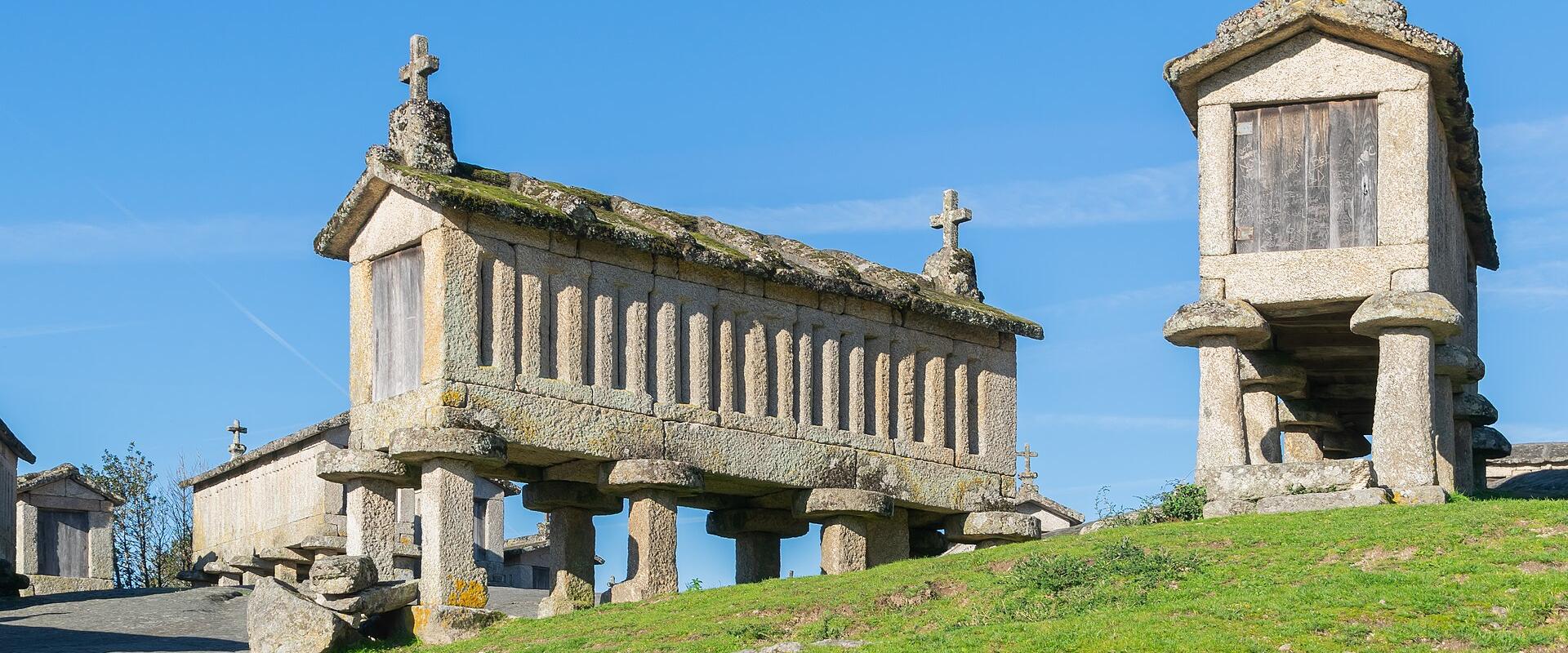
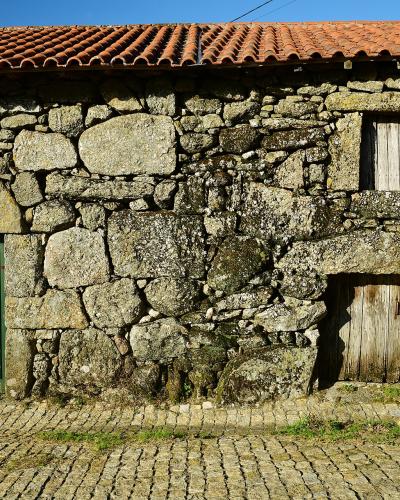
The lanes of Soajo, in the Minho region of northern Portugal, are as much a part of the village's character as its famous granaries. Soajo lies within the Peneda-Gerês National Park, in a landscape of granite hills, oak woods, and terraced fields, and almost everything in the village is made of stone. The houses are of dressed or rough granite, the field walls are dry stone, the steps and lanes are paved with granite blocks, and even the drinking troughs and washing places are cut from the same material. Walking through it is a lesson in how a community can shape a landscape from what is beneath its feet.
The paths are the oldest layer. Narrow lanes wind between houses, rising and falling with the slope, bordered by high stone walls that hold the earth and keep animals in. Some are cobbled and worn smooth by centuries of use by people, cattle, and carts, while others are simple tracks of bedrock. Rainwater runs in channels at the side. Many of these paths once linked the village with its fields, pastures, and the high mountain settlements that were used in summer. In this part of the country, families traditionally moved with their animals between winter villages and summer upland settlements, known as inverneiras and brandas, and the routes they used survive as stony tracks across the hills.
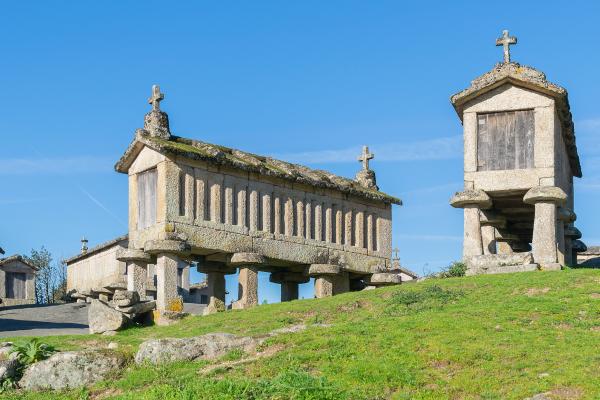
The village has a strong communal tradition. Pasture and woodland were managed jointly, and the use of shared resources was organised by the community, with rules for grazing, water, and the use of the threshing floor. The famous espigueiros, the granite granaries on stilts, stand together on the village's communal threshing ground on a high point at the edge, and the paths between the houses and the granaries are among the best to walk. A stone pillory in the village centre also recalls its former status as a local administrative centre.
Walking is easy but requires care, because granite is slippery when wet and the lanes are steep. Wear shoes with a good grip and carry water. The best light for photography is early morning and late afternoon, when the stone has warmth and shadows add depth. The surrounding national park has many marked trails, some of them following old Roman and medieval roads.
The village suits walkers, photographers, and anyone who enjoys quiet rural places. Plan a couple of hours to wander, and combine it with a look at the granaries.
Categories
More photos coming soon
Opening Hours
Hours
Open to the public.
Nearby Attractions
Other places to visit in Soajo
Frequently Asked Questions
Quick Facts
Best Time to Visit
Spring (April-June) and early autumn (September-October) offer mild weather, lush scenery, and ideal conditions for hiking and exploring Soajo’s natural wonders.