



Traditional Granite Architecture (espigueiros)
18th-century granite granaries on stone stilts
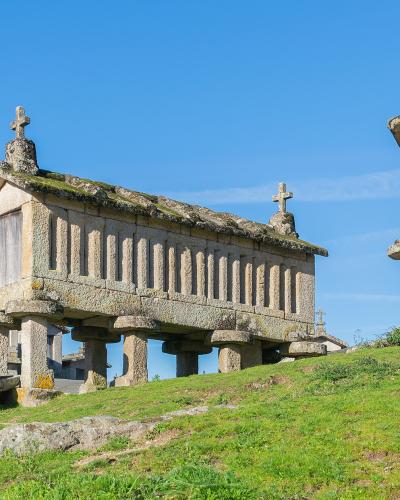
In the mountain villages of northern Portugal, one of the most distinctive sights is the espigueiro, a granite granary raised on stone legs. Soajo, a village in the Peneda-Gerês National Park, has one of the best-known groups, gathered on a communal threshing floor on a rocky outcrop at the edge of the settlement. The cluster of narrow stone buildings, each topped with a cross, stands in a row against the sky, and the view of them with the mountains behind is one of the classic images of the region.
The espigueiros were built to store maize, which became the staple crop of the north after it arrived from America in the 16th century. Fresh cobs must be kept dry and away from animals, or they quickly rot or are eaten. The solution was a raised stone chest, narrow and long, with a pitched roof of slabs and sides pierced with slits so that the wind could pass through and dry the grain. The stone legs, often capped with a flat disc, prevented rats and mice from climbing in. Most of the surviving examples date from the 18th and 19th centuries, when maize farming was at its height in the Minho and the granite quarries provided cheap material.
At Soajo, around two dozen granaries stand together on the eira, the communal threshing floor, where families once beat the harvested grain. Each belonged to a household, and their size indicates the wealth of the family. Many have crosses or small stone ornaments on the ridge, a reflection of the religious culture of the village. Their positions, in a place open to the wind, were chosen deliberately, and the setting looks as it did two centuries ago, apart from the tourists.
The village has other things to see. A stone pillory in the square recalls its former municipal status, the lanes are lined with granite houses with wooden balconies, and the surrounding mountains have walking routes through meadows and old stone paths. Cattle and goats still graze in the area, and the way of life is still partly rural. Another important group of espigueiros lies at Lindoso, near the Spanish border, where they stand beside a medieval castle.
The granaries can be seen at any time and cost nothing, but early morning and late afternoon give the best light. Parking is nearby. The site suits photographers, walkers, and anyone interested in traditional rural architecture.
Categories
More photos coming soon
Hours & Fees
Hours
Open 24 hours (open-air site)
Admission
Free
Nearby Attractions
Other places to visit in Soajo
Frequently Asked Questions
Quick Facts
Best Time to Visit
Spring (April-June) and early autumn (September-October) offer mild weather, lush scenery, and ideal conditions for hiking and exploring Soajo’s natural wonders.