






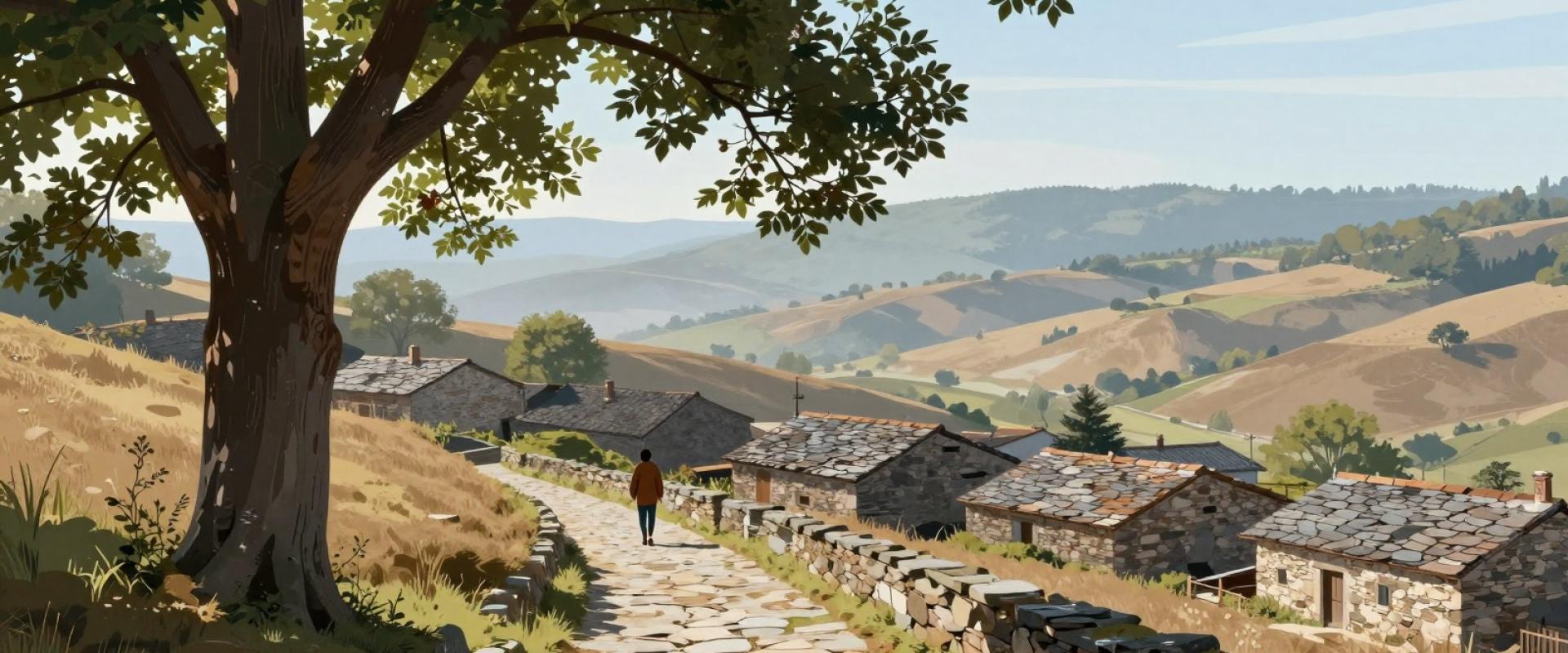
AI-generated illustration
Discovering Rio de Onor
One-day exploration of Rio de Onor's mountain villages
1 day
•
Easy difficulty
•
Est. €30
Day 1: The Sacred Mountains and Village Heritage
A full-day immersion into the mystical landscape of Rio de Onor, focusing on the iconic 'Pedras Formosas' (Beautiful Stones), the historic village center, and the local culinary traditions.
-
09:00
Arrival and Orientation
Arrive at Rio de Onor village. Park at the designated parking area near the village square. Pick up a local map or guidebook. Brief orientation on the 'Pedras Formosas' trail.
-
10:00
Hike to Pedras Formosas (Beautiful Stones)
A moderate 3-4 km hike (one way) through the Montesinho Natural Park. The trail leads to the famous granite rock formations sculpted by wind and water. This is the highlight of the visit, offering stunning views and a sense of ancient mystery.
-
13:00
Traditional Lunch in the Village
Return to the village for lunch. Try local dishes such as 'cozido à transmontana' (hearty stew) or fresh trout from the Rio de Onor river. Recommended spots include local taverns near the church.
-
14:30
Explore the Historic Village Center
Walk through the narrow cobblestone streets of Rio de Onor. Visit the 16th-century Church of São Bartolomeu and admire the traditional granite houses. Learn about the local legends and the 'Caretos' tradition associated with the region.
-
16:00
Relax by the Rio de Onor
Spend some quiet time by the riverbank. The water is clear and cold, perfect for a refreshing break. Enjoy the peaceful atmosphere of the valley.
-
17:00
Afternoon Snack and Local Products
Visit a local shop or bakery for 'broa' (cornbread) and local honey or cheese. A perfect way to end the day with local flavors.
-
18:00
Sunset Views and Departure Prep
Find a viewpoint overlooking the village and the mountains to watch the sunset. Prepare for departure or check into nearby accommodation.
Meals:
Lunch at Village Center Tavern , Snack at Local Bakery/Shop
Where to stay: Stay in a local 'Casa de Turismo Rural' (Rural Tourism House) in Rio de Onor or nearby villages like Carvalhais or Vilarinho da Castanheira for an authentic experience.
Getting around: A car is highly recommended to reach Rio de Onor from major cities like Bragança (45 mins) or Miranda do Douro (30 mins). Public transport is very limited and infrequent.
Practical Information
Rio de Onor is a remote mountain village in the Montesinho Natural Park, offering a rugged, authentic experience distinct from Portugal’s coastal hubs. The best time to visit is between May and October. Summer months provide warm, dry weather ideal for hiking, though temperatures can spike. Spring and autumn offer mild conditions and fewer crowds, while winter brings snow, ice, and potential road closures, making access difficult for unprepared travelers.
Reaching Rio de Onor without a car is challenging but possible. The most reliable public transport route involves taking a train to Bragança, followed by a bus to Miranda do Douro or directly to Rio de Onor if available, though schedules are infrequent and often limited to weekends or specific seasons. Alternatively, travelers can take a train to Bragança and arrange a taxi or private transfer for the final 30-kilometer mountain drive. Once in the village, getting around is entirely on foot. The terrain is steep and rocky, requiring sturdy footwear. There are no local buses or rental services within the village itself.
Accommodation options are limited to rural tourism houses (casas de turismo rural) and small guesthouses. Booking well in advance is essential, especially during peak summer months. Stay in the village center to access the main square and basic amenities, but be prepared for limited dining options in the evening. Many establishments offer self-catering facilities, which is practical given the sparse restaurant scene.
Budget considerations should account for the remote location. While daily costs can be lower than in Lisbon or Porto, the lack of competition keeps prices for lodging and food relatively high. Cash is preferred, as many small businesses do not accept cards. Ensure your budget includes extra funds for flexible transport, as last-minute taxi rides from Bragança can be expensive.
Pack layers, including waterproof jackets and windbreakers, as mountain weather changes rapidly. Bring sturdy hiking boots with good grip for the uneven, rocky paths. Essential items include a headlamp for evening walks, a reusable water bottle (tap water is generally safe but check local advice), and high-energy snacks. Always carry a physical map or downloaded offline maps, as mobile signal can be unreliable in the valley. Respect local customs and leave no trace, as the ecosystem is fragile and protected.
Book your stay
More Itineraries
7 days
Alentejo Highlights Tour
Seven-day tour of Alentejo's historic towns and cork oak landscapes
View Itinerary →
7 days
Algarve Highlights Tour
7-day tour of Algarve's cliffs, beaches, and historic towns
View Itinerary →