Corvo Island (Azores)
Smallest Azorean island with volcanic caldera
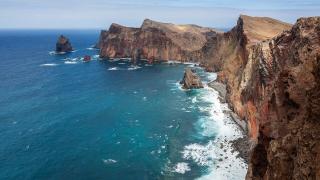
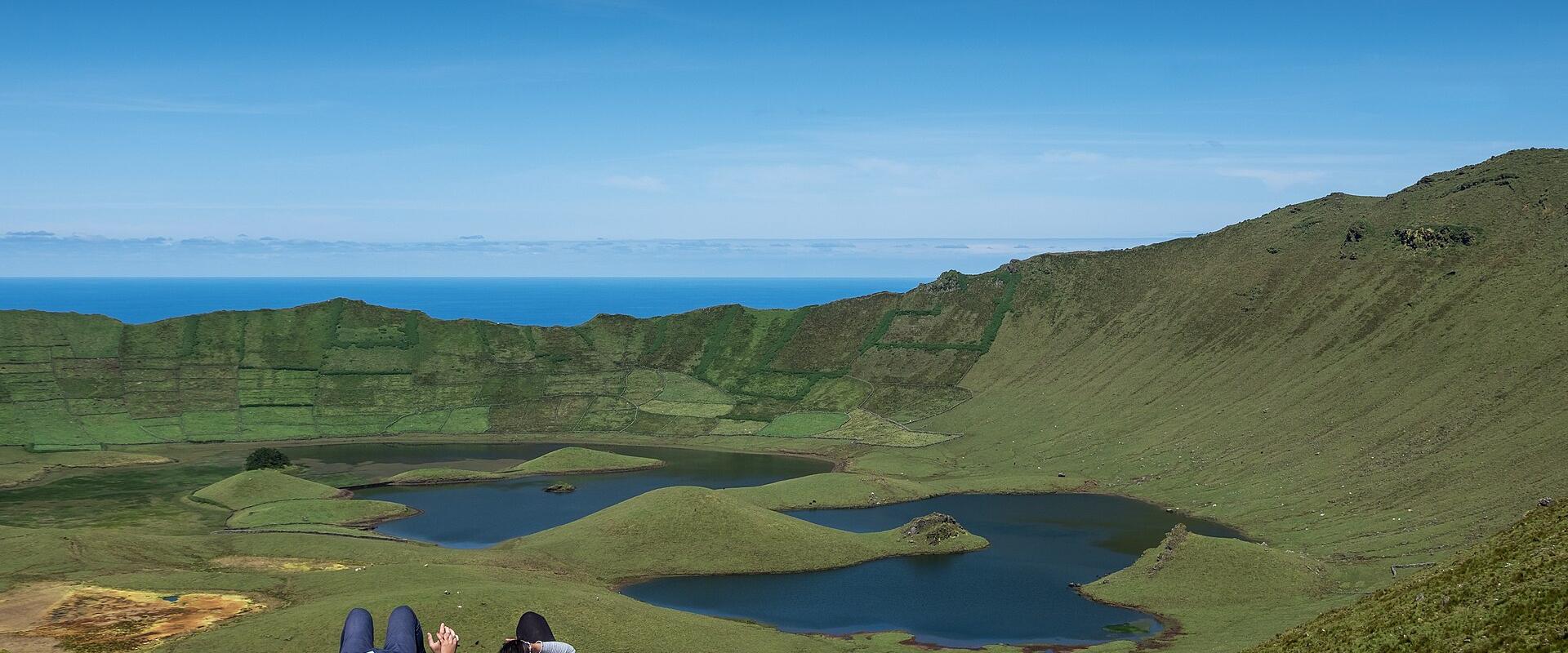
Corvo is the smallest island of the Azores and one of the most remote inhabited places in Europe, a speck of volcanic rock at the northern end of the archipelago, nearer to North America than to the Portuguese mainland. It covers only about seventeen square kilometres, and it has a single settlement, the Vila do Corvo, with fewer than five hundred inhabitants who live in a tight cluster of stone houses, narrow lanes, and small gardens on a low platform of land at the foot of the island's big hill. Nearly all of the island is wild, rising to a high rim of cliffs, and there are no trees in most places, just grass and heath blown by the wind.
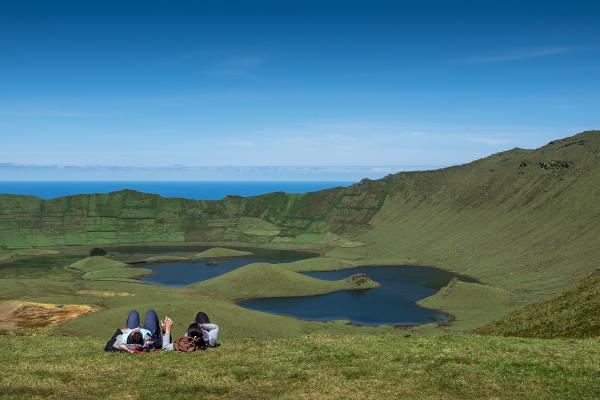
The crater is the island's great feature. The Caldeirão, a vast volcanic caldera about two kilometres across and several hundred metres deep, fills most of the interior, with steep green walls plunging to a floor that holds two small lakes and scattered islets of rock. Its form is nearly perfect, and the sight of it from the rim, when the mist clears, is unforgettable. A road leads up from the village to the rim, and a walking trail circles the crater, a route of a few hours that offers constant views of the caldera, the sea, and the village far below. The trail is moderately demanding, and weather changes quickly, so good footwear and waterproofs are essential.
Corvo is also famous among birdwatchers. In autumn, strong westerly winds blow migrating birds from North America across the Atlantic, and many rare vagrant species end up on the island, which has become one of the best places in Europe to see American birds. Birdwatchers come from all over the continent at this season. The island is part of a UNESCO Biosphere Reserve, recognised for its natural and cultural value.
The pace of life is slow and communal. The people, descended from settlers who arrived in the 16th century, work in farming, fishing, and increasingly in tourism, and the island has a small airport on the lava platform beside the village, with a handful of flights each week from Flores, as well as boats in summer. Services are limited to a few shops, restaurants, and guesthouses, so plan accommodation and meals in advance.
The island suits hikers, birdwatchers, and travellers who value solitude. A day trip from Flores is possible, but staying a night allows time for the crater and the sunset.
Categories
More photos coming soon
Nearby Attractions
Other places to visit in Açores
Frequently Asked Questions
Quick Facts
Best Time to Visit
Late spring to early autumn (May–October) offers mild weather, lush scenery, and optimal conditions for hiking, whale watching, and exploring the Açores.