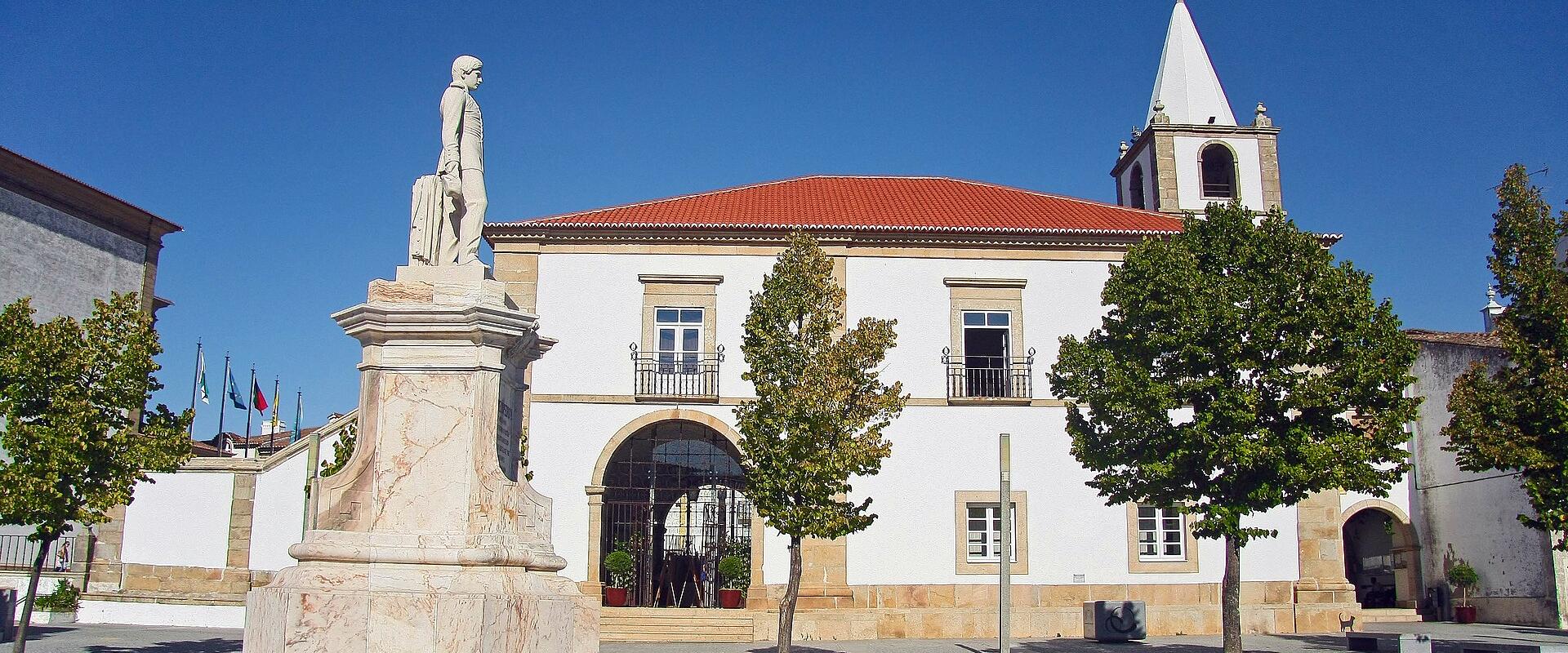
Praça D. Pedro V
Central square with Baroque palaces and church
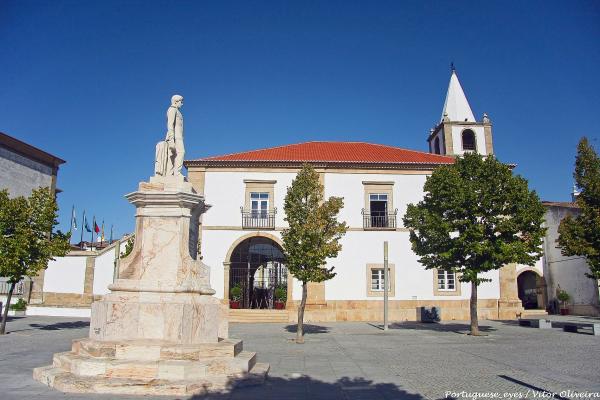
Praça Dom Pedro V is the main square of Castelo de Vide, a small open space in the middle of the old town where the streets meet, and it gives the quickest idea of the town's character. It is paved in stone, shaded in part by trees, and lined by buildings from different periods, so that a short pause on one of the benches or at a cafe table lets you watch daily life go by. The square is named after the 19th-century king Pedro V, and it is the place where the town gathers for markets, festivals and an evening stroll.
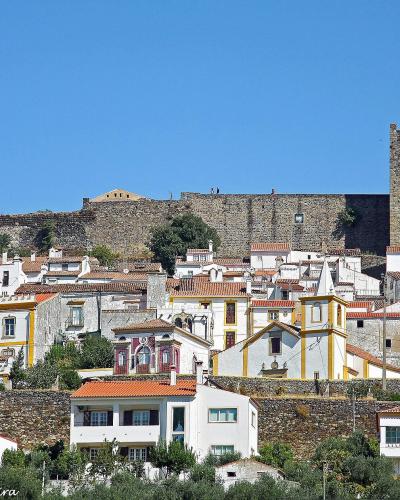
The most prominent building is the parish church, Santa Maria da Devesa, which faces the square and whose Baroque facade, rebuilt in the 18th century, dominates one side. Its interior, with painted ceilings and gilded altars, rewards a short visit. Opposite and around the square stand the town hall and several manor houses with wrought-iron balconies, coats of arms over the doors and tall windows, built by wealthy families in the 17th and 18th centuries, when the town prospered from trade and farming. A stone pillory, or pelourinho, a column that once marked the municipal rights of the town, stands in the open space, and a few steps away, the Fonte da Vila, a fountain in a canopy of arches of the 16th century, is one of the best-known of Castelo de Vide's many fountains.
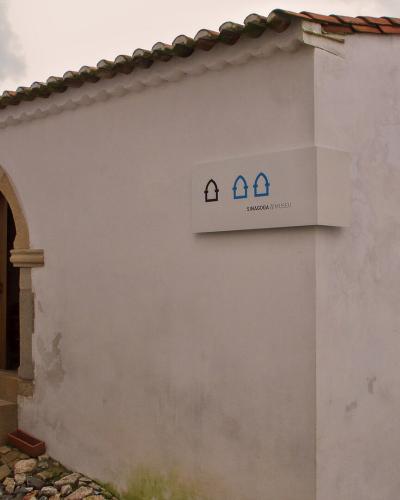
Water is the town's identity. Castelo de Vide has natural mineral springs, and the water, which rises in the hills of the São Mamede range, supplies dozens of public fountains scattered through the lanes, which locals use for drinking and for filling bottles. The abundant water also explains the luxuriance of the gardens, with flowers spilling from balconies and window boxes, and the town is sometimes called the Sintra of the Alentejo, though its charm is quieter. The Fonte da Vila marks the start of a stroll that leads uphill to the Jewish quarter, where the medieval synagogue, one of the oldest in Portugal, is open as a museum, and on toward the castle.
The square is the natural place to start a visit. Cafes with outdoor tables serve coffee, pastries and regional specialities, and nearby restaurants offer dishes of the Alto Alentejo, such as pork with coriander, bread soups and cheeses from the sheep of the surrounding hills. Local shops sell honey, olive oil and handicrafts. The square is open to the public at all times, and it is liveliest in the evening, when residents gather, and on festival days, when the streets are decorated.
Steep, cobbled streets lead off the square, so wear comfortable shoes. Spring and autumn are the best seasons for walking in the town, as summer afternoons are hot. The square suits all visitors and works well as a base for exploring the old town.
Categories
More photos coming soon
Nearby Attractions
Other places to visit in Castelo de Vide
Frequently Asked Questions
Quick Facts
Best Time to Visit
Spring (March-May) and autumn (September-November) offer mild weather and lush scenery, ideal for exploring and outdoor activities.