


River Almonda
Karst river in UNESCO Biosphere Reserve
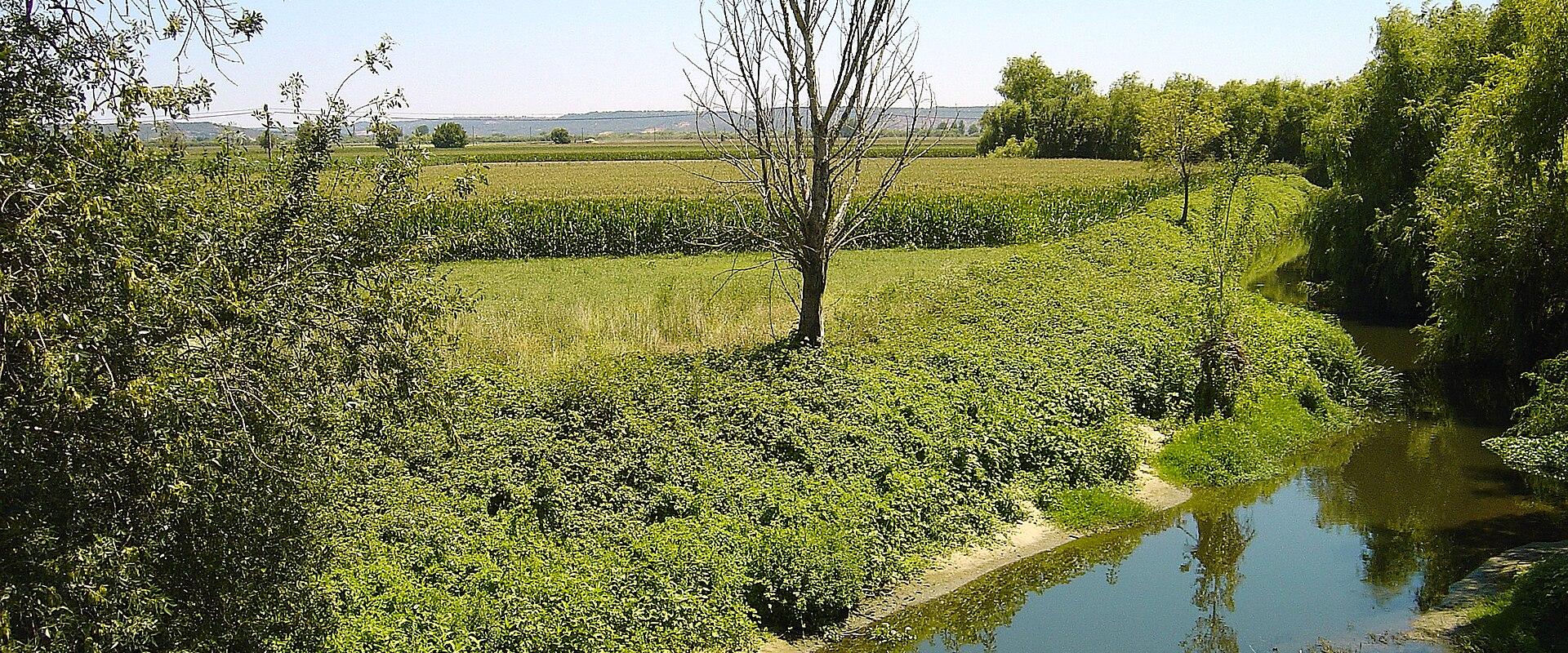
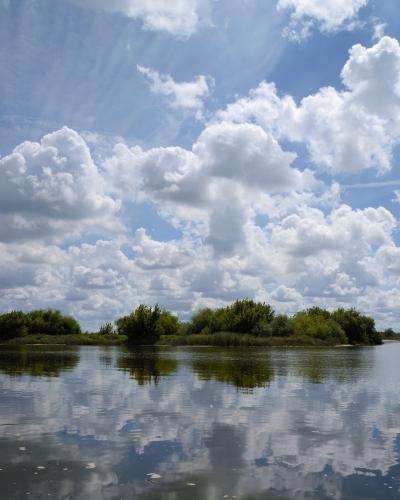
The Almonda is a short river with an unusual story. It rises from karst springs at the foot of the Serra de Aire, in limestone country in the district of Santarém, and flows through Torres Novas before joining the Tagus near Golegã. For much of its course it is a modest stream through farmland, but the last stretch passes into the floodplain of Paul do Boquilobo, a wetland reserve that UNESCO recognised as a Biosphere Reserve in 1981.
The reserve is famous for its birds. Its flooded woodland and reedbeds hold one of the largest heron colonies in Iberia, with species such as cattle egrets, night herons, and spoonbills nesting or visiting through the year. The best season for seeing the colony is spring and early summer, when the trees are busy with nests, while winter brings high water and a very different landscape. The marsh is also a protected wetland of international importance. The mix of water meadows, ditches, poplars, and maize fields makes a landscape that changes with the season, and the flat ground is easy for walking and cycling.
History is present as well as nature. The Almonda karst system includes caves where archaeologists have found traces of very early occupation, among them the Aroeira cave, where a skull of an ancient human ancestor, dated to roughly 400,000 years ago, was discovered. Much of that can only be seen in museums and from reports, but it adds depth to a walk along the valley. The area is also on the route of the Central Portuguese Way of the Camino de Santiago, which passes through nearby Golegã, and pilgrims can be seen walking along country roads. The village of Azinhaga, nearby, was the birthplace of the writer José Saramago.
There are marked routes for walking and cycling near the reserve, and visitors are asked to follow the rules that protect nesting birds and sensitive ground. Bring binoculars, insect repellent in summer, and waterproof footwear in winter, because paths can be muddy. Facilities are limited, so plan food and water.
The area suits birdwatchers, walkers, cyclists, and pilgrims, and travellers who want a quiet side of the Tagus valley away from the main tourist circuits.
Categories
More photos coming soon
Nearby Attractions
Other places to visit in Paul do Boquilobo
Frequently Asked Questions
Quick Facts
Best Time to Visit
Spring (March-May) and autumn (September-October) offer mild weather, peak birdwatching, and lush landscapes for exploring Paul do Boquilobo’s trails and wetlands.