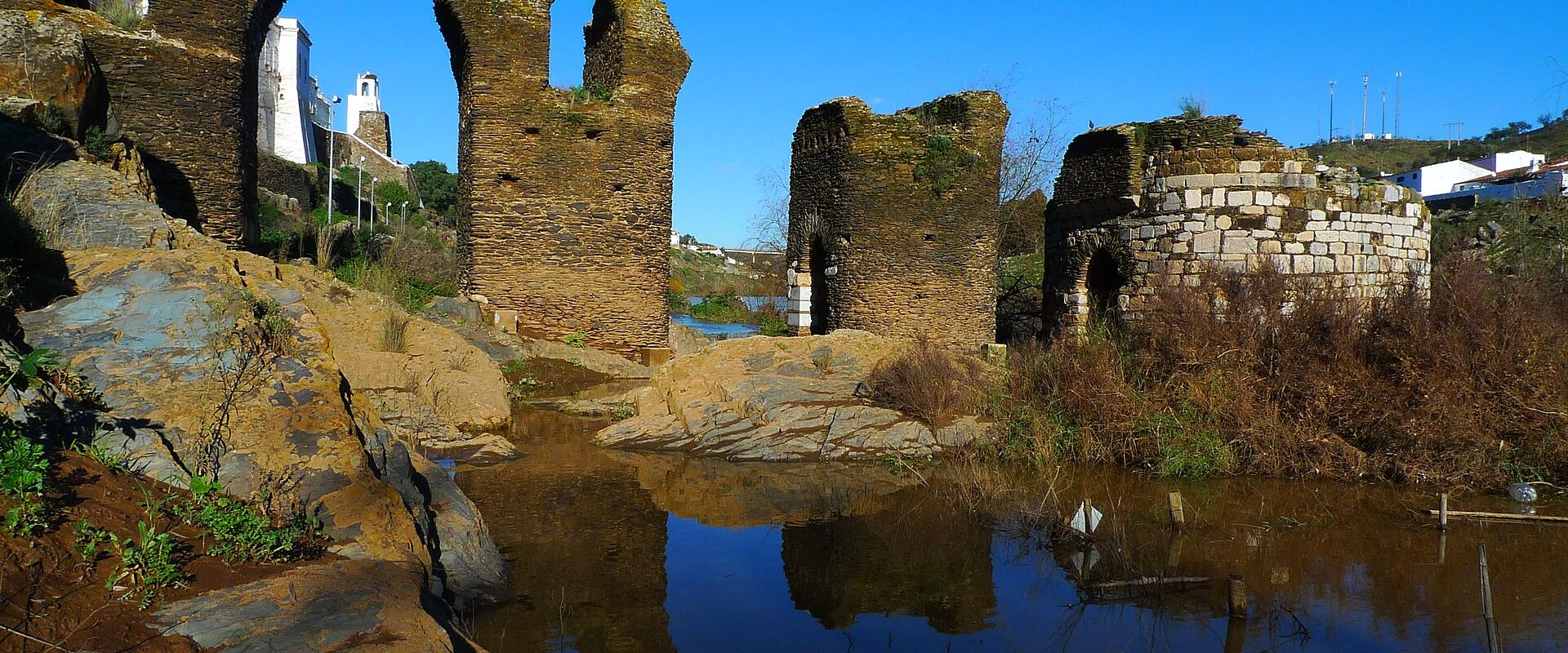
Roman Remains (Cryptoporticus, Torre Couraça, Roman Roads)
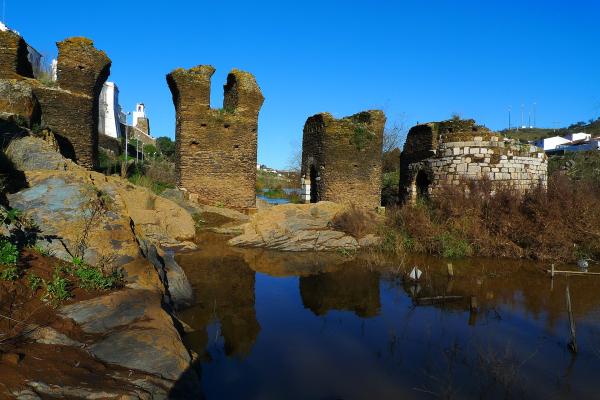
Roman ruins in Mértola, Portugal
Mértola was a significant Roman port, known as Myrtilis Iulia, on the Guadiana river at the head of its navigable stretch. Ore from the copper and pyrite mines of the region, and agricultural produce from the Alentejo, were carried here and loaded onto ships bound for the Mediterranean. The town's Roman past is not set apart from the present, as the remains lie under and among its streets, and the visitor can find them one by one while exploring.
The best-known is the cryptoporticus, a vaulted underground gallery that formed part of the foundation of the Roman forum. Romans often built such structures to create a level platform on sloping ground, and the gallery is a fine piece of engineering, with stone walls and a barrel-vaulted ceiling. Today it lies beneath the town hall and is part of the Roman Museum, in a cool, dimly lit space. The museum also displays objects found in the town, including pottery, glassware, coins, funerary stones and mosaics, and gives a picture of life in Roman Myrtilis.
Another key site is the early Christian basilica, in the area near the Rossio do Carmo, which shows how Mértola remained an important place after the empire fell, with a Christian community that left inscriptions and burials. The town continued as a centre under Visigothic, Islamic and later Christian rule, and it is this continuous history that has given Mértola its name as a vila museu, where the sites are scattered across the town as a living museum.
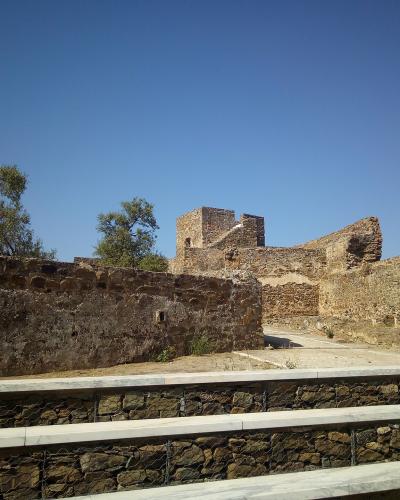
The Torre do Rio, with its fortified walkway known as the Couraça, belongs to the later defences. It stands at the water's edge, and the walkway runs down from the castle to the river, protecting the access to the water and the port. It is medieval in origin rather than Roman, but it is part of the same story, showing how the river harbour remained a point to be defended. The tower now holds a small exhibit about the river's history and offers a view over the Guadiana. Traces of the Roman road network can also be found in the surrounding countryside, linking Mértola with other towns of the province.
The old town is compact and best explored on foot. Steep lanes lead past the castle, the former mosque, the museum and the riverside, and distances are short. Wear comfortable shoes, since the streets are cobbled and steep. Opening times vary between the museums and sites, and some close at lunchtime or on Mondays, so check locally and consider buying a combined ticket. Spring and autumn are the most comfortable seasons, as summers in the Guadiana valley are very hot. The visit suits history lovers and anyone interested in Roman archaeology, and it works well as a day trip from the Algarve or from Beja.
Categories
More photos coming soon
Nearby Attractions
Other places to visit in Mértola
Frequently Asked Questions
Quick Facts
Best Time to Visit
Spring (March-May) and early autumn (September-October) offer warm, pleasant weather and vibrant landscapes for exploring Mértola’s history and natural park.