Madeira is small, about 57 km from east to west, but its mountains make distances feel longer. A network of expressways (the "VE" and "VR" roads) cuts through the hills in tunnels and links the main towns quickly, while the older regional roads wind up to passes and viewpoints. Driving yourself is the most flexible way to see the island, and four days is enough for a full circuit without rushing.
Before you set off
- Car size: pick a small car with a decent engine. Roads to viewpoints are steep, narrow and full of hairpins.
- Use the tunnels to save time, the old roads for views. Most of the scenic driving is on regional roads above or alongside the expressways.
- Check the weather by altitude. It can be sunny in Funchal and foggy on the plateau. Regional webcams help you decide which side of the island to head for.
- Trail reservations: since 1 January 2026, Madeira's classified walking trails (PR routes) require an online booking through the SIMplifica portal, with 30-minute entry slots. Non-residents pay an access fee in advance: €4.50 per person for most trails according to Visit Madeira, with higher fees on some routes. Check each trail's status on visitmadeira.com before you drive to a trailhead.
Day 1: Funchal to the west along the south coast
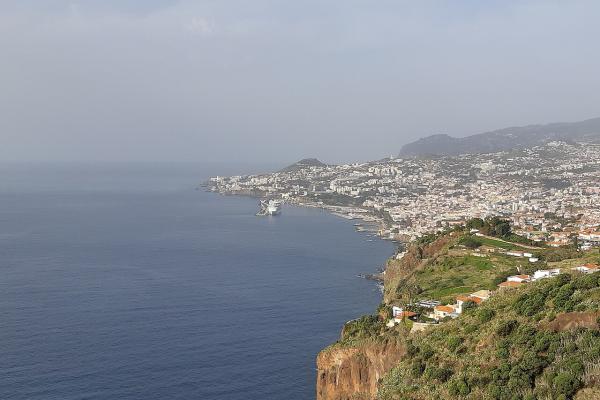
Leave Funchal for Câmara de Lobos, a fishing town with brightly painted boats in its small harbour. A few minutes further on, Cabo Girão has a glass-floored skywalk at the top of one of Europe's highest sea cliffs, about 580 metres above the shore.
Continue west through Ribeira Brava, then on to Ponta do Sol and Calheta, which has a man-made sandy beach in a sheltered marina. Funchal to Calheta takes well under an hour on the expressway, so there is time to stop wherever you like. Base yourself in the west or return to Funchal.
Day 2: Porto Moniz, Seixal and the north coast
From Calheta, take the regional road up to Paul da Serra, the island's high plateau, and then down to Fanal, an area of ancient laurel trees in the Laurisilva of Madeira, a UNESCO World Heritage site since 1999. On a misty morning the twisted trees look unreal. Walk only on paths and respect fences around grazing land.
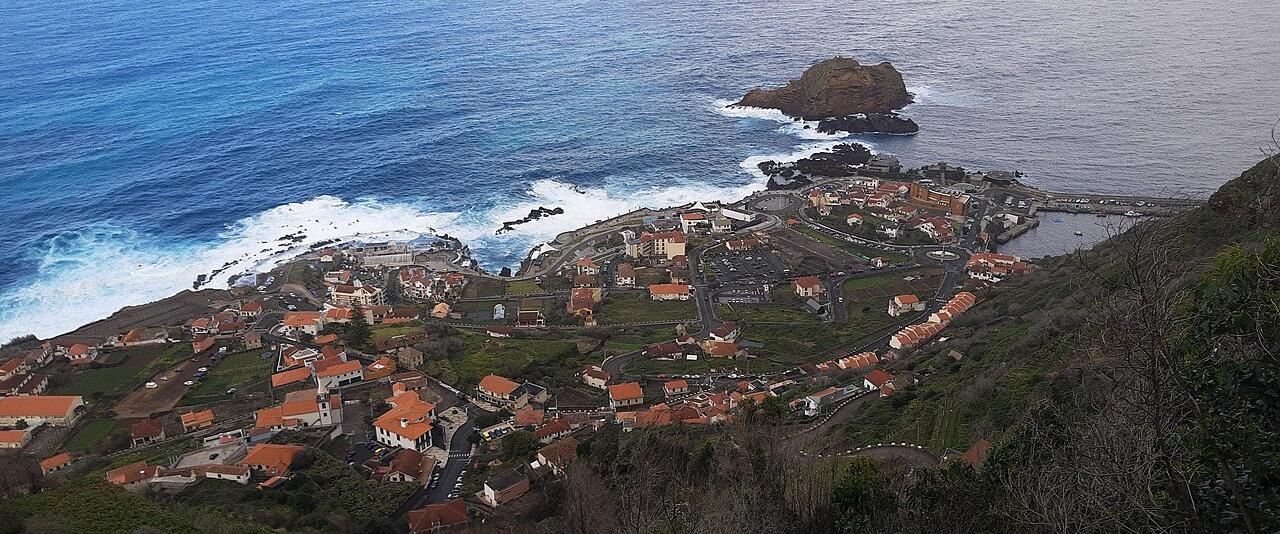
Descend to Porto Moniz on the northwest tip, known for its natural lava rock swimming pools filled by the sea. One complex is managed and ticketed, and there are also free natural pools nearby. Then drive east along the north coast to Seixal, with a black-sand beach under green cliffs, and stop at the Véu da Noiva waterfall viewpoint.
Day 3: São Vicente, Santana and the northeast
São Vicente has a volcanic cave system, the Grutas de São Vicente, with a guided visit through lava tubes. From there, follow the coast east to Santana, best known for its triangular thatched houses, a traditional building style preserved in the town centre.
From Santana, Pico Ruivo, the island's highest peak at 1,862 metres, can be reached on a short trail from Achada do Teixeira. The longer and more famous PR1 Vereda do Areeiro links Pico do Arieiro to Pico Ruivo; it reopened in 2026 after works, and it is a demanding mountain walk. Book the slot in advance and check its current status and direction rules before committing.
In the afternoon, continue to Machico, the town where Portuguese navigators first landed, and Caniçal.
Day 4: Ponta de São Lourenço and Pico do Arieiro
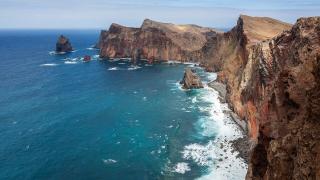
The eastern tip of the island, Ponta de São Lourenço, is a dry, windswept peninsula of red and ochre rock that looks nothing like the green interior. The PR8 trail along it is one of the most popular walks on the island. Start early: there is little shade and parking fills quickly.
Finish with the drive up to Pico do Arieiro, at about 1,818 metres the island's third-highest peak and reachable by car. On clear days you see over the cloud layer towards the central mountains. Sunrise and sunset are popular, so expect company and dress for cold at the top.
Driving tips
- Fuel and parking: fill up in the main towns before heading to the plateau. Parking at popular trailheads and viewpoints is limited; arrive early.
- Mountain roads: use low gears on long descents and give way where the road narrows.
- Rain: after heavy rain, rockfalls can close roads, especially on the north coast. Follow closures and local advice.
- Where to stay: Funchal is the most practical single base. If you prefer to move, split nights between the south coast and the north.