Funchal at a Glance
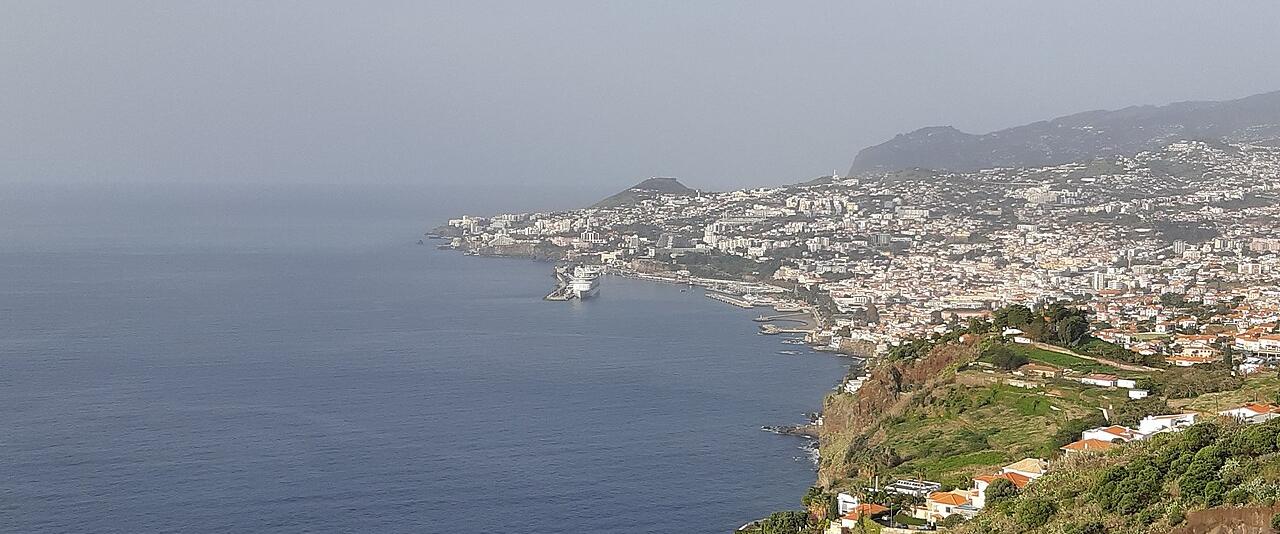
Funchal is the capital of Madeira and home to around a third of the island's population. It is built on a natural amphitheatre of hills rising steeply from a bay on the south coast, so the centre is compact and close to the sea, while the suburbs climb hundreds of metres up the slopes. The city was founded in the 15th century, soon after Portuguese settlement of the island, and grew rich on sugar and later on Madeira wine.
Most visitors base themselves in Funchal and explore the rest of the island from there. The city itself deserves two or three days.
The Old Town and Painted Doors
The Zona Velha, the old quarter at the eastern end of the seafront, is the oldest part of Funchal. Its main street, Rua de Santa Maria, is known for its painted doors: since 2010, an arts project has invited artists to decorate the doors of houses and shops along the street, turning it into an open-air gallery. The area is full of restaurants and bars, busy in the evenings.
At the eastern edge stands the Fortaleza de São Tiago, a yellow-painted 17th-century fort by the sea, with the small Barreirinha beach complex nearby.
The Market and the City Centre
The Mercado dos Lavradores, opened in 1940 in an Art Deco building decorated with tile panels, is the city's main market. The upper galleries sell fruit, vegetables and flowers, including tropical fruit grown on the island, and the fish hall downstairs displays black scabbardfish (espada) and tuna. Prices on the tourist-facing fruit stalls can be high, so ask before buying.
In the centre, the Sé, Funchal's cathedral, dates from the late 15th and early 16th centuries and has an elaborate wooden ceiling. Nearby are the main shopping streets, the Jardim Municipal and the seafront promenade. The CR7 Museum, dedicated to Madeira-born footballer Cristiano Ronaldo, is by the marina.
Monte: Cable Car, Gardens and Toboggans
The Funchal cable car runs from the Zona Velha up to Monte, a hillside parish about 550 m above sea level, in a ride of around 15 minutes. At Monte you can visit:
- The Church of Nossa Senhora do Monte, which holds the tomb of Charles I, the last Austro-Hungarian emperor, who died in exile on Madeira in 1922.
- The Monte Palace Tropical Garden, a large garden with exotic plants, lakes and a collection of tile panels and minerals.
The traditional way down is the Monte toboggan: wicker sledges on wooden runners, steered down the steep streets by two drivers in white clothes and straw hats. The ride goes part of the way to the city, ending at Livramento, from where you take a taxi or walk down. A second cable car links Monte with the Madeira Botanical Garden, which has terraced beds, native Madeiran plants and views over the bay.
Madeira Wine
Madeira wine is a fortified wine heated during ageing, which makes it unusually long-lived. Several wine lodges in central Funchal run tours and tastings, including the Blandy's Wine Lodge in a former Franciscan monastery building. Tastings usually cover the four main grape styles, from dry Sercial to sweet Malvasia.
Food to Try
Local specialities include espetada (beef skewers on bay-leaf sticks), espada (black scabbardfish), often served with banana, bolo do caco (a flat bread usually spread with garlic butter), limpets grilled with garlic, and poncha, a drink made from sugarcane rum, honey and citrus. Many restaurants in the Zona Velha serve all of these.
Practical Tips
- Getting around: The centre is walkable, but the hills are steep. Local buses (Horários do Funchal) serve the upper districts, and taxis are plentiful.
- From the airport: Madeira Airport is about 20 km east of Funchal. An airport bus and taxis connect it with the city.
- Timing: Funchal's climate is mild year-round. Book ahead for the Flower Festival in spring and the New Year period, when accommodation fills up.
- Opening hours: Check current hours and prices for the cable cars, gardens and toboggans on their official websites, as they change by season.
- Day trips: Organised tours and rental cars leave from Funchal for the levadas, Pico do Arieiro, the north coast and Cabo Girão, the high sea cliff with a glass-floored viewpoint west of the city.
Funchal also has a long seafront promenade running west from the marina towards the hotel district of the Lido, where the Lido bathing complex offers seawater pools, since the city has few sandy beaches. The promenade is flat, which makes it one of the few easy walks in a hilly city, and it is a good place to watch cruise ships come and go.