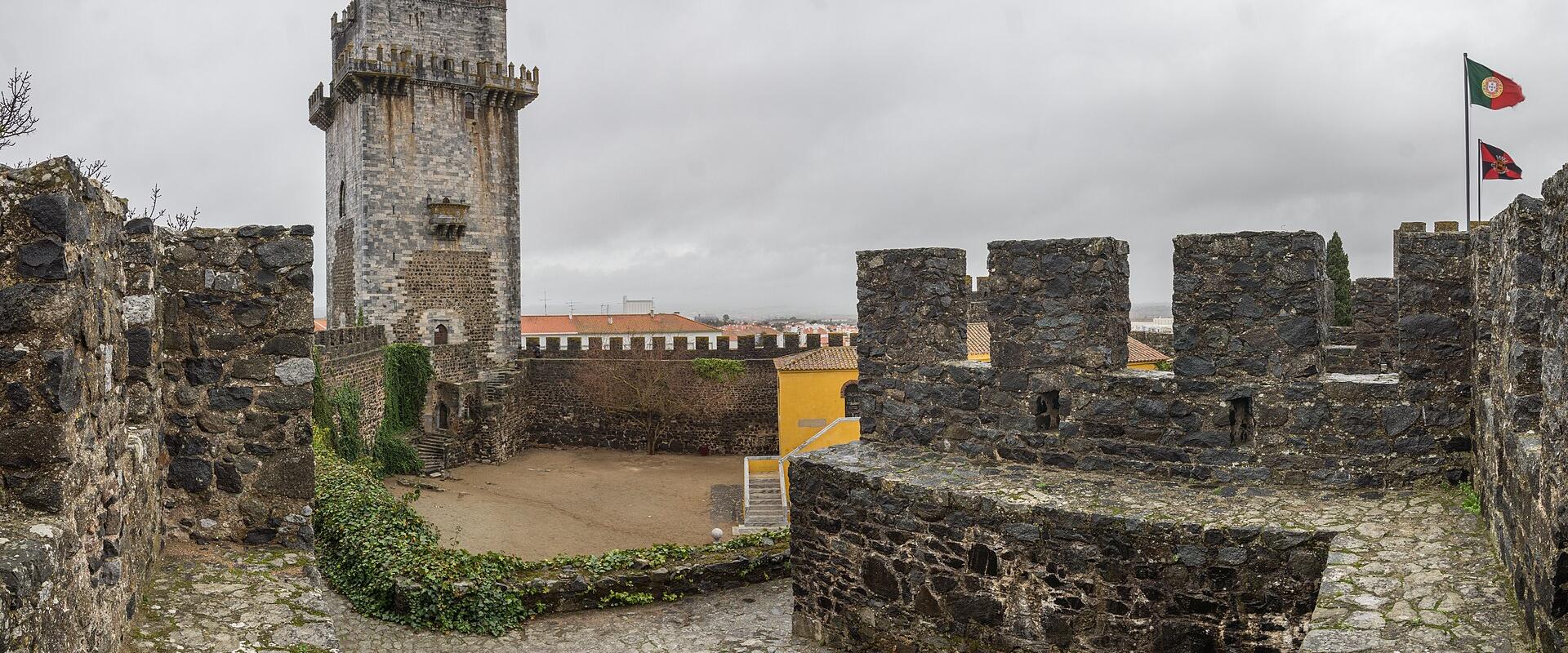
Beja Castle
13th-century Gothic keep, the highest military tower in P...
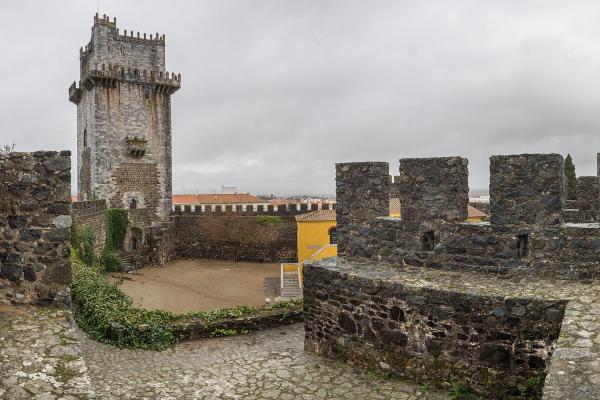
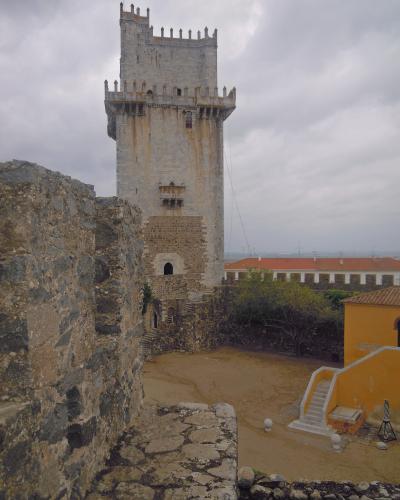
Beja Castle is unusual in that it stands in the middle of a town on the plain rather than on a mountain top, and what it lacks in height, it makes up with its keep, a Gothic tower of nearly 40 metres, one of the tallest medieval military towers in Portugal. Rising above the whitewashed roofs, it can be seen from far across the Alentejo, and it is the town's landmark. The castle occupies the highest ground of the old centre, in a district of low houses and narrow streets, and a climb to the top gives the best view of the plain.
The town's history goes back more than two thousand years. The Romans founded a colony here, called Pax Julia, which became one of the main towns of southern Lusitania, and the walls of the castle follow the line of the Roman defences in part. The Visigoths held the town after the Romans, and under Muslim rule, as Baja, it was an important centre. The Christian conquest in the 13th century brought it into the Portuguese kingdom, and King Dinis then rebuilt and strengthened the fortress, in the late 13th and early 14th centuries, giving it the keep that we see today.
The keep is the main attraction. Square in plan, with walls of granite and marble and battlements at the top, it contains three vaulted rooms, one above the other, with ribbed vaults in the Gothic manner, which are the finest interior of their kind in the country. A narrow stone stair of about two hundred steps leads up inside the walls to the roof terrace, from which the view over the plain, the town and the horizon is wide, particularly beautiful in spring, when the fields are green. One of the rooms holds a small military museum, with weapons and objects, and temporary exhibitions are held in the other spaces. Remains of the town walls, with the foundations of towers and parts of the ramparts, can be seen around the castle, and the lanes nearby retain the pattern of the medieval town.
Because of the stairs and uneven floors, the keep is not suitable for visitors with mobility problems, and dogs are not allowed inside. Opening hours are daily, with a break in the middle of the day, and a modest ticket price. Summer afternoons in Beja are among the hottest in Portugal, so plan the visit for the morning or late afternoon.
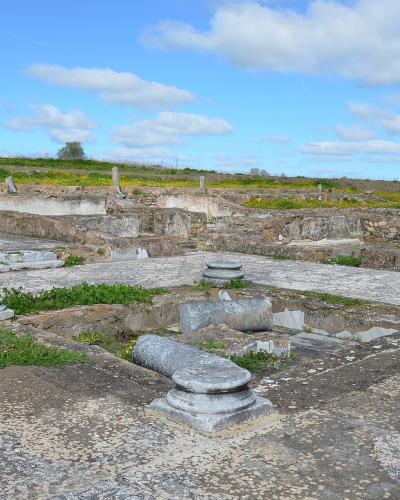
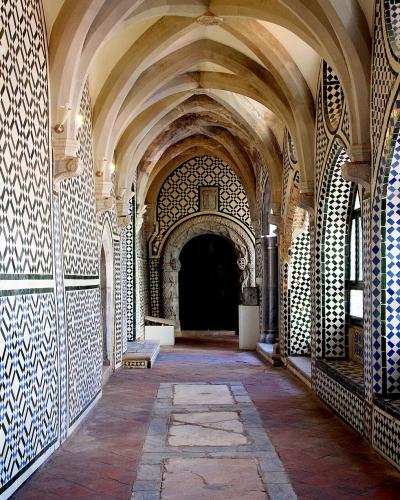
Beja has much else to see. The convent of Nossa Senhora da Conceição, now a museum named after Queen Leonor, is linked with the story of the nun Mariana Alcoforado and her famous love letters, and houses a fine collection of tiles and paintings. The Roman villa of Pisões lies outside the town. The castle suits history lovers, photographers and anyone who likes a climb with a reward.
Categories
More photos coming soon
Opening Hours
Hours
Daily
Nearby Attractions
Other places to visit in Beja
Frequently Asked Questions
Quick Facts
Best Time to Visit
Spring (mid-April to mid-June) and autumn (mid-September to early October) offer warm, pleasant weather and vibrant countryside for exploring Beja.