






Cabinet Of Curiosities
18th-century collection of exotic objects
The Cabinet of Curiosities at the University of Coimbra is a room where the 18th-century idea of knowledge is put on display, in a way that makes you stop and look. It forms part of the university's Science Museum, which occupies the Colégio de Jesus, the old Jesuit college on the Largo Marquês de Pombal, in the upper town. The setting is fitting, because the history of science in Coimbra is bound up with the reforms that gave the university its modern shape.
Cabinets of curiosities, called Wunderkammern in German, were a European fashion from the 16th to the 18th centuries. Rich collectors and learned institutions assembled objects from nature and art, such as shells, minerals, fossils, stuffed animals, skeletons, scientific instruments, exotic artefacts from distant lands and oddities of every kind, and arranged them in rooms meant to amaze and to provoke thought. In the age of discovery, when Portuguese ships returned from Africa, Asia and Brazil with unfamiliar plants and animals, such collections were a way of making sense of a rapidly expanding world. They were seen as a miniature theatre of the world, in which the visitor could survey creation in a single room.
In Coimbra, this tradition took institutional form after 1772, when the Marquês de Pombal reformed the university and founded new faculties of mathematics and natural philosophy. He brought in the Italian naturalist Domenico Vandelli to create a natural history museum and a botanical garden, and cabinets for physics and chemistry were established, with instruments bought from the best makers in Europe. Over the following two and a half centuries, the university's scholars and researchers collected specimens and objects, which were later brought together in the Science Museum. The cabinet draws on this accumulation.
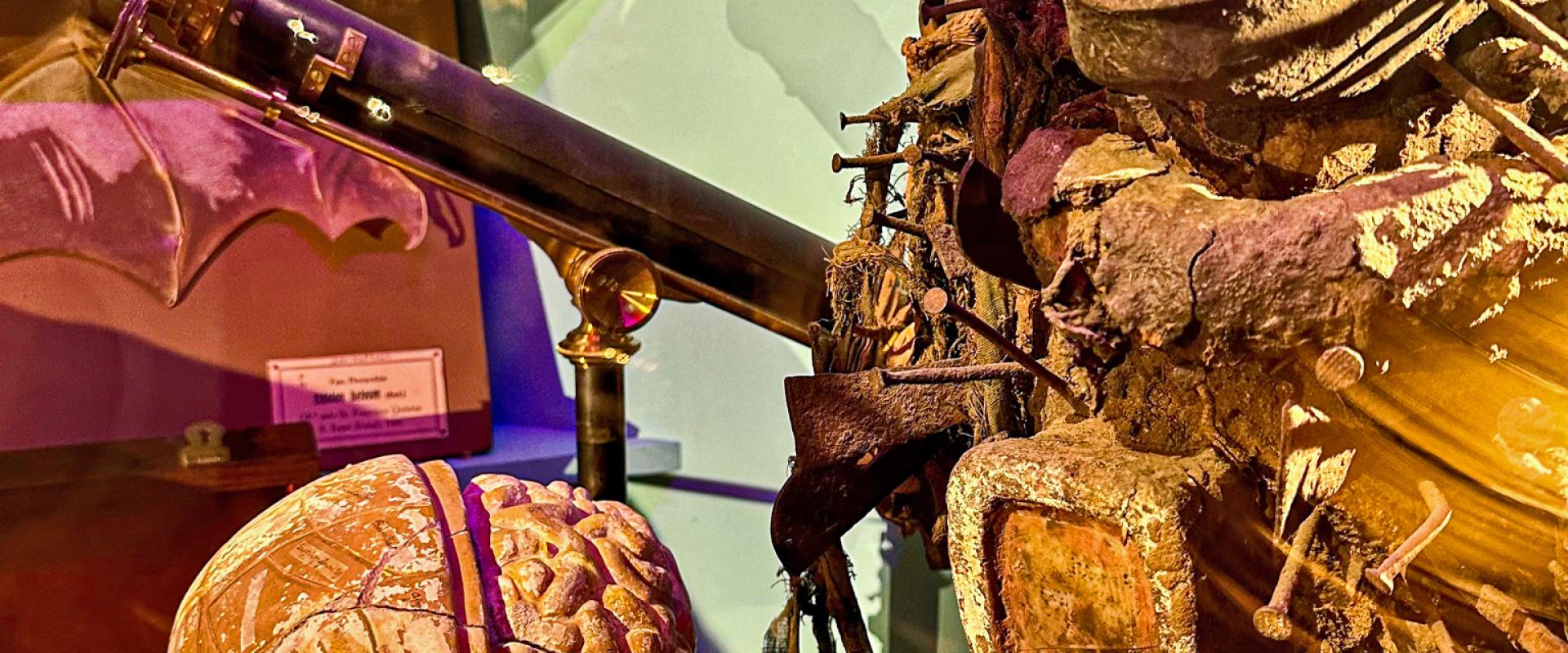
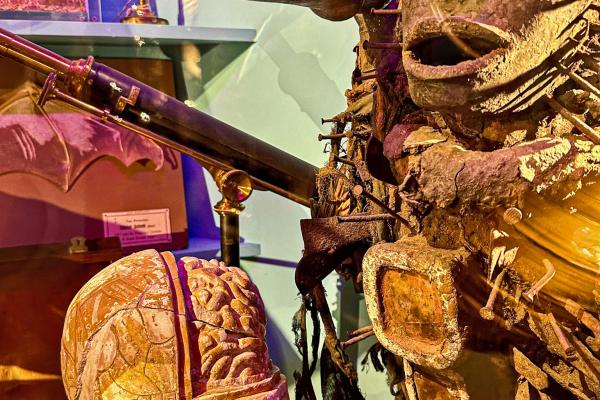
The room has been designed as an experience rather than a classic display. Objects are arranged on shelves and in cases, without explanatory labels, so that visitors look and form their own impressions, and the lighting changes slowly, creating moods and bringing different items into view. The collection includes natural specimens, curiosities, antique instruments and unusual artefacts, and the atmosphere is meant to recall the wonder that visitors felt in the 18th century. Children often enjoy it, because the objects spark questions without a lecture. Those who want more information can find it in the museum's other rooms, which show the physics and chemistry laboratories and temporary exhibitions.
The cabinet is included in the museum's general ticket, and opening times vary, so check ahead. A visit takes about half an hour for the cabinet and an hour or more for the whole museum. It combines naturally with the university, the botanical garden and the cathedral in the upper town. The cabinet suits families, science lovers and anyone who enjoys the strange and beautiful.
Categories
More photos coming soon
Nearby Attractions
Other places to visit in Coimbra
Frequently Asked Questions
Quick Facts
Best Time to Visit
Spring (March-May) and autumn (September-October) offer warm, pleasant weather and vibrant city life for exploring Coimbra’s historic sites and gardens.