
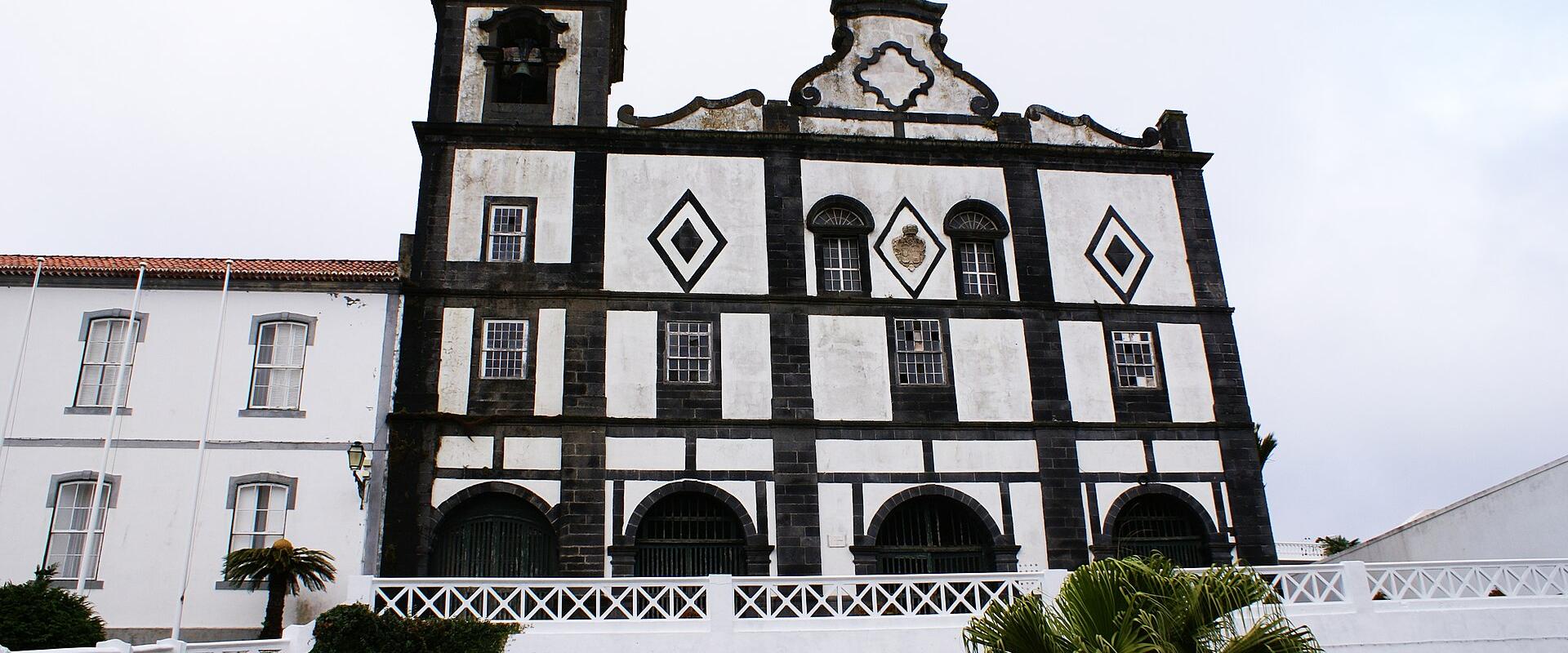
Church of Nossa Senhora do Rosário
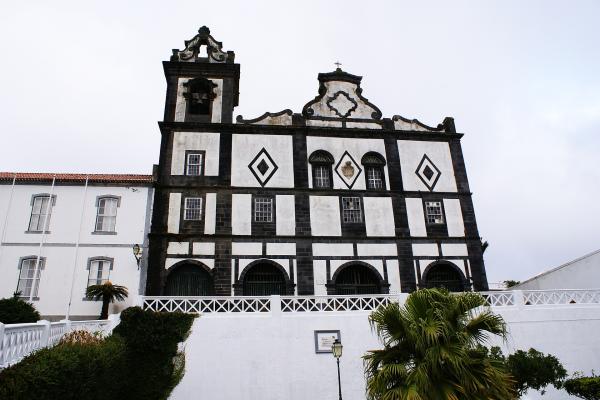
Church in Fag a de Cub res, Sao J orge
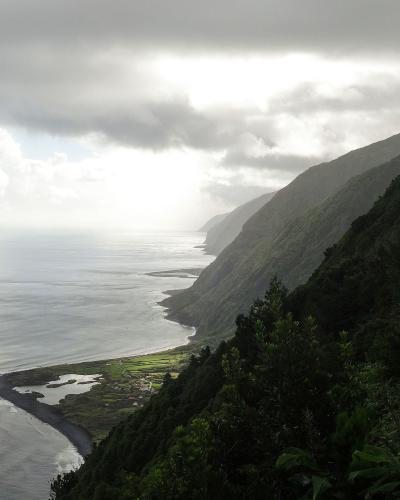
The Fajã dos Cubres is one of the most remote and photogenic settlements on São Jorge, the long, narrow island in the central group of the Azores, and the small church of Nossa Senhora do Rosário belongs to its tiny community. A fajã is a flat apron of land at the foot of a steep cliff, formed by lava flows or by landslides that built a platform at the water's edge, and São Jorge has dozens of them. Cubres is reached by a winding road that drops steeply from the plateau above, and the sense of arriving in a hidden place is part of the experience.
The church is small and typical of the island. Its walls are whitewashed, with black basalt used around the door, windows, and corners, a combination seen on churches and houses throughout the Azores, and its bell tower is simple. Inside, the space is modest, with a single nave, a plain altar, and a few images of saints, reflecting the devotion of a village that has always been small. In a community like this the church is not only a place of worship but also a meeting point where news is shared, feast days are celebrated, and people gather for baptisms and funerals. The Holy Spirit festivals, which are the most important popular religious celebrations in the Azores, are marked in villages across the islands with processions and communal meals, and small settlements such as this keep them alive.
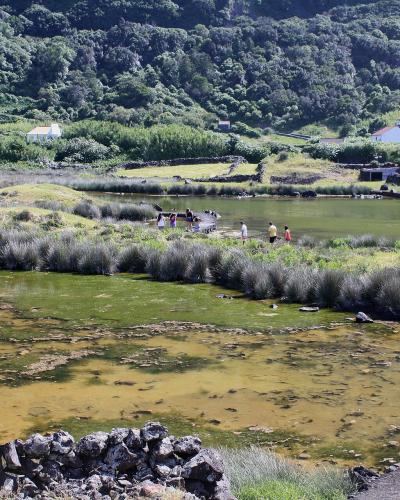
The setting is spectacular. The fajã stretches along the coast with a few houses, fields, and small farms, and behind it a lagoon is separated from the sea by a bank of stones. The lagoon is a protected area and a refuge for waterbirds, and it is a quiet spot for bird-watching. Cliffs rise hundreds of metres behind, covered in green pasture and hydrangeas, and waves break on a rocky shore in front. A path leads along the coast to the neighbouring Fajã de Santo Cristo, which is accessible by foot and is known for its surf and lagoon.
Visitors should treat the church as a place of worship, with respect for any services. It is often closed outside service times, so the exterior and the setting are the main interest. The road down is steep and narrow, so drive carefully, and bring water and sun protection, since there are few facilities.
The visit suits photographers, walkers, and travellers who enjoy remote places. A few hours here, including a walk along the shore, makes a good half-day.
Categories
More photos coming soon
Opening Hours
Hours
No specific opening hours provided in the source material.
Nearby Attractions
Other places to visit in Fajã dos Cubres
Frequently Asked Questions
Quick Facts
Best Time to Visit
April to September offers mild weather, clear views, and vibrant birdlife—ideal for hiking, nature walks, and exploring Fajã dos Cubres’ lagoon and trails.