





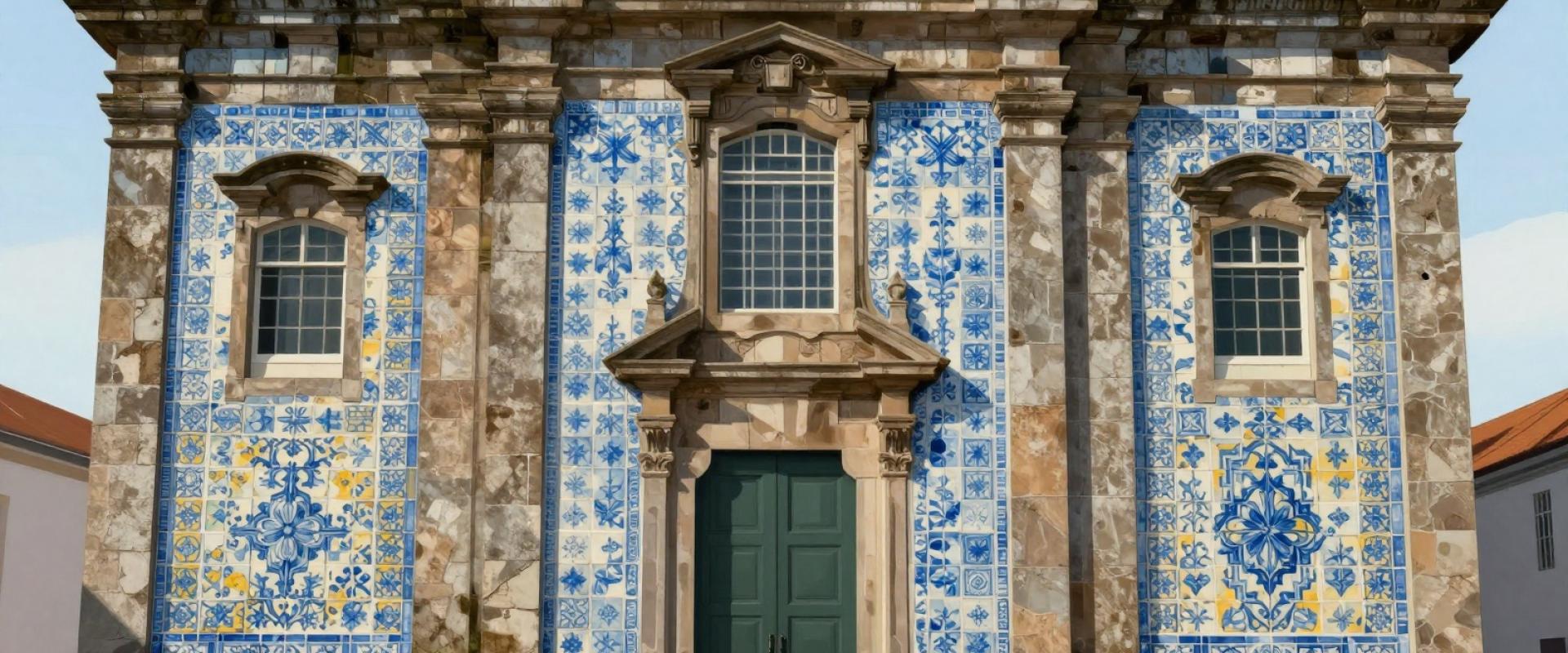
Church With Gorgeous Floor-to-ce Azulejos (Santarém)
Church with floor-to-ceiling azulejos in Santarém
Azulejos, the glazed tiles that cover walls throughout Portugal, reach their most impressive effect in churches, where they can wrap an entire interior in blue and white pictures from floor to ceiling. Santarém, the old Gothic town above the Tagus, has several churches where tiles play a leading role, and the best known is the church of Santa Maria de Marvila, whose interior is covered with tiles of the 17th century. The visit is a lesson in how a simple technique became a national art.
The tradition of tilework in Portugal came from the Muslim and Spanish world. Early tiles were made in the Moorish technique, with raised outlines separating colours, and they covered walls and floors in geometric patterns. During the 16th and 17th centuries, workshops in Lisbon and elsewhere began producing flat painted tiles in carpet-like designs, in which repeating patterns of flowers, leaves and geometric forms created the impression of a woven textile on the wall. In the late 17th and the 18th century, the great age of the Baroque, tile painters such as Policarpo de Oliveira Bernardes and António de Oliveira Bernardes created huge narrative panels in blue and white, telling the lives of saints in scenes of dramatic movement. Churches across Portugal commissioned these panels, which were cheaper than carved stone or frescoes and gave a bright, easy-to-clean surface.
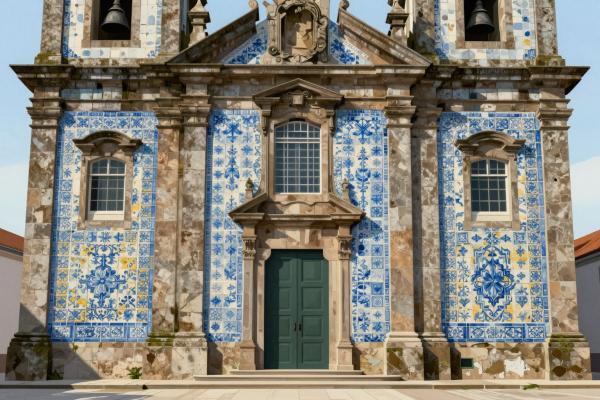
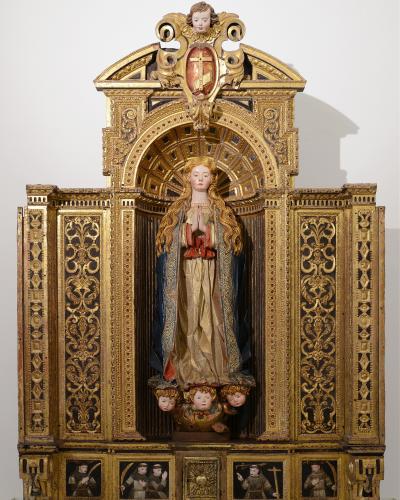
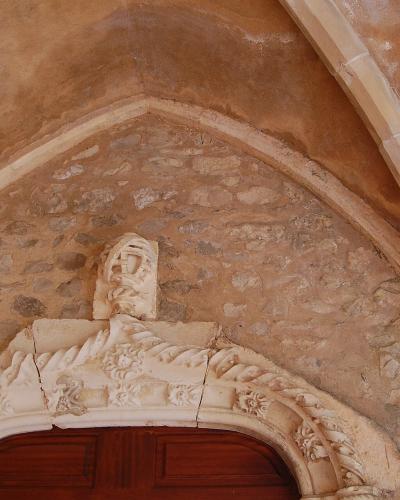
At Marvila, the Gothic building has a Manueline portal of the early 16th century, beautifully carved, but the interior is a surprise, as the walls of the nave are covered with tiles in a pattern that recalls tapestry, in yellow, blue and white. The altarpieces and gilded woodwork add a warm, rich note, and the effect is of a space wrapped in colour and pattern. The calm light that filters through the windows makes the tiles glow. Other churches in the town, such as the church of Graça, with its great rose window, and the Misericórdia, offer a contrast in style, so a walk between them shows several periods.
When visiting, take time to look at the details. Tile panels often carry inscriptions, dates and the painter's mark, and you can see how the glaze catches light. The churches are places of worship, so be quiet and respectful, and check the opening hours at the tourist office, as they often close at lunchtime and may be open only for part of the day. Photography rules vary.
The church fits easily into a walk through Santarém's historic centre, which includes the Jardim das Portas do Sol viewpoint, the Holy Miracle church, the diocesan museum and the main square. The visit suits those who love art, ceramics and old buildings, and it takes about half an hour. Wear comfortable shoes, as the streets are steep.
Categories
More photos coming soon
Opening Hours
Hours
Not found
Nearby Attractions
Other places to visit in Santarém
Frequently Asked Questions
Quick Facts
Best Time to Visit
Spring (mid-April to mid-June) and autumn (mid-September to early October) offer mild weather and vibrant scenery for exploring Santarém’s historic sites.