Douro International Natural Park
Border park with Egyptian vulture and almond blossoms
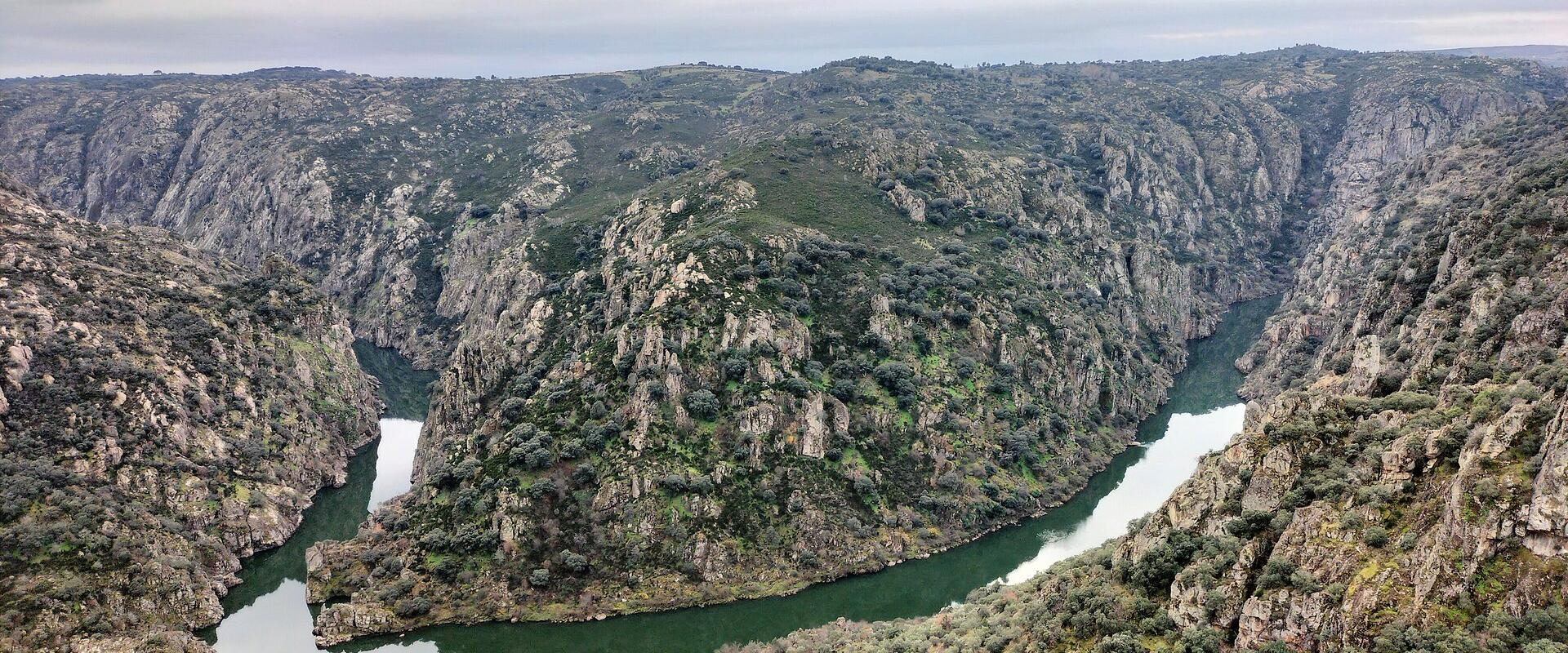
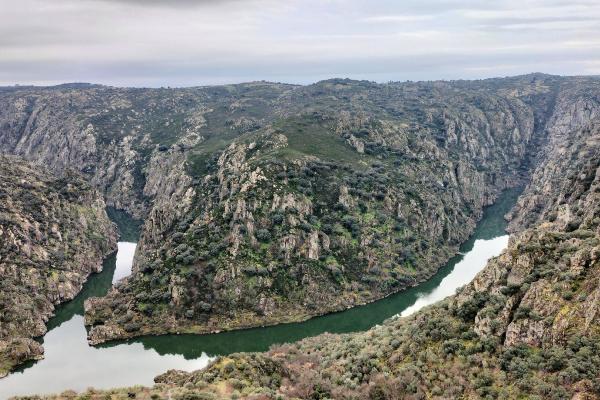
The Douro International Natural Park protects a long stretch of the river canyon where the Douro forms the border between Portugal and Spain, in the north-east of the country. It was created in 1998 and runs along the river and its tributary the Águeda for roughly a hundred kilometres, taking in parts of the municipalities of Miranda do Douro, Mogadouro, Freixo de Espada à Cinta, and others. Seen from the plateau above, the landscape seems flat and dry, with fields, stone walls, and scattered oaks, but the plain suddenly drops away into a gorge that is in places more than two hundred metres deep.
The canyon is the park's great feature. The river has cut through hard granite and schist over millions of years, leaving steep, rocky walls, crags, and ledges that are almost inaccessible to people. That isolation has made them a refuge for cliff-nesting birds. The Egyptian vulture is a symbol of the park, a small, white and yellow scavenger that arrives from Africa to breed on the ledges each spring, and the area also supports griffon vultures, black storks, golden and Bonelli's eagles, and eagle owls. Viewpoints on the plateau, such as the one at Penedo Durão, are good places to watch birds riding the air currents above the gorge. Binoculars are a great help.
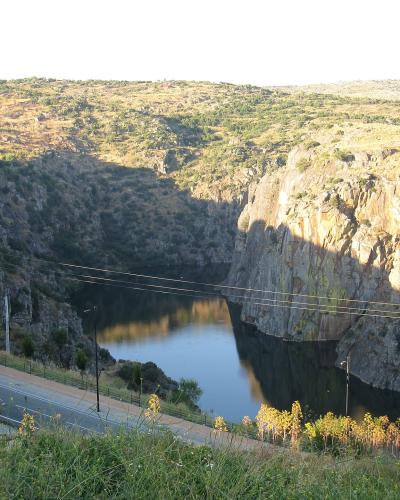
The river itself has been changed by a series of hydroelectric dams, including Miranda, Picote, and Bemposta, which turned it into a chain of long, narrow reservoirs. This has not removed the beauty of the gorge, and boat cruises from Miranda do Douro and other points take visitors between the cliffs, giving a very different view from the one above. The commentary often covers geology, birds, and the old smuggling routes that crossed the river.
Spring is a particularly attractive season. Almond trees bloom in late winter and early spring, especially around Freixo de Espada à Cinta, which is known for its almonds, and the white and pink flowers contrast with the dark rock. Wild flowers appear in the following weeks. Autumn brings gold and red colours in the oak woods, while summer is hot and dry and winter can be cold.
There are walking trails of different lengths, some following old paths used by farmers and smugglers. The park suits hikers, birdwatchers, photographers, and travellers who like wild, remote country. Bring water, sun protection, and sturdy shoes, and plan enough time, since distances between villages are long.
Categories
More photos coming soon
Nearby Attractions
Other places to visit in Miranda do Douro
Frequently Asked Questions
Quick Facts
Best Time to Visit
Spring (April-May) and autumn (September-October) offer mild weather, lush landscapes, and vibrant festivals for exploring Miranda do Douro and the Douro gorge.