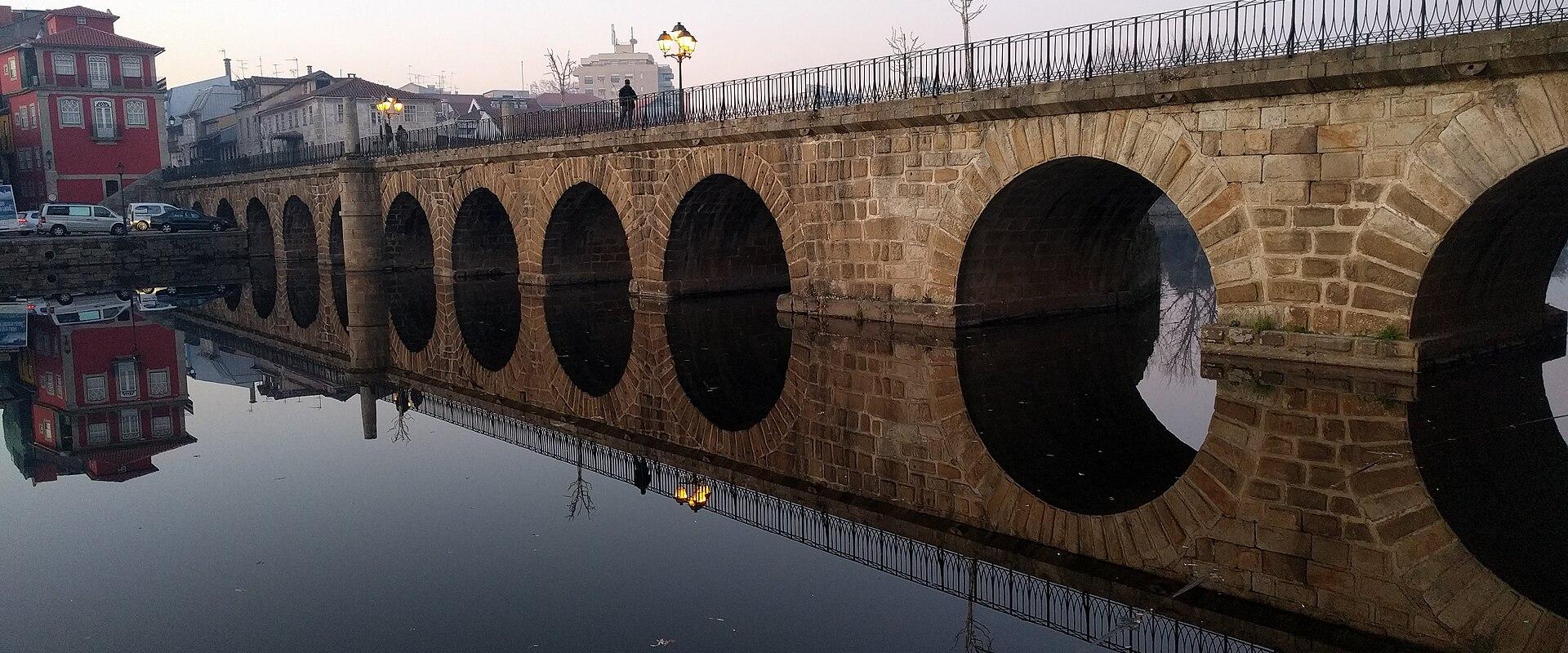
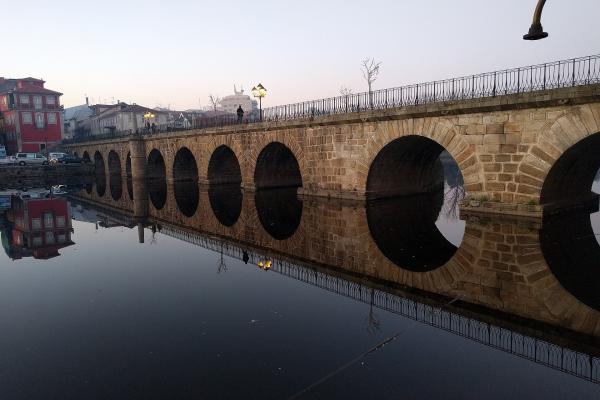
Historic Stone Bridge (Ponte Romana)
1st century Roman bridge over the Tamega River
The Roman bridge at Chaves, the Ponte de Trajano, is one of the best-known Roman monuments in the north of Portugal, and it still carries people across the Tâmega river. The stone arches, the grey granite and the long, level roadway have changed little in nearly two thousand years, and the bridge is a symbol of the town, appearing on its coat of arms. Chaves began as Aquae Flaviae, a Roman spa town founded in the late 1st century, and the bridge was a key part of the road system that linked it with Braga and Astorga.
The bridge was built at the beginning of the 2nd century, during the reign of the emperor Trajan, who ruled from 98 to 117, and it is generally dated to around the year 100. It is about 140 metres long and a little less than 9 metres wide, with a flat or very slightly curved roadway paved in large granite slabs, supported on a series of semicircular arches. Sources differ on the exact count of arches, with a dozen or so visible in the present structure, and some of the arches lie partly below the level of modern ground. The piers have pointed cutwaters on the upstream side, to break the force of the river in flood, and the stone blocks are cut and fitted with great precision. Over the centuries, the bridge has been repaired many times, especially after floods, but the structure is largely original.
At the end of the bridge stands a stone monument known as the Padrão dos Povos, the Pillar of the Peoples. It carries an inscription that lists the Roman communities of the region that contributed to the bridge's construction, an unusual record of how the work was financed and organised, and it also mentions the emperor. Two Roman milestones near the bridge record the building of the road and mention the emperors who maintained it, including Vespasian, whose reign saw the foundation of the town. These stones give the visit a connection with the voices of the past.
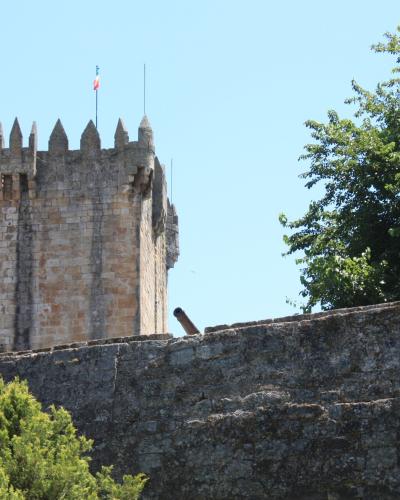
Crossing the bridge is a simple pleasure. It is open to pedestrians only, and the walk takes a couple of minutes, with views upstream and downstream along the river and the old quarter. The riverbank on the town side has gardens and a promenade, and people fish and row in the river. Chaves has many other sights nearby, including the thermal springs, the medieval castle keep with its military museum, and the old town with its balconies.
Visit in the morning or evening, when the light is soft on the stone. There is no charge, and the bridge is accessible at all times. It suits history enthusiasts, photographers and anyone passing through the Trás-os-Montes.
Categories
More photos coming soon
Nearby Attractions
Other places to visit in Chaves
Frequently Asked Questions
Quick Facts
Best Time to Visit
April to October offers warm, pleasant weather for exploring Chaves’ historic sites, enjoying the hot springs, and outdoor activities in the Alto Tâmega region.