Jerónimos Monastery
Manueline monastery with Vasco da Gama’s tomb
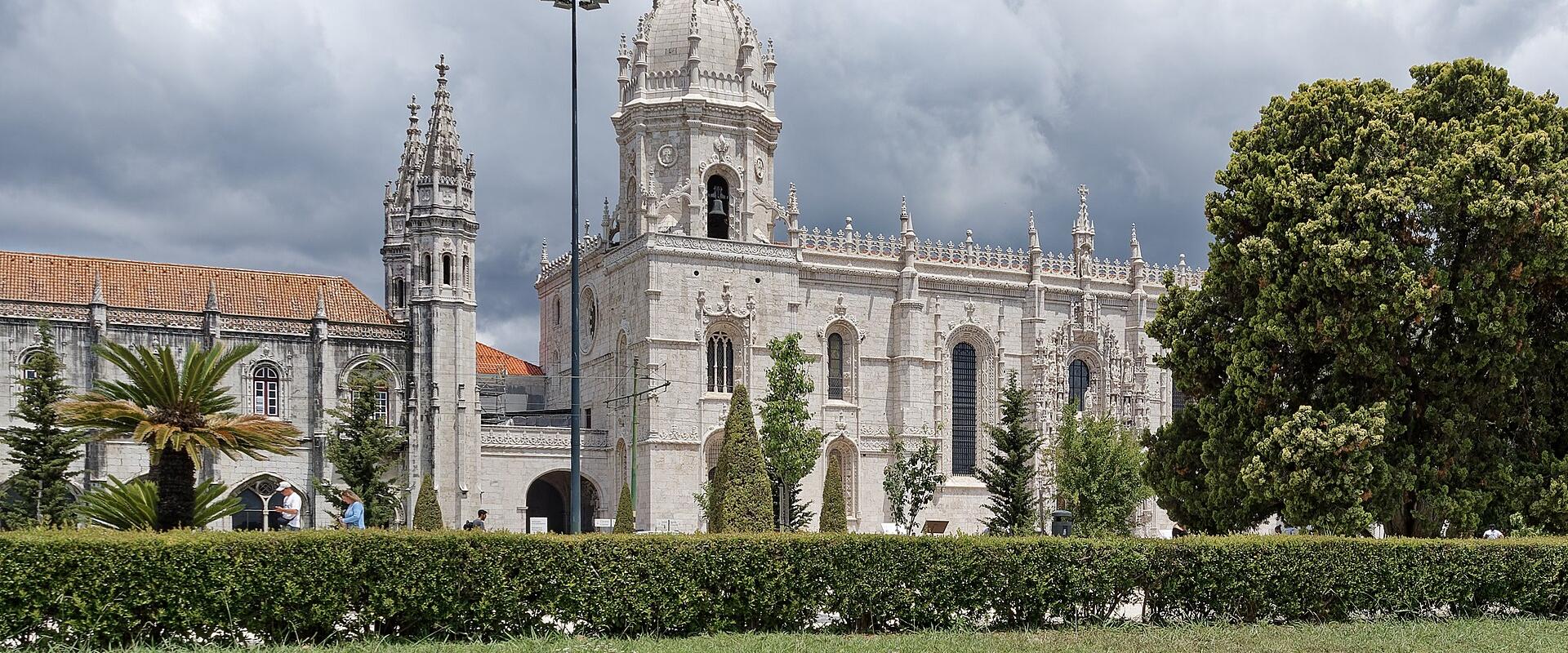
The Mosteiro dos Jerónimos is the masterpiece of the Manueline style and the most important monument in Belém, the district where Portuguese ships once set out for the unknown. King Manuel I laid the foundation in 1501 with the aim of creating a monastery for monks of the Order of Saint Jerome, who were to pray for the king and for the souls of sailors. The money came largely from the trade in spices from India, opened by Vasco da Gama's voyage, and the building was a statement of national pride and religious purpose. Work continued for the whole of the 16th century under several architects, the main ones being Diogo de Boitaca, João de Castilho, and later Diogo de Torralva.
The church and cloister are the centre of the visit. The south portal of the church, carved by João de Castilho, is a vast composition of saints, canopies, and ornament set around a central statue of Our Lady, while the interior is a hall of astonishing lightness, where tall, slender columns shaped and carved like palm trees rise to a net of star-shaped vaults. Rich carving of ropes, shells, and armillary spheres, the symbols of the age of discovery, appears everywhere. Within the church lie the tombs of kings, including Manuel I, and of explorers and writers. Vasco da Gama is buried in a tomb near the entrance, and the poet Luís de Camões, who celebrated the voyages in The Lusiads, is commemorated opposite. The 20th-century poet Fernando Pessoa also has a tomb here.
The cloister, two storeys high, is perhaps the most beautiful part of the complex. Its arches are carved from limestone in layers of delicate detail, with twisted columns, foliage, maritime emblems, and tiny figures, and the effect when sun falls on the stone is dazzling. The refectory, with its tiled walls, and the chapter house complete the monastic rooms. The west wing of the building houses museums of archaeology and of the sea.
The monastery was inscribed by UNESCO in 1983 along with the nearby Belém Tower. After the religious orders were dissolved in 1834 it served for many years as a school and orphanage, and in 2007 it was the setting for the signing of the Treaty of Lisbon of the European Union. Queues for the cloister can be long in summer, and it is best to buy tickets ahead and arrive early. The church itself is free to enter.
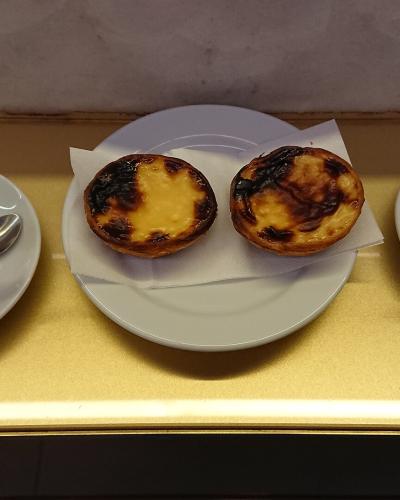
The monastery suits history and architecture lovers, and combines well with a pastry at the famous bakery nearby.
More photos coming soon
Nearby Attractions
Other places to visit in Lisbon
Frequently Asked Questions
Quick Facts
Best Time to Visit
March to May and September to October offer warm weather, fewer crowds, and ideal conditions for sightseeing and outdoor activities in Lisbon.