


Lava Vineyards Of Pico Island
UNESCO-listed volcanic vineyards in Pico, Azores
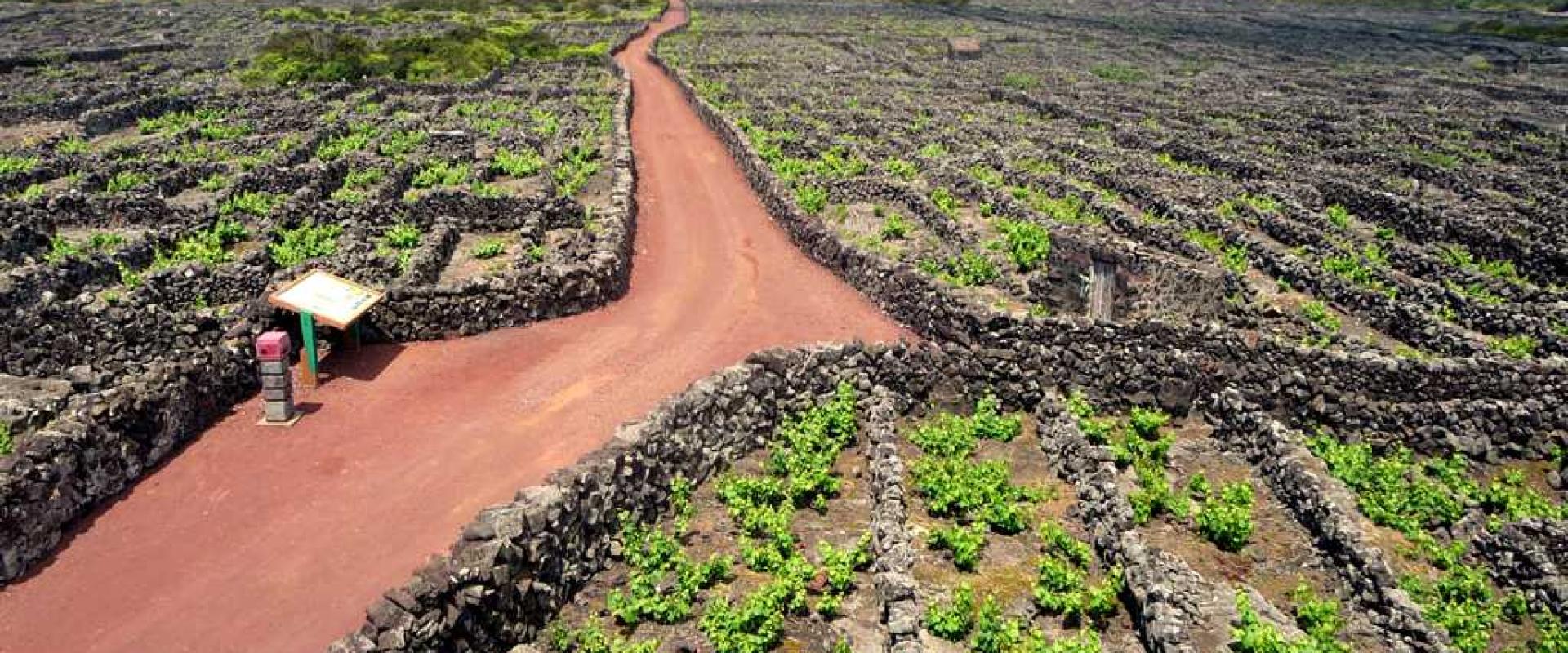
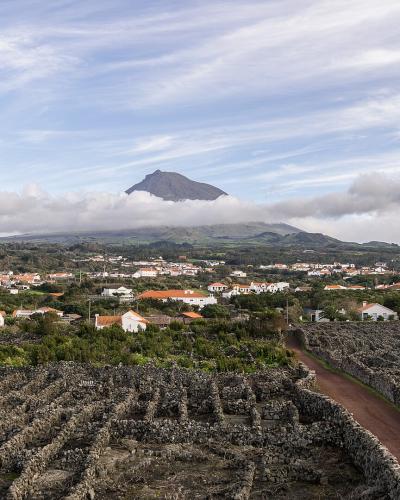
The wine of Pico is hard to separate from the rock it grows on. The island is a volcano, and across its western and northern coasts the lava from past eruptions has cooled into black, jagged fields known locally as lajidos or mistérios, a surface so rough and sharp that nothing seems able to grow there. Yet the vines do, rooted in cracks and pockets of soil among the stones, protected by walls of dark basalt, and the wine they produce is unlike any other in Portugal.
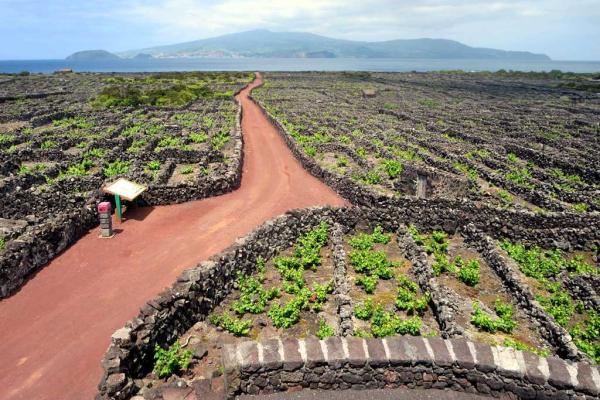
The vines grow in tiny enclosures, called currais, built of piled lava stone, with the vine plants set low among the stones in lines that follow the contours of the land. The walls shield the plants from the wind and from salt spray, trap warmth during the day and release it at night, and help to keep moisture around the roots. Everything is done by hand, from pruning and tying to harvesting, since the terrain is too broken for machinery, and the grapes are carried in baskets across the rocks to be loaded onto small trailers. The work is slow and demanding, and the quantities produced are small. The extraordinary pattern formed by the walls, which cover several hundred hectares, was recognised by UNESCO as a World Heritage landscape.
The grapes are mostly traditional white varieties. Verdelho, once the great wine of the island, which was shipped to European courts and to Russian tsars in the 18th and 19th centuries, is joined by Arinto dos Açores, a variety with sharp acidity, and Terrantez do Pico, a rare grape that makes complex, mineral wines. The vines are exposed to the sea, so the wines often have a salty, mineral edge, with high acidity and a fresh, citrus character that goes well with fish and shellfish. Pico wines have been given a protected designation of origin, and the revival of the industry over the last few decades has led to wines that win praise from critics. Reds are made in smaller quantities, and a rustic wine called vinho de cheiro, strongly aromatic, is made for local drinking.
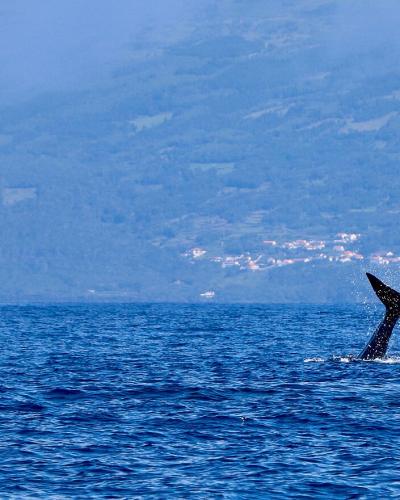
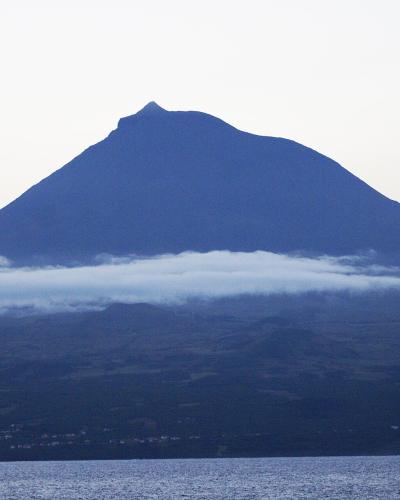
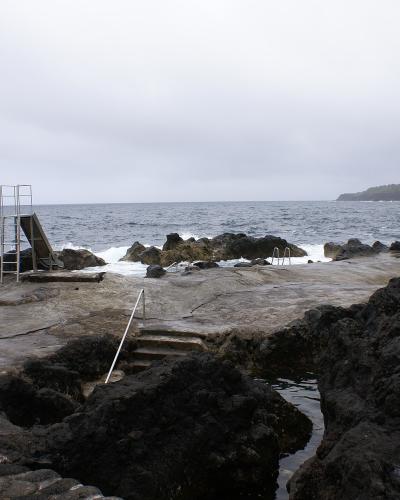
The best way to learn about the vineyards is to visit the area around Criação Velha and Lajido, where the walled plots run down to the sea, and the wine museum in Madalena, housed in a former convent, which explains the history, techniques and traditions. A number of producers offer tastings, and some have cellars built in lava stone, so it is advisable to book ahead. The harvest takes place from late August into September, and it is a time when the island's villages are busy. The island's other draws, climbing the mountain, swimming in lava pools, exploring lava caves and watching whales, fit well with a vineyard day.
Wear sturdy shoes, as the lava is rough and sharp, and bring water and a hat. The vineyards suit wine lovers, walkers and photographers.
Categories
More photos coming soon
Nearby Attractions
Other places to visit in Pico
Frequently Asked Questions
Quick Facts
Best Time to Visit
May to October offers mild weather, lush vineyards, and optimal conditions for hiking, whale watching, and exploring Pico’s volcanic landscapes.