
Old Cathedral (Sé Velha)
Romanesque fortress cathedral of Coimbra's Reconquista era
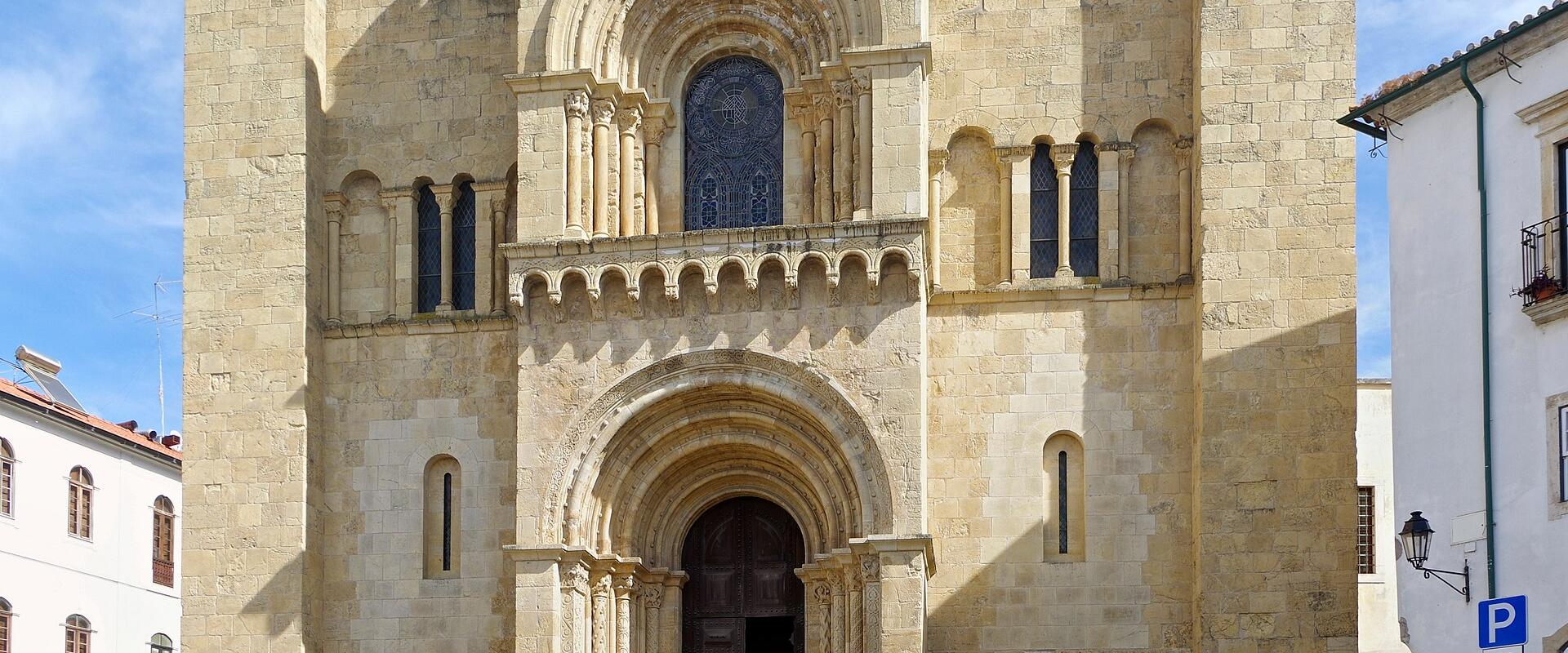
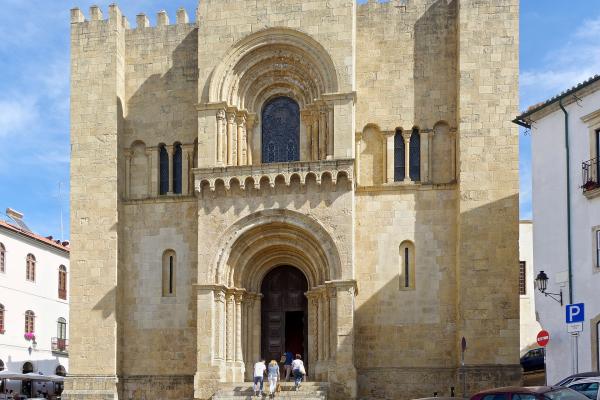
The Sé Velha, the Old Cathedral of Coimbra, is the finest Romanesque church in Portugal and one of the best preserved in the Iberian peninsula. It stands on the hillside below the university, with the steep lanes of the old town running past its walls, and it looks more like a fortress than a place of worship. The facade is plain, with thick walls, narrow windows, and a crenellated top, and the whole building is solid and strong. This appearance reflects the troubled times in which it was built. In the 12th century Coimbra was the capital of the young Portuguese kingdom, close to a frontier with Muslim territories, and its cathedral had to be defended.
Work began around 1162 under Bishop Miguel Salomão, with master builders named Bernard and Robert, and the style follows the Romanesque tradition of northern Europe adapted to local stone. Inside, thick columns carry round arches, a gallery above the aisles runs round the nave, and a dome rises over the crossing. The plain stonework gives the interior a quiet, sober feeling, which contrasts with the richer decoration of later periods. A cloister from the 13th century, in early Gothic style, adds a peaceful courtyard of pointed arches.
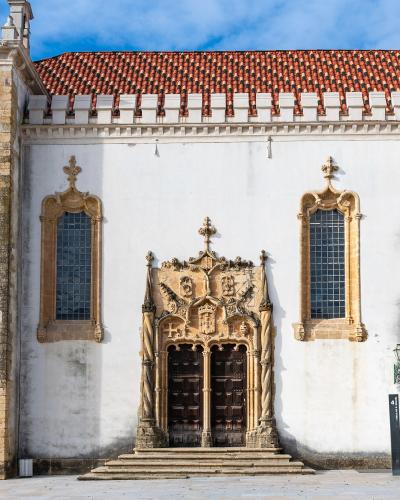
Some later additions bring colour. The gilded Flemish altarpiece in the main chapel, made in the early 16th century by artists from the Netherlands, is a magnificent piece of carved and painted wood, with scenes in many figures. The Porta Especiosa, a side portal in Renaissance style carved in the 1530s by the French sculptor João de Ruão, who settled in Coimbra, is richly decorated and contrasts with the austere facade. Tombs of early bishops and nobles stand in the chapels.
The Old Cathedral served as the city's cathedral until the 18th century, when the bishop moved to the Sé Nova, the New Cathedral, a larger Baroque church from the Jesuit period nearby. The Sé Velha is still an active church, and occasional services can limit visiting, so check the schedule. Admission fees apply to some parts such as the cloister, and times may change. Weekday mornings are the quietest.
The cathedral suits history readers, architecture lovers, and those interested in medieval Portugal. It combines naturally with a walk up the hill to the university and down through the old town's steep streets.
Categories
More photos coming soon
Nearby Attractions
Other places to visit in Coimbra
Frequently Asked Questions
Quick Facts
Best Time to Visit
Spring (March-May) and autumn (September-October) offer warm, pleasant weather and vibrant city life for exploring Coimbra’s historic sites and gardens.