
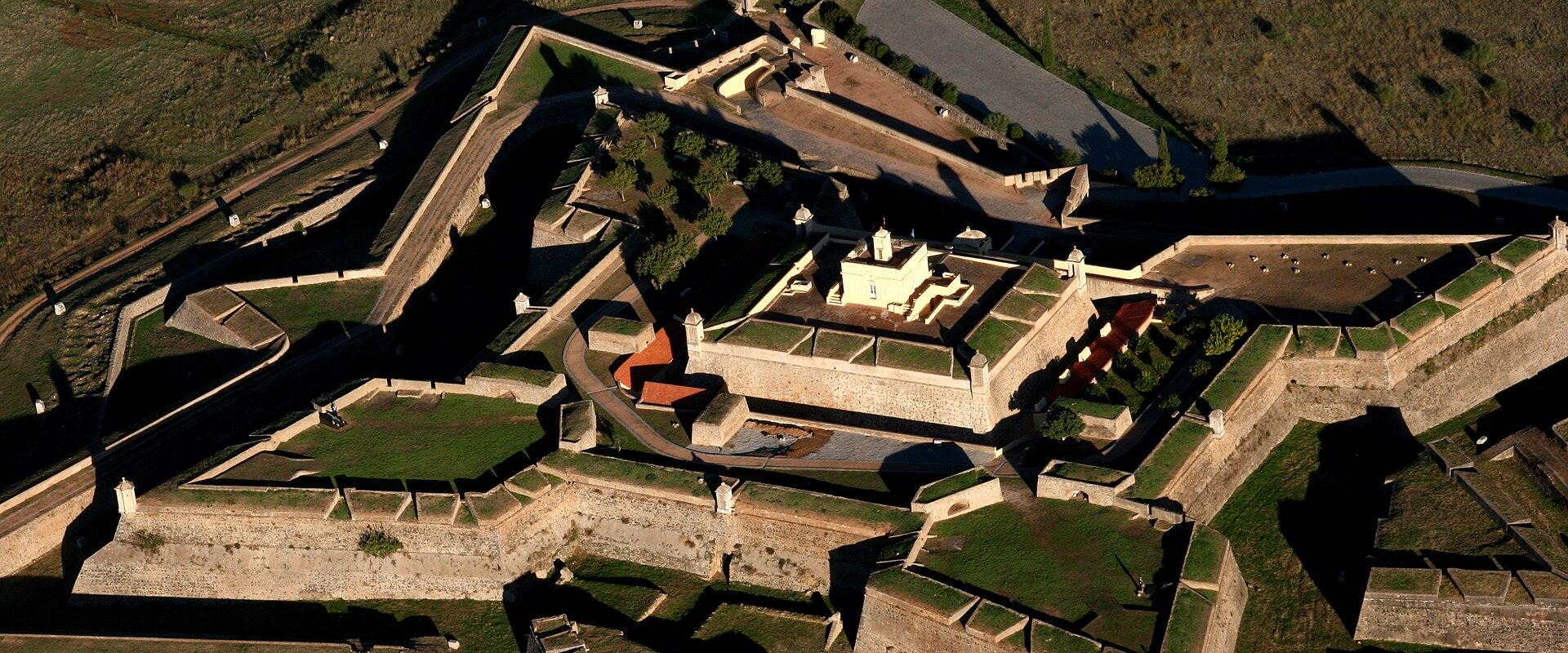
The Forte de Santa Luzia is one of the two great forts that guard Elvas, and it is the older of them. It stands on a hill just outside the town walls, facing the Spanish frontier, and it was begun in the 1640s, soon after Portugal restored its independence from Spain in 1640 and the border towns urgently needed modern defences. Elvas was the main Portuguese stronghold on this part of the frontier, only a few kilometres from the Spanish fortress of Badajoz, and its ring of walls and forts is now part of the UNESCO World Heritage listing for the Garrison Border Town of Elvas and its Fortifications, inscribed in 2012.
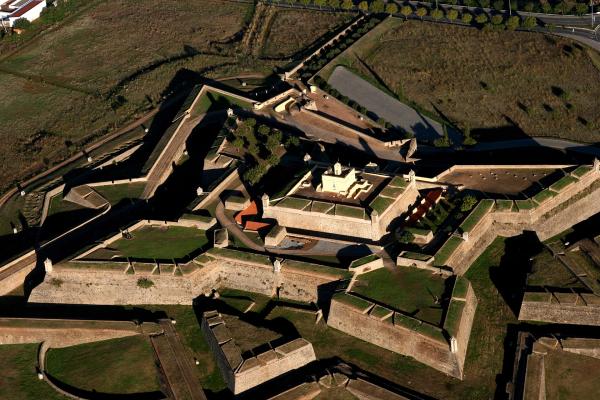
The fort is a classic star fort, laid out in the geometric style that spread across Europe when cannon made medieval walls obsolete. Its low, thick ramparts of earth and stone have projecting bastions at the corners, so that defenders could fire along the face of the wall, and outworks called ravelins protect the approaches. A deep dry ditch runs around the fort, crossed by a drawbridge-style entrance, and a sloping outer bank, the glacis, exposes any attackers to fire. The shapes were worked out by military engineers, among them Dutch-trained experts and the Jesuit Cosmander, who adapted northern European designs to local stone and conditions. Inside the fort are barracks, a powder store, cisterns for water, and underground galleries.
The fort played its part in the wars that followed. In 1659 a Spanish army besieged Elvas but was beaten back at the battle of the Linhas de Elvas, and the Santa Luzia fort was one of the strongpoints that held. Later it was rebuilt and improved, and it remained in military use for a long time. Today it is quiet, with grassy ramparts and good views.
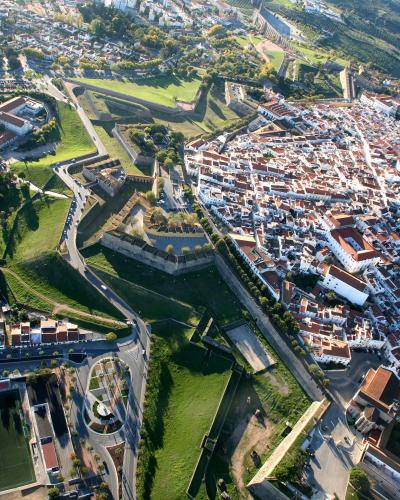
From the top of the walls the view takes in the whole of Elvas, with the old town's white houses, the huge Amoreira Aqueduct, and the wide plain of the Alentejo stretching toward Spain, with the Spanish fortress visible on a clear day. Photography is best in the afternoon light, and the scene is especially pleasant in spring when the plain is green.
The fort can be reached on foot or by a short drive from the centre, and the walk is gently uphill. Opening times and any visiting arrangements vary, so check locally. It suits history readers, photographers, and families who like exploring walls and tunnels. Combine it with the Forte da Graça on the opposite hill.
Categories
More photos coming soon
Nearby Attractions
Other places to visit in Elvas
Frequently Asked Questions
Quick Facts
Best Time to Visit
Spring (March-May) and autumn (September-November) offer warm, pleasant weather and lush scenery for exploring Elvas’ fortifications and historic sites.