

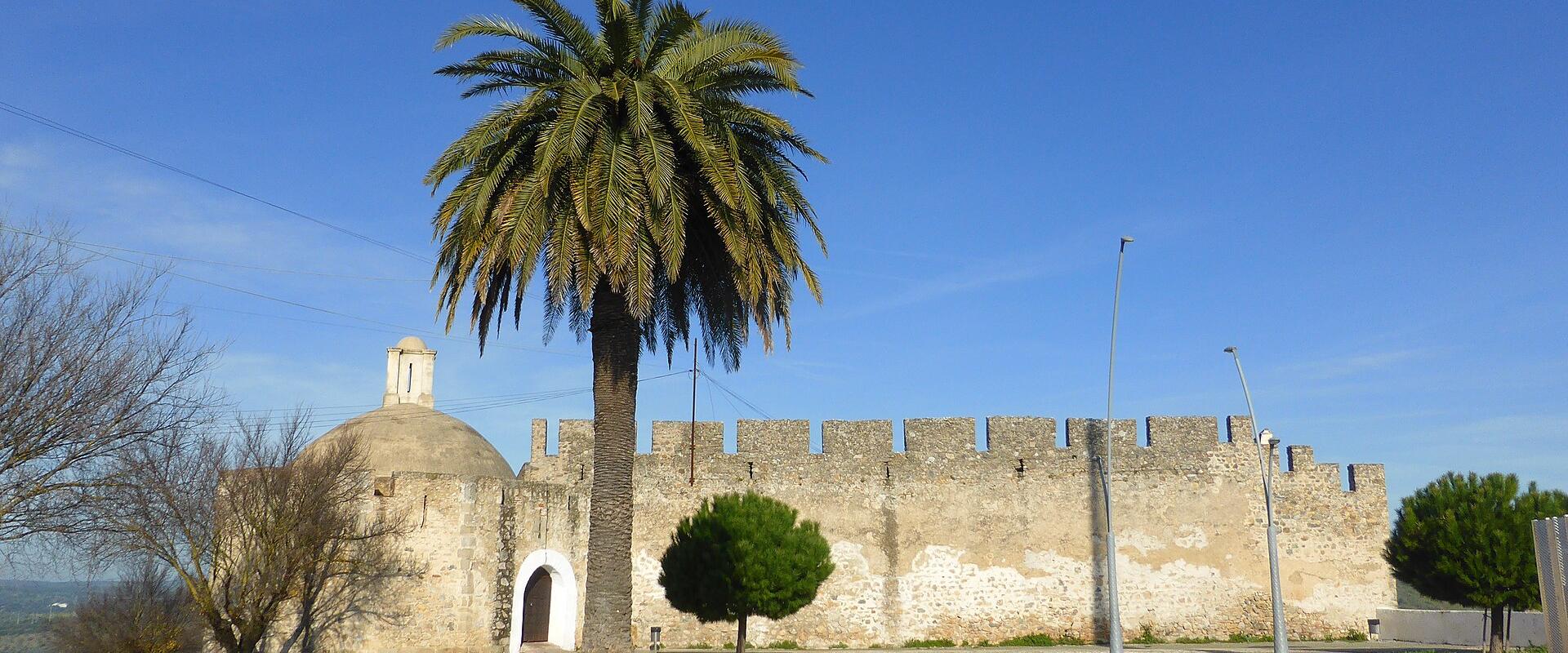
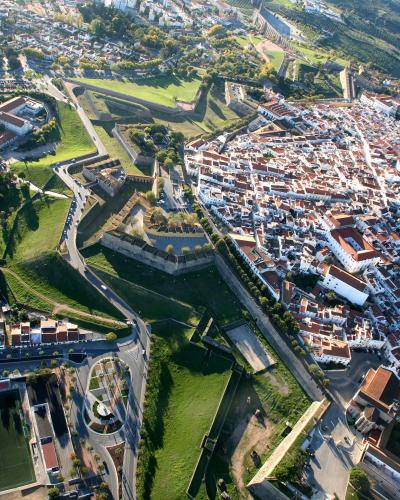
The fortifications of Elvas are among the largest and best-preserved bastioned defences in the world, and they are the main reason the town was inscribed on the UNESCO World Heritage List in 2012. Elvas stands on a hill a few kilometres from the Spanish frontier and the fortress city of Badajoz, and for centuries it was the main Portuguese stronghold on the border, tested by many sieges and invasions. The walls that visitors see were built in stages, mainly between the 17th and 19th centuries, when the military engineering of the age was at its most developed.
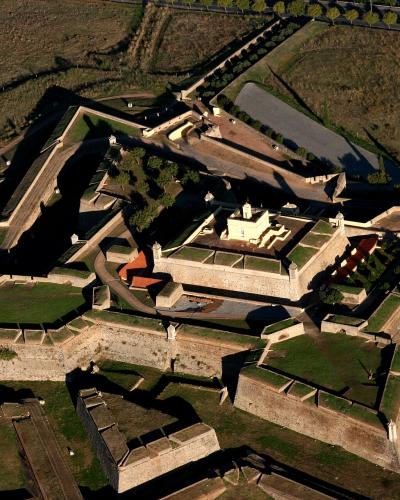
The system is based on the star-shaped, or bastioned, design that spread across Europe after the invention of powerful artillery. Instead of tall, thin medieval walls, the defenders built low, thick ramparts of earth faced with stone, with pointed bastions sticking out so that every part of the wall could be covered by fire from another. In front lay deep dry moats, outworks called ravelins, and sloping glacis, so that attackers had to cross a wide killing ground. Dutch engineering ideas strongly influenced the design, and the result is a layered, geometric structure that is easiest to appreciate from above or from the ramparts themselves.
At the north of the town stands the Forte de Santa Luzia, an early star fort of the 17th century, and on a hill to the south is the Forte da Graça, built in the 18th century and considered one of the finest in Europe, with its own deep ditches and powerful bastions. Both can be visited and give broad views over the plains. The Portas de Olivença and other town gates are fine examples of fortified entrances, and the route along the walls leads past bastions, cisterns, and gun positions.
Elvas was besieged repeatedly. In 1659 a Portuguese army relieved the town and defeated a Spanish force in the battle of the Linhas de Elvas, and the fortifications also played a role during the Peninsular War. Today they are quiet and green, with grass in the ditches and wide views from the ramparts.
Walking the walls takes an hour or two, with comfortable shoes recommended, and a visit combines well with the Amoreira Aqueduct and the town's old centre. The site suits history readers, photographers, and families, and spring and autumn offer the best walking weather.
Categories
More photos coming soon
Nearby Attractions
Other places to visit in Elvas
Frequently Asked Questions
Quick Facts
Best Time to Visit
Spring (March-May) and autumn (September-November) offer warm, pleasant weather and lush scenery for exploring Elvas’ fortifications and historic sites.