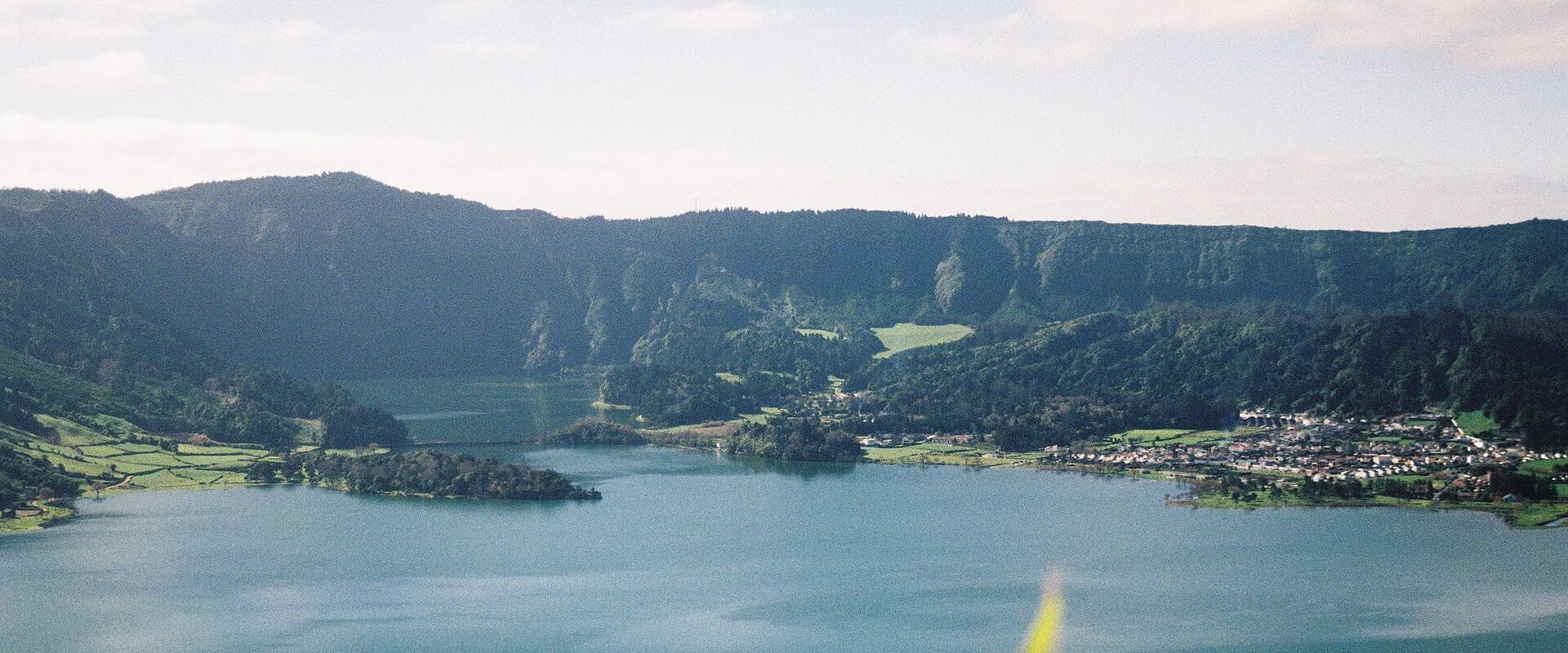
Sete Cidades Lagoon
Volcanic twin lakes in Sete Cidades, Azores
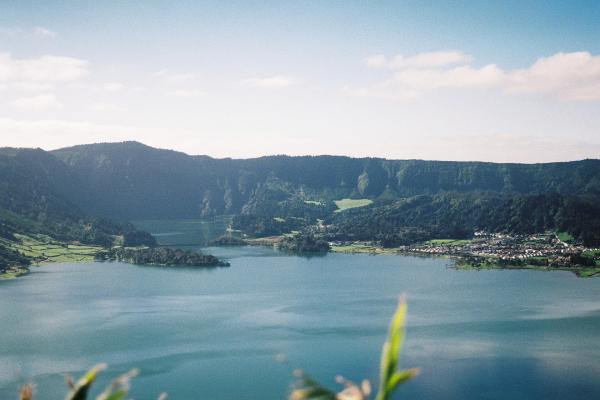
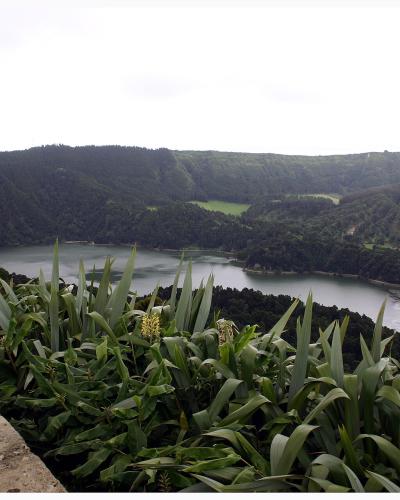
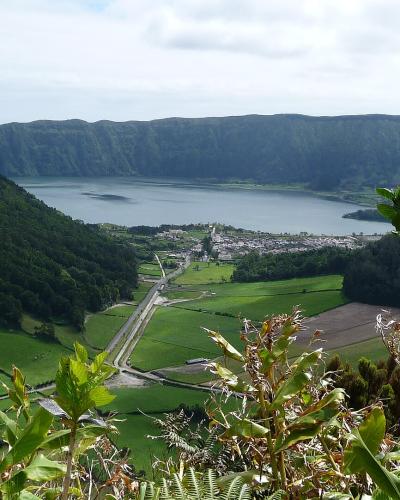
The Sete Cidades crater is one of the great natural amphitheatres of the Atlantic, a huge volcanic caldera at the western end of São Miguel, roughly five kilometres across and with a rim some twelve kilometres around. It was formed by a series of major eruptions that collapsed the summit of the volcano, leaving a vast bowl, and part of the floor is filled by lakes, with a village, farms and woodland in the rest. Standing on the rim, you look down into a self-contained world.
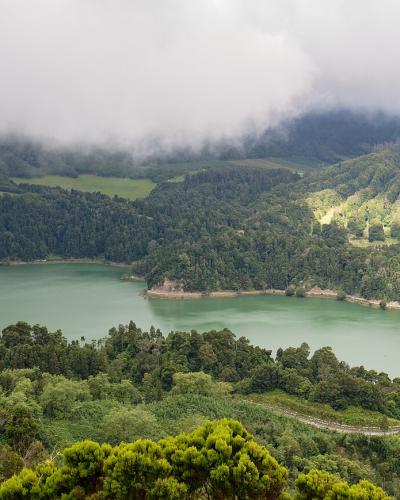
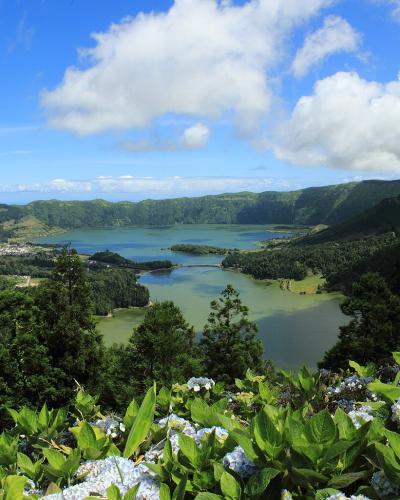
The lakes are the main feature, a pair joined by a narrow strait, the Lagoa Azul and the Lagoa Verde, the Blue and the Green Lake, which look different thanks to depth, algae and the reflection of the sky and hills. A short distance away lie two smaller crater lakes, the Lagoa de Santiago and the Lagoa do Canário, each in its own hollow with its own viewpoint. The name Sete Cidades, Seven Cities, recalls an old legend about seven cities or bishoprics on an Atlantic island that sailors believed in during the Middle Ages, and it was attached to this place by early settlers. No cities lie here, but the name stuck.
The best way to see the crater is to walk or drive around the rim. A series of viewpoints are strung along the road, among them the Vista do Rei, with its famous view of both lakes, the Miradouro do Cerrado das Freiras, looking over the Lagoa de Santiago, and the Miradouro da Boca do Inferno, with a view of the Lagoa do Canário. A marked footpath circles the caldera, taking several hours and passing through forest, meadow and cliff edges, with changing views at every turn, and shorter routes lead down to the lake shore. Hydrangeas line the roads in summer, making the display brighter. In the crater, the village of Sete Cidades has a neo-Gothic church, a handful of cafes and a bridge between the lakes, and you can hire bicycles and kayaks.
The weather is the main variable. The crater catches clouds, and views can vanish within minutes, so patience pays, and the morning is often clearer than the afternoon. Temperatures are cooler on the rim, and the wind can be strong, so bring a jacket and waterproofs. Walking requires shoes with grip, especially after rain. The viewpoints are free and open at all times.
A trip to Sete Cidades usually takes half a day or more from Ponta Delgada, a drive of about thirty minutes. It combines easily with a visit to the thermal pool of Ferraria on the coast, and with a stop at the pastures and hedgerows of the western side. The crater suits walkers, cyclists, photographers and anyone with a day to spend on a classic Azorean landscape.
Categories
More photos coming soon
Hours & Fees
Hours
Open 24 hours (viewpoints accessible at all times, though visibility depends on weather conditions).
Admission
Free admission to the viewpoints.
Nearby Attractions
Other places to visit in Sete Cidades
Frequently Asked Questions
Quick Facts
Best Time to Visit
Late spring to early autumn (April–October) offers mild weather, lush scenery, and the best conditions for hiking and lake views in Sete Cidades.