
Spacious Beaches
Golden sands and calm waters in Cascais
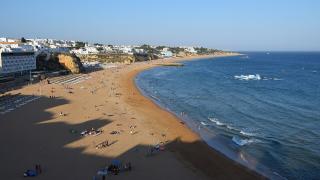
Cascais is a fishing town that became a royal resort, and the beaches that line its bay and the coast beyond show both sides of that history. Small, sheltered coves in the town centre were used by fishermen and later by the aristocrats who built villas here, while wide, wind-swept sands to the north draw surfers and walkers. Between them, the choice is wide, and a train ride from Lisbon of around forty minutes makes them easy to reach.
In the middle of town, the beaches are small and busy. Praia da Ribeira, beside the fish market, is still the fishermen's beach, where boats are hauled up on the sand and nets are mended. Next to it, Praia da Conceição and Praia da Duquesa, curved, golden and sheltered by rocky points, are the classic family beaches, with calm water, a promenade, cafes and sunbeds for hire. They are popular, so in July and August, they can be crowded. A little further, Praia da Rainha, the Queen's Beach, is a tiny cove tucked between cliffs, which takes its name from Queen Amélia, the last queen of Portugal, who used to bathe here in the late 19th century. It is the prettiest, but the smallest.
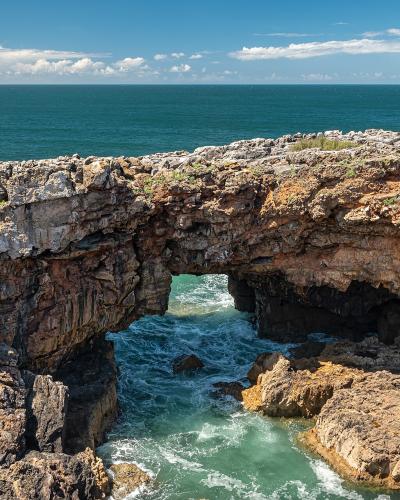
North of town, the coast turns wilder. Past the Boca do Inferno and the cape of Cabo Raso, the beach of Guincho is a long, open stretch of sand with dunes behind it, backed by the hills of the Sintra range, and facing the full force of the Atlantic. The wind blows here almost constantly, which makes Guincho one of the best places in Europe for windsurfing and kitesurfing, and it has hosted international competitions. The waves are big, the currents strong and the water cold, so swimming is for experienced people only, and lifeguards fly flags to show conditions. On a clear day, the sunsets over the ocean are spectacular, and there are restaurants nearby, including a few well-known seafood places.
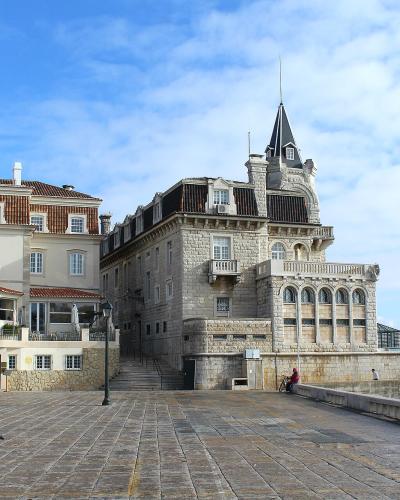
The royal connection shaped Cascais. In 1870, King Luís I made the old citadel his summer residence, and the court followed, building villas and gardens along the coast. In the 20th century, the town drew exiled royalty, including Umberto II of Italy and, after his abdication, Edward VIII, the Duke of Windsor, who stayed in Cascais in 1940. These associations gave the resort its refined atmosphere, which still lingers in the promenade and the seafront buildings.
Practical tips: the water is cool all summer, with temperatures in the high teens Celsius, and mornings are often foggy, with the sun appearing by midday. Sunbeds and umbrellas can be rented on the central beaches, and a coastal path and cycle track link Cascais with Estoril and with Guincho. Arrive early in high season to find a spot. The beaches suit families, surfers, walkers and anyone who wants a day by the sea within reach of Lisbon.
More photos coming soon
Nearby Attractions
Other places to visit in Cascais

Frequently Asked Questions
Quick Facts
Best Time to Visit
April to October offers warm, sunny weather ideal for beaches and sightseeing; May-June and September-October are especially pleasant and less crowded.