



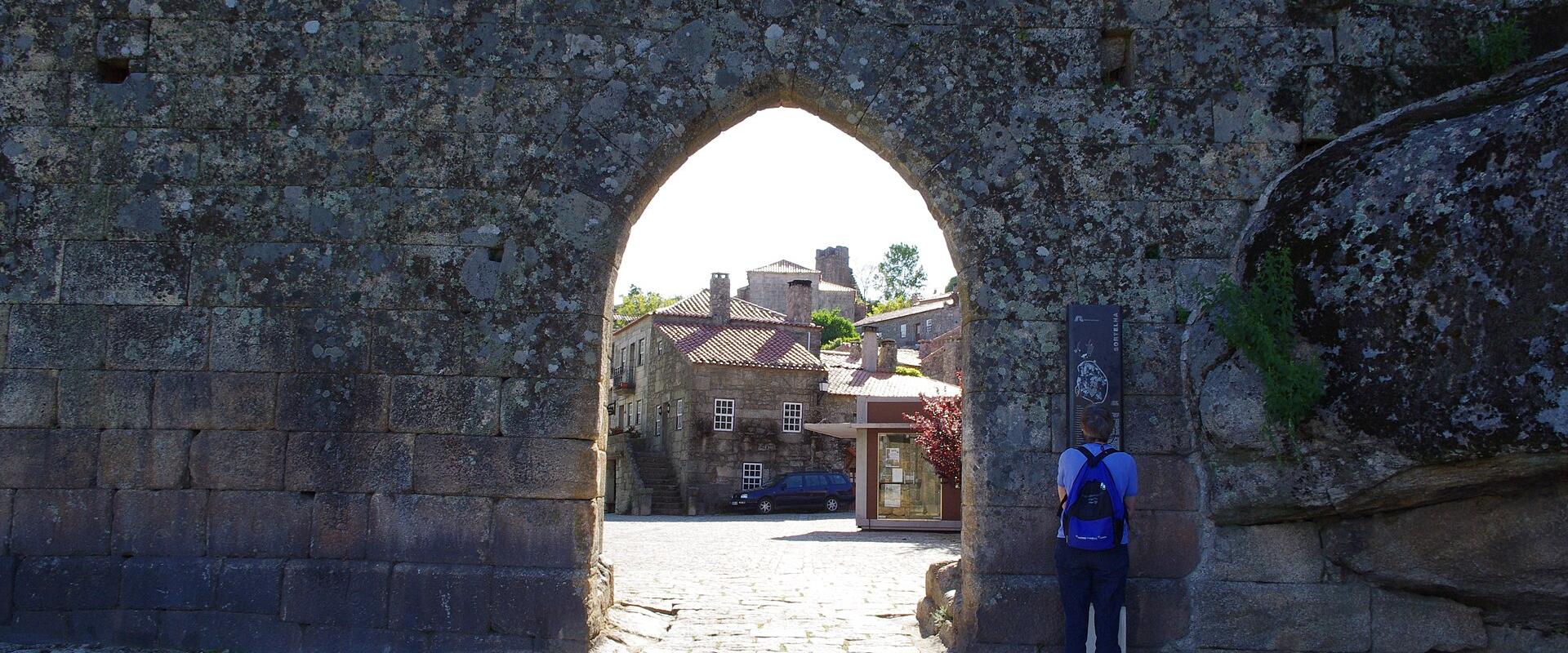
Via Sacra Steps (Sortelha)
Historic stone steps in Sortelha, Portugal
In many Portuguese villages, a path of small shrines or stone markers leads from the centre toward a chapel or a cross on a nearby height, and this is the Via Sacra, the Way of the Cross. The stations commemorate the Passion of Christ, from the condemnation to the burial, and they are used for prayer and for processions during Lent and Holy Week. In Sortelha, the walled granite village in the Beira Baixa near Sabugal, the Via Sacra is part of a landscape in which religion and daily life are tightly interwoven, and the steps and shrines are among the village's quiet treasures.
The tradition has a long history in Portugal. The devotion of the Via Crucis grew out of pilgrimages to Jerusalem, where pilgrims retraced the route that Christ walked to Calvary, and in the late Middle Ages, the Franciscans, who were guardians of the holy places, promoted the practice of marking similar routes in Europe so that the faithful could take part without travelling. In Portuguese villages, the stations are often simple, with niches or small chapels, called passos, built along a path, each with a painted image, a cross or a panel of tiles. Along the route, the faithful stop to recite prayers and meditate. In many places, the route ends at a calvary, a cross on a rocky outcrop, a fitting place on a hill such as Sortelha's.
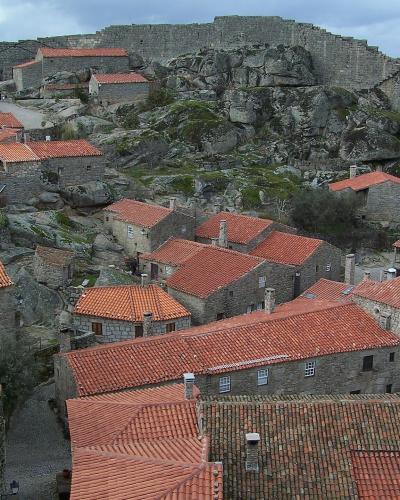
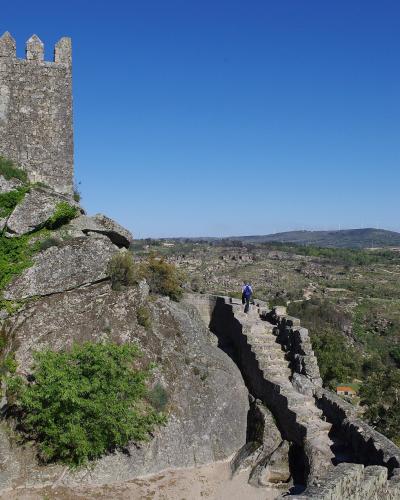
Accounts of the Via Sacra at Sortelha vary in detail, and visitors should treat the description with some care. The route is described as a series of stone steps and stations within the village and on its approaches, among the granite houses, in the same stone as the walls and the castle, and it is integrated with the village layout. The markers are modest, often weathered by wind and rain, and some carry tiles or crosses. The scale is small, which suits the village, whose lanes are steep and narrow, and where distances are short. Many of the old stones are worn and lichen-covered, and the setting among boulders adds to the sense of age.
The path comes alive during Holy Week, when the village holds its Easter ceremonies. Processions, with the image of the dead Christ carried through the streets, and the Easter visit, in which the cross is carried from house to house, are the highlight of the year, and emigrants often return home for them. At other times, the quiet of the village makes the walk contemplative.
The steps can be visited at any time, free of charge. Wear shoes with good grip, since the granite is polished and slippery after rain, and take care on the steepest sections. The route combines with a walk around the walls and a visit to the castle, the main church and the small chapels. It suits walkers, photographers and those interested in religious traditions.
Categories
More photos coming soon
Nearby Attractions
Other places to visit in Sortelha
Frequently Asked Questions
Quick Facts
Best Time to Visit
Spring (March-May) and autumn (September-November) offer mild weather, lush scenery, and fewer crowds for exploring Sortelha’s medieval streets and castle.