Terceira is one of the easier Azores islands to visit with children. It has a compact road network, a walkable UNESCO-listed old town, two show caves inside extinct volcanoes and several protected swimming spots built into the lava coast. Lajes airport has direct flights from Lisbon and the other islands, and most sights sit within a 40-minute drive of each other.
Angra do Heroísmo: an old town children can walk
Angra do Heroísmo was the main Atlantic stopover for Portuguese and Spanish fleets for centuries, and its historic centre has been on the UNESCO World Heritage List since 1983. The grid of streets is flat enough for pushchairs in the lower town, and the buildings are painted in strong colours that hold younger children's attention better than most museum visits.
Two easy targets in town:
- Jardim Duque da Terceira, the public garden in the centre, with shade, benches and a path that climbs to the Alto da Memória monument for a view over the bay.
- Monte Brasil, the volcanic headland that closes off the bay. Forest roads and paths lead to picnic areas and viewpoints over the town, and the walk is manageable for school-age children if you keep it short.
Algar do Carvão: walking into a volcano
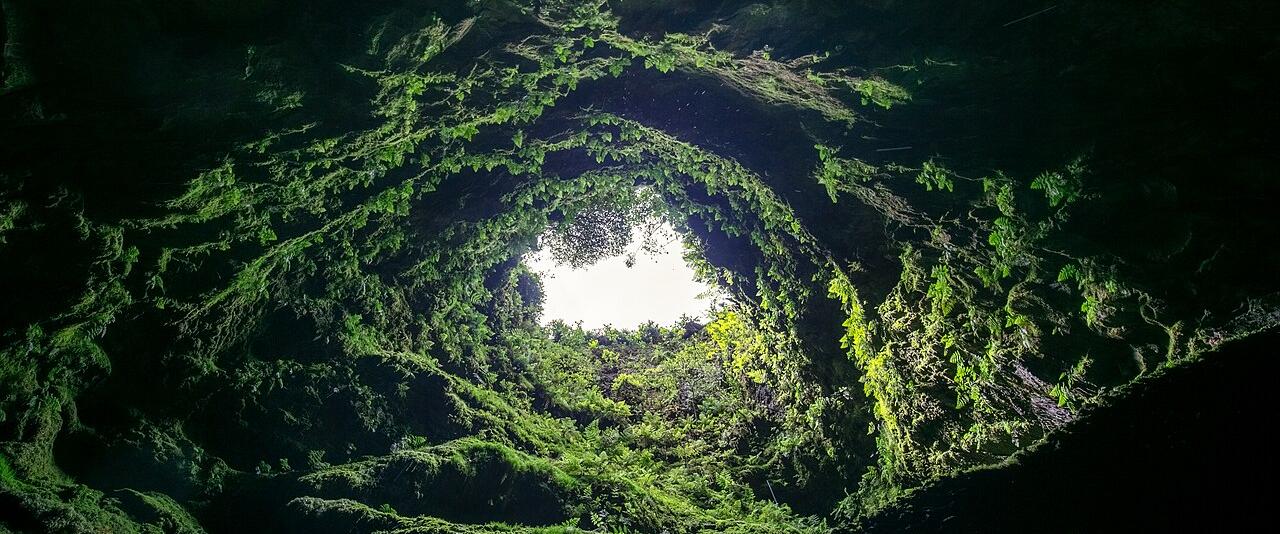
Algar do Carvão, in the centre of the island, is a volcanic vent you can enter on foot. A 45-metre vertical shaft opens into a chamber about 90 metres deep, with silica formations on the walls and a rain-fed lake at the bottom that can dry out in summer. It is a Regional Natural Monument run by the caving association Os Montanheiros.
Points that matter for families:
- Access is by stairs: 114 steps to the main platform and 338 in total if you go to every platform. Montanheiros does not recommend it for babies, toddlers or anyone with balance problems.
- Children under 12 visiting with a paying adult go in free.
- Opening days vary by season (daily in spring and summer afternoons, four days a week in the cooler months).
- Montanheiros says visits will be suspended from late October or November 2026 until roughly the end of the first quarter of 2027 while the new visitor centre is finished. Check montanheiros.com before you plan the day around it.
Gruta do Natal: a lava tube for younger walkers
Gruta do Natal, a few kilometres west, is a lava tube rather than a vertical vent, so the walking is mostly level and better suited to smaller children. It is also run by Montanheiros, tickets are sold only on arrival, and the cave opens in the afternoons, daily from April to September and on fewer days in winter. Bring a light jacket: caves stay cool and damp all year. The Montanheiros site warns that schedules can change at short notice, so treat any timetable you find elsewhere as a guide only.
Natural pools and beaches
Terceira's coast is mostly black lava rock, which is why the island's best swimming is in natural pools.
- Biscoitos, on the north coast, has the best-known pools: basins in the lava, with ladders and concrete paths added. The water is calm on settled days but it is still the open Atlantic, so watch the swell and keep children close.
- Praia da Vitória, on the east coast, has a long sandy beach along the bay, which is the simplest option for toddlers who want to dig.
- Smaller town pools and swimming areas exist around the coast. Summer is the season for lifeguards; outside it, swim only in sheltered spots.
Sea temperatures stay cool even in August, so a thin wetsuit or rash vest helps younger children stay in longer.
Short walks and viewpoints
- Serra do Cume, in the east, gives a view over the patchwork of stone-walled fields that appears on many Azores postcards. You can drive almost to the top.
- Furnas do Enxofre, in the centre of the island, has a short trail through steaming fumaroles. Stay on the marked path and hold small hands near the vents.
- The island's official trails are listed on the Azores trails portal (trails.visitazores.com) with distance and difficulty. Pick the short circular ones and check the weather on the day, as cloud and rain move fast across the interior.
Practical tips for families
- Car: a rental car makes everything easier. Book a child seat in advance, as stock on the island is limited in summer.
- Weather: the Azores can show four seasons in a day. Pack layers and rain jackets even in July.
- Whale watching: boat trips leave from Angra and other harbours. Ask operators about the minimum age and the type of boat, and avoid rigid inflatables with very young children.
- Bullfights in the street: from spring to autumn, villages hold touradas à corda, where a bull is let along a street on a long rope. They are a big part of island life, but keep children well behind barriers or watch from a safe wall.
- Food: Terceira's best-known dish is alcatra, beef slow-cooked in a clay pot. Most cafés also serve simple grilled fish, soups and the island's sweet rolls, so fussy eaters are easy to feed.
Plan three to five days for a relaxed family visit, with one cave, one pool day and one day in Angra as the fixed points.