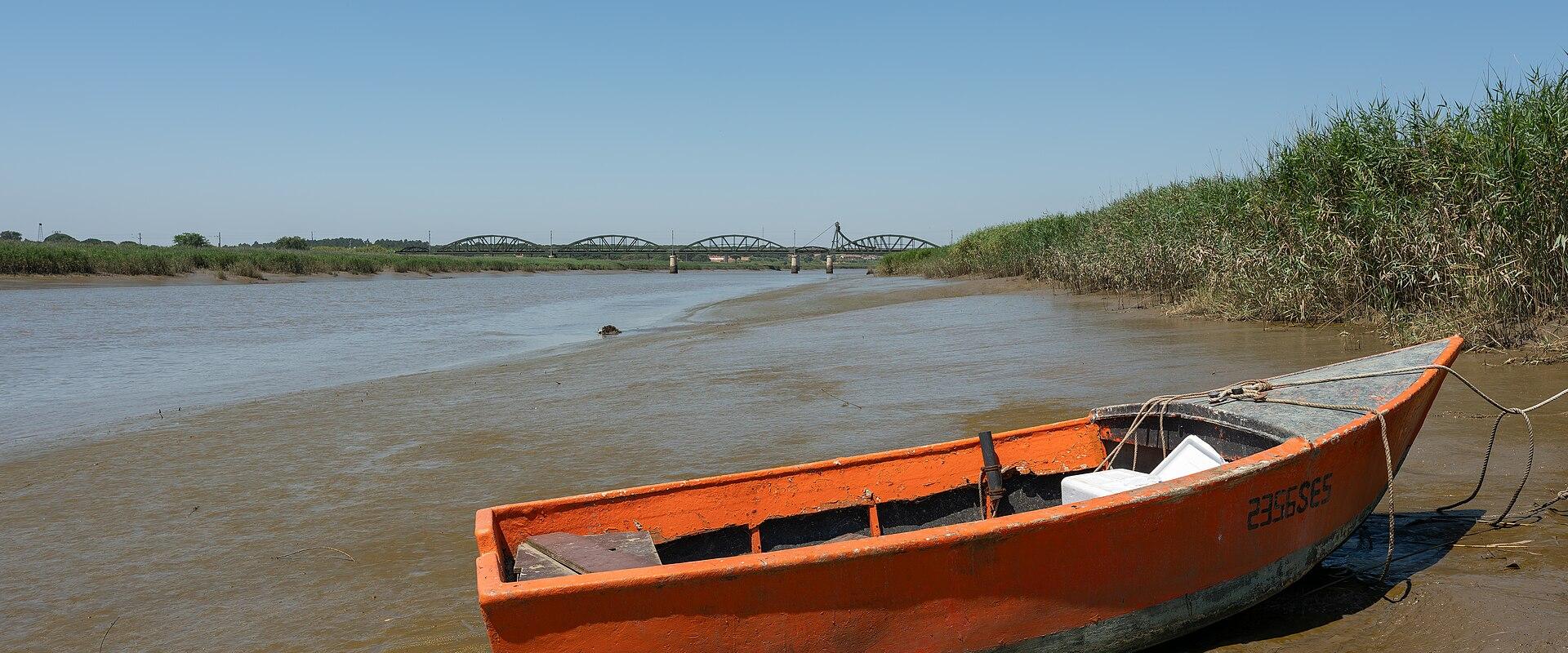
Boat Trips Along The Southern Bank Of The Sado River (Sesturi Estuary)
Boat tour along the southern Sado River bank
The Sado estuary opens south of Setúbal, a wide stretch of shallow water, sandbanks and salt marshes, and a boat trip is the best way to see it. Setúbal, an industrial and fishing city on the north shore, is the main starting point, and its harbour, the Doca das Fontaínhas, is where most of the excursions leave. The route runs out across the open water toward the long, low peninsula of Tróia and along the southern bank, where the estuary narrows into creeks and channels.
The highlight for many passengers is the dolphins. A resident community of bottlenose dolphins, known in Portuguese as roazes-corvineiros, lives in the estuary and feeds in the channels near the mouth, and the boats go out to look for them. Sightings are frequent, though not guaranteed, and it is exciting when a group of animals surfaces beside the boat. Operators follow rules designed to limit disturbance, keeping at a distance and cutting engines, and passengers are asked to stay quiet and not to feed or touch the animals. The best time is usually the morning, when the water is calm and the light is good, and the trips last from two hours to half a day, depending on the operator, with some catamarans and traditional wooden boats taking part.
Besides dolphins, the trip offers views of a varied landscape. To the west, the green ridge of the Serra da Arrábida rises behind Setúbal, with the white buildings of the Convento da Arrábida visible on its slopes. The sandbanks of the Sado are used by flamingos, spoonbills and other waders, particularly in winter, and the marshes are fringed with reeds. Salt pans still produce salt in some areas, and old tidal mills stand at the edge of the water. Closer to the shore, you may pass the fishing boats and the traditional wooden vessels of the estuary, and the old fort of São Filipe, a 16th-century fortress on the hill above Setúbal, can be seen from the water.
On land, Setúbal offers good food as the natural end to the trip. The city is known for its fried cuttlefish, choco frito, and grilled fish, which can be found in the restaurants near the harbour and in the covered market, the Mercado do Livramento, which is decorated with azulejo panels. The region produces a sweet fortified wine, Moscatel de Setúbal, a good match with local cheeses and desserts. Ferries to Tróia cross the estuary in about fifteen minutes, and the peninsula has long beaches and the remains of a Roman fish-salting complex.
Prices and timetables vary by operator, so book ahead in summer. Bring a hat, sunscreen, a jacket for the breeze and binoculars if you have them. The trip suits families, wildlife lovers and photographers.
Categories
More photos coming soon
Admission Fees
Admission
Starts from US$ 46.41
Nearby Attractions
Other places to visit in Alcácer do Sal
Frequently Asked Questions
Quick Facts
Best Time to Visit
Spring (March-May) and autumn (September-November) offer mild weather, ideal for sightseeing, boat tours, and exploring Alcácer do Sal’s historic and natural attractions.