
Ponte Da Ajuda
Ruined 16th-century stone bridge on the Guadiana
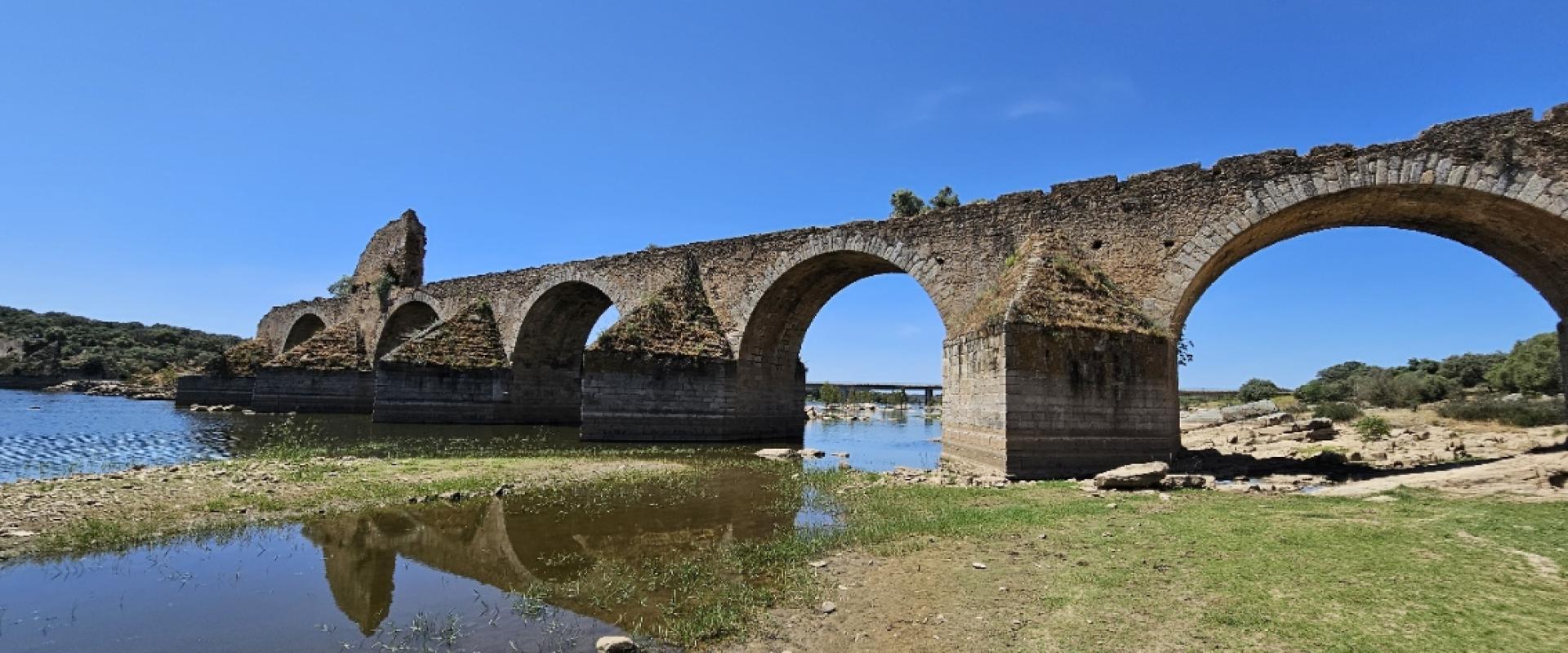
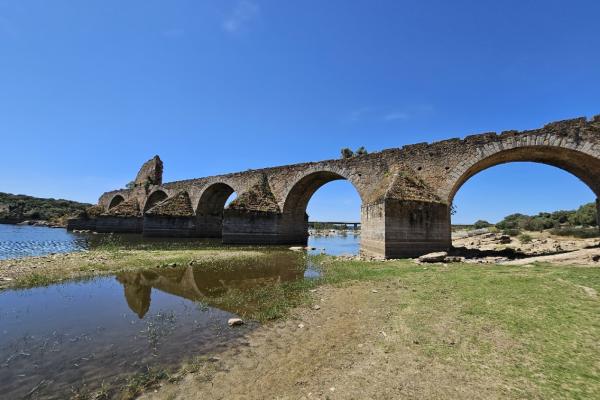
The Ponte da Ajuda stands on the Guadiana river a few kilometres from Elvas, and it is one of the most evocative ruins on the Portuguese-Spanish border. It was built in the early 16th century, in the reign of Manuel I, to carry the road between Elvas and Olivença across the river, and for a long time it was the largest bridge in the region. Its name, Our Lady of Help, comes from a chapel dedicated to Nossa Senhora da Ajuda close to the crossing. The bridge had many arches, built in stone, and it carried traffic of merchants, pilgrims, and armies on one of the principal routes between the two kingdoms.
The bridge's history is a record of the frontier wars. It was damaged in the early 18th century during the War of the Spanish Succession, when part of it was destroyed, and again in the Napoleonic period, when the French and Spanish armies passed this way and the Portuguese forces tried to deny the crossing. Over the years it was partly repaired and partly neglected, and today the structure is a partial ruin, with several arches standing and others missing. The span of the river is marked by the broken line of piers and arches, and the open ends give the bridge a ghostly beauty, particularly in the evening when the stone glows in the low sun.
The bridge also reminds visitors of an unresolved border question. Olivença, now Olivenza, which lies on the other side, was Portuguese until 1801, when it was taken by Spain after the War of the Oranges, and Portugal has never formally recognised the loss. The ruined bridge, which once linked Elvas with this lost town, has become a symbol of that story, and the dispute is still occasionally mentioned in diplomatic exchanges. The area on both banks is quiet and rural, with fields, cork oaks, and the slow, wide river.
The bridge can be visited at any time, and no fee is charged. It can be reached by car and on foot from either the Portuguese or the Spanish side, along small roads and tracks, and there is space to park close by. Walking along the remaining roadway and looking along the river gives a sense of the scale of the original structure. Wear sturdy shoes, and take care near the edges where the stone is broken.
The bridge suits history readers, photographers, and travellers interested in the border. It combines with a visit to the forts and walls of Elvas.
Categories
More photos coming soon
Hours & Fees
Hours
Open 24 hours a day, 7 days a week
Admission
Free
Nearby Attractions
Other places to visit in Elvas
Frequently Asked Questions
Quick Facts
Best Time to Visit
Spring (March-May) and autumn (September-November) offer warm, pleasant weather and lush scenery for exploring Elvas’ fortifications and historic sites.