


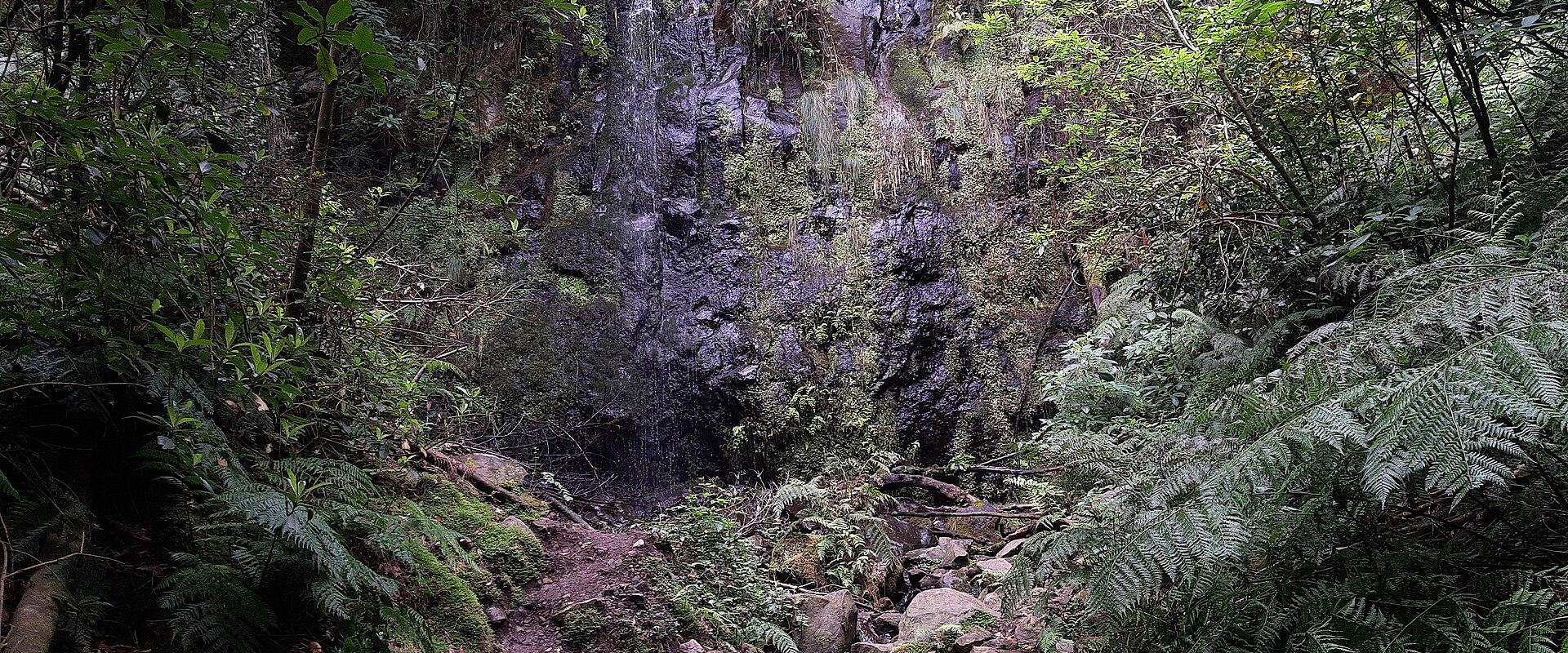
Waterfall At Levenda Do Rei
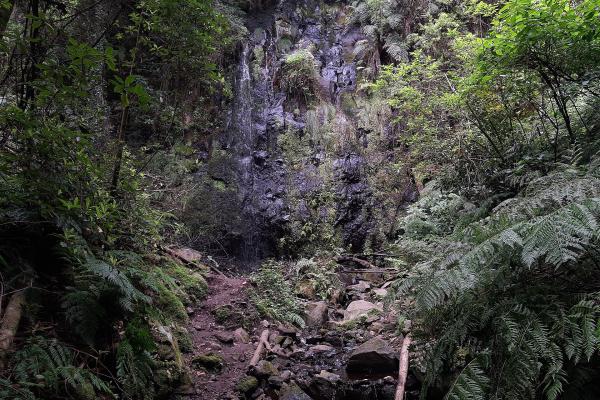
Waterfall on the Levada do Rei trail in Madeira
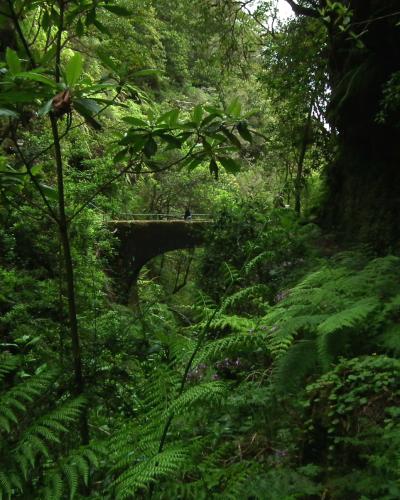
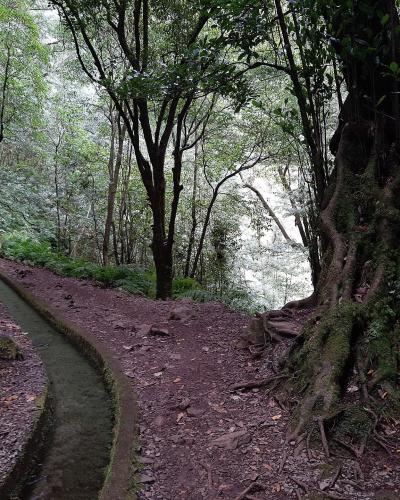
Waterfalls on Madeira are often reached by a walk beside a levada, and the one at the end of the Levada do Rei is a good example of how the island's water engineering and its landscape combine. The levada, one of the many irrigation channels that carry water around the north coast, runs along a steep forested hillside near São Jorge, and the path beside it leads to a cascade that drops into a mossy ravine, in a setting of ferns, dripping rock and dense laurel forest.
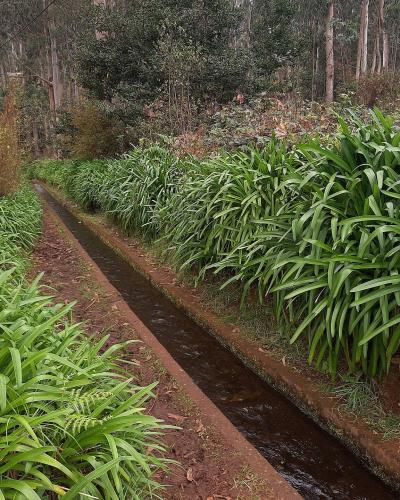
Levadas are among the island's great achievements. Madeira's wet north and dry south are separated by a mountain spine, and from the 16th century, farmers and engineers dug channels that carried water from the rainy slopes to the sugar cane and banana fields of the sunny south. Building them was dangerous work. Labourers, often enslaved or convict workers in the early centuries, hung on ropes from cliff faces to cut a narrow channel into the rock, and where the path was impossible, they drove tunnels through the mountain. The channels need constant maintenance, and special levada keepers, the levadeiros, lived in small houses along the routes. Today, the maintenance paths are used by walkers, and the sound of running water at your side is a constant companion.
The walk to the waterfall is mostly easy. The path follows the levada through woodland of laurel, heather, ferns and moss, with the stream flowing alongside in its narrow stone channel, and glimpses of the valley opening out through the trees. Toward the end, a few stairs and steeper parts lead down to the base of the falls, where the path can be slippery with spray. The trail can include wet sections and tunnels, so carry a torch or a headlamp, wear shoes with good grip and bring a waterproof jacket, as mist and drizzle are common. The sound grows louder as you approach, and the air turns cool and damp.
The waterfall is not huge, but its setting, in a green ravine with moss on every rock, makes it atmospheric, and the effect is best after rain, when the flow is strongest. In dry summers, the falls shrink. The place is a good spot for a rest, a snack and photographs, but take care on wet rocks, and stay on the path. The hike is free and there is no gate, and many people take around three hours for the round trip, though times vary with pace.
Reaching the start of the trail is easiest by car or by guided tour from Funchal or the north coast, and the area near São Jorge and Santana has other attractions, including the baroque church of São Jorge and the traditional triangular houses of Santana. The waterfall suits walkers of moderate fitness, nature lovers and photographers, and it is best in the morning, when the paths are quieter.
Categories
More photos coming soon
Hours & Fees
Hours
Open 24 hours (unrestricted access to trail)
Admission
Free
Nearby Attractions
Other places to visit in Levada do Rei
Frequently Asked Questions
Quick Facts
Best Time to Visit
Late spring to early autumn (May–October) offers mild weather, lush forest, and ideal conditions for hiking Levada do Rei; trail is accessible year-round.