Why Belém Deserves a Full Day
Belém is a riverside district about 6 km west of central Lisbon, and it holds more major monuments per square kilometre than anywhere else in the city. The area was the departure point for Portuguese voyages in the Age of Discovery, it suffered relatively little damage in the 1755 earthquake, and the waterfront was later reshaped for the 1940 Portuguese World Exhibition. The result is a compact cluster of a monastery, a fortified tower, museums and gardens, all within walking distance of each other.
Getting There
Tram 15E runs from Praça da Figueira and Praça do Comércio along the river to Belém and is the easiest option from the Baixa. Trains on the Cascais line from Cais do Sodré stop at Belém station, a few minutes' walk from the monastery, and are usually faster and less crowded than the tram. A Navegante card loaded with credit covers both.
Jerónimos Monastery
The Jerónimos Monastery was founded by King Manuel I at the start of the 16th century and is the clearest example of the Manueline style, with carved ropes, sea creatures and exotic plants worked into the stone. Together with Belém Tower it was inscribed as a UNESCO World Heritage Site in 1983. The church, Santa Maria de Belém, is generally free to enter and contains the tombs of Vasco da Gama and the monument to the poet Luís de Camões. The two-storey cloister requires a ticket and is the highlight; the queue for it can be long in summer, so arrive at opening time or buy tickets online. The west wing houses the Navy Museum (Museu de Marinha).
The Riverside: Padrão dos Descobrimentos and Belém Tower
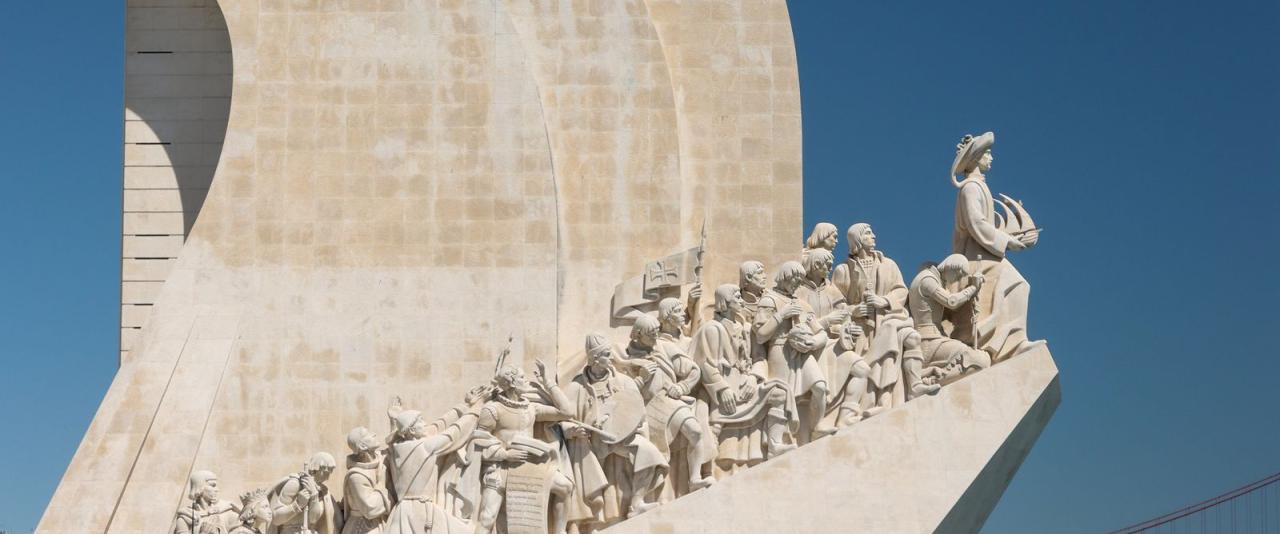
Cross under the road via the underpass to reach the river. The Padrão dos Descobrimentos is a 1960 monument built for the 500th anniversary of the death of Henry the Navigator, showing him at the prow of a ship followed by figures from the period of exploration. A lift goes to the top for views of the monastery and the river, and the large compass-rose map set into the pavement in front is free to see.
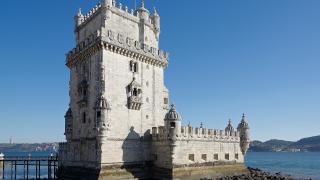
Belém Tower, a short walk west, was built in the early 16th century as part of the river's defences. It is small inside and the stairs are narrow, so entry is managed in batches. Many visitors find the exterior and the waterfront enough; if you want to go in, check the current opening status and ticket options with Museus e Monumentos de Portugal before you go.
Museums Worth Your Time
- MAAT (Museum of Art, Architecture and Technology) occupies a curved riverside building and the former Tejo power station next to it. The roof of the new building is a public walkway.
- National Coach Museum (Museu Nacional dos Coches) holds one of the largest collections of royal and ceremonial carriages in the world.
- Centro Cultural de Belém hosts the modern and contemporary art museum MAC/CCB, built on the former Berardo collection, plus concerts and exhibitions.
Pick one or two; trying to see all of them after the monastery makes for a very long day. If you have time left, the Ajuda Palace, a former royal residence on the hill above Belém, and the Ajuda Botanical Garden next to it are quieter alternatives, reached by a steep walk or a short bus ride. The pink Belém Palace, facing the river near the bakery, is the official residence of the President of Portugal and is not generally open as a tourist sight, although a museum on the presidency operates in part of the complex.
Pastéis de Belém
The custard tart is sold across Portugal as the pastel de nata, but the bakery at Rua de Belém has made its own version, the pastel de Belém, since 1837. Its recipe traces back to the monastery after religious orders were dissolved in 1834 and is still kept secret. Tarts come warm, with cinnamon and icing sugar on the side. The takeaway counter usually moves faster than the queue for a table, although the large indoor rooms often have seats free even when the street queue is long.
Suggested Route
Start at Jerónimos at opening time, then have tarts at the bakery next door. Cross to the river for the Padrão and walk west to Belém Tower. After lunch, choose MAAT or the Coach Museum, and finish with an evening walk east along the river path towards Alcântara and the 25 de Abril Bridge. The path is flat, shared with cyclists and runners, and passes the MAAT roof walkway on the way, which makes it a good way to return towards the centre without waiting for a crowded tram. Note that many national monuments close on Mondays, so check days before planning around them.