Why Lisbon Has So Many Viewpoints
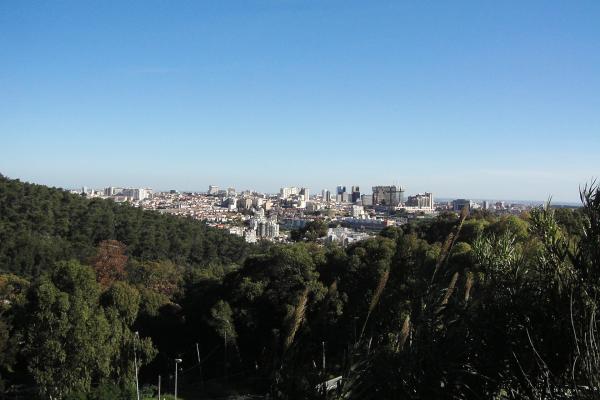
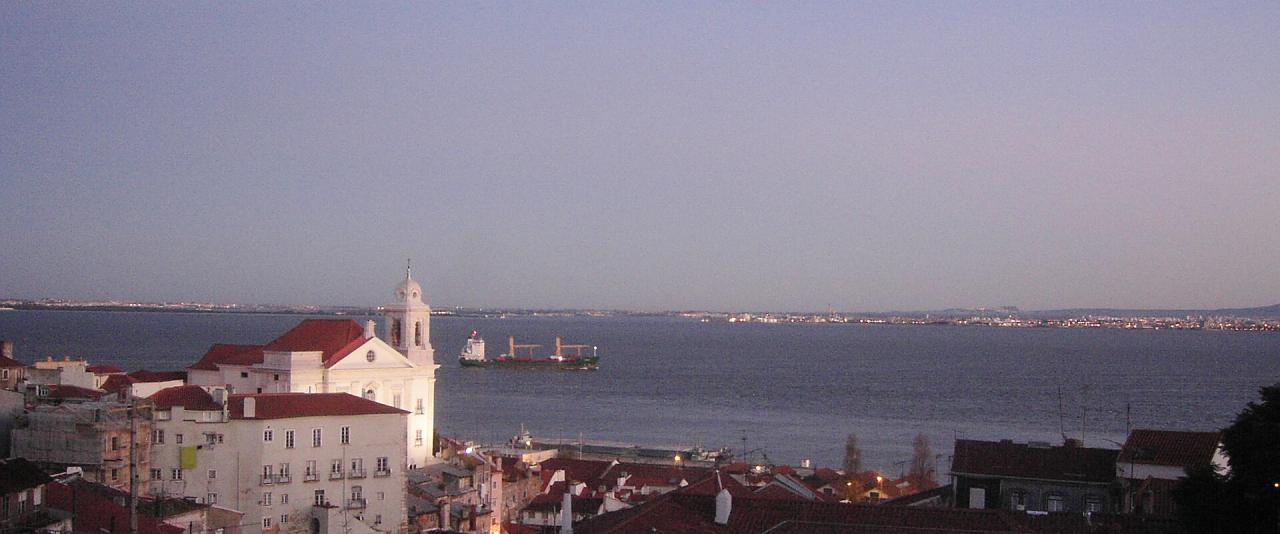
Lisbon is built over a series of hills above the Tagus estuary, and the city has turned many of their high points into public terraces called miradouros. Most are free, open at all hours and come with a few benches, a kiosk or a garden. Each one faces in a slightly different direction, so the views change considerably: some look over the castle and Alfama, others over the Baixa grid, the river or the 25 de Abril Bridge.
Graça and Senhora do Monte
The Miradouro da Senhora do Monte is the highest of the city's main viewpoints and gives the widest panorama, taking in the castle, the Baixa, the river and the hills to the west. It faces west, so it is a popular sunset spot. A short walk downhill, the Miradouro da Graça (officially named after the poet Sophia de Mello Breyner Andresen) sits beside the Graça church and convent under a row of pine trees, with a kiosk and a view across to the castle. Tram 28 stops nearby, as do buses from Martim Moniz.
Santa Luzia and Portas do Sol
On the route between the cathedral and the castle, Santa Luzia is a small terrace with a pergola, bougainvillea and tiled panels, including one showing Praça do Comércio before the 1755 earthquake. A few steps on, Portas do Sol opens up over the rooftops of Alfama towards the dome of the National Pantheon and the white façade of São Vicente de Fora. Both are on the tram 28 route and are among the busiest viewpoints in the city, especially in the middle of the day.
São Pedro de Alcântara and Santa Catarina
On the opposite side of the Baixa, São Pedro de Alcântara is a two-level garden terrace on the edge of Bairro Alto, looking east across the city to the castle and Graça. It was traditionally reached on the Glória funicular from Restauradores, but that line has been suspended since the accident of 3 September 2025, in which 16 people died; it is not expected back in service for several years. Walk up Calçada da Glória (steep) or approach from Bairro Alto or Príncipe Real instead.
Further south-west, Santa Catarina, with its statue of the mythical giant Adamastor, looks out over the river, the port and the 25 de Abril Bridge. It is a relaxed spot in the late afternoon.
Quieter Viewpoints
- Monte Agudo, in a residential area north of Graça, has a long view south over the city and few visitors.
- Penha de França, beside the church of the same name, looks west across the eastern districts.
- Jardim do Torel, a small garden above Avenida da Liberdade, faces the castle hill. The Elevador do Lavra funicular has historically served it; check whether it is running before relying on it.
- Santo Amaro, in Alcântara, gives a close view of the 25 de Abril Bridge.
Paid Viewpoints
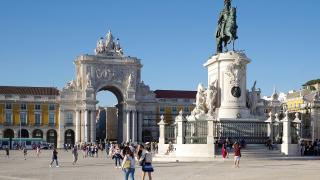
Several of the city's highest vantage points charge admission: the grounds of the Castelo de São Jorge, the terrace of the National Pantheon, the platform at the top of the Santa Justa Lift, and the top of the Rua Augusta Arch above Praça do Comércio. The arch is the best of these for looking straight down the Baixa grid. Across the river, the Cristo Rei monument in Almada, reached by ferry from Cais do Sodré to Cacilhas and then by bus, gives a view of Lisbon from the south bank.
Practical Tips
- Lisbon's streets are steep and the cobbles are slippery when wet or polished; flat shoes with grip help.
- Combine viewpoints by area: Graça with Senhora do Monte, Santa Luzia with Portas do Sol and the castle, São Pedro de Alcântara with Bairro Alto.
- Western-facing terraces such as Senhora do Monte and Santa Catarina are the busiest at sunset; early morning is quietest everywhere.
- Kiosk drinks at viewpoints cost more than in the streets below.
- Accessibility varies: Portas do Sol and Santa Luzia can be reached by tram, while others involve steps or steep slopes.
- Lisbon's public lifts help with some climbs. The Elevador do Castelo, a free public lift system from the Baixa, shortens the climb towards the castle area; check opening times locally.
- A loose route for one day: start at Senhora do Monte in the morning, walk down to Graça, continue to Portas do Sol and Santa Luzia, descend through Alfama for lunch, then cross the Baixa to São Pedro de Alcântara and finish at Santa Catarina for sunset.