




How the System Fits Together
Portugal is easy to travel without a car between its main cities. The national rail operator, CP (Comboios de Portugal), connects Lisbon, Porto, Coimbra, the Algarve and many smaller towns. Lisbon and Porto each have a metro, buses and historic trams, while long-distance coaches fill the gaps where trains are slow or absent. Rural areas such as the interior Alentejo, the Douro beyond the railway and parts of the coast are where public transport becomes thin and a car starts to make sense.
Trains Between Cities
CP runs several classes of service:
- Alfa Pendular: the fastest trains, linking Braga, Porto, Coimbra, Lisbon and the Algarve (Faro). Lisbon to Porto takes about three hours.
- Intercidades: intercity trains on the same main lines plus routes to Évora, Beja, Guarda and Covilhã, slightly slower and usually cheaper.
- Regional and urban trains: local services, including Lisbon's Sintra and Cascais lines and Porto's suburban network.
Alfa Pendular and Intercidades require seat reservations; buy online at cp.pt or in the CP app. Fares are lower when booked in advance. Scenic regional lines worth knowing about include the Douro line from Porto to Régua, Pinhão and Pocinho, and the Algarve line between Lagos and Vila Real de Santo António, with Faro in between.
Lisbon: Metro, Trams, Buses and Ferries
The Lisbon Metro has four lines: Blue, Yellow, Green and Red. The Red line serves the airport, about 16 minutes from Saldanha. Trains run from about 06:30 to 01:00. Work is under way on a circular line linking Rato and Cais do Sodré, scheduled to open in 2027.
Buses and trams are run by Carris. Historic tram 28 crosses Graça, Alfama, the Baixa and Estrela, and tram 15E runs along the river to Belém. The Glória funicular has been suspended since the fatal accident of September 2025.
Most visitors use the Navegante occasional card, a reusable paper card costing about EUR 0.50. Load it with single tickets, a 24-hour metro and Carris ticket, or pay-as-you-go credit (zapping), which is slightly cheaper per trip than a single ticket. In 2026 a single metro or Carris ticket costs around EUR 1.90; buying a ticket on board a tram costs noticeably more. Contactless bank cards can also be used at metro gates. The same card covers Transtejo ferries across the Tagus, for example from Cais do Sodré to Cacilhas.
Porto: Metro and Andante
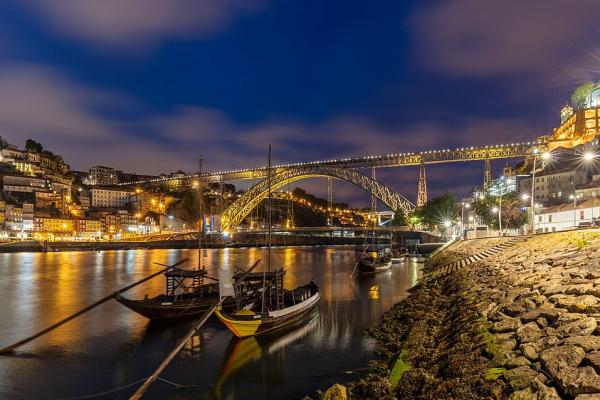
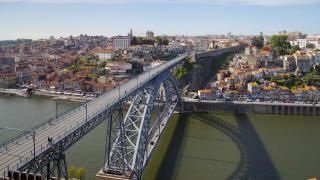
The Metro do Porto is a light-rail network with six lines, A to F, much of it above ground. Line E (violet) runs from Trindade to the airport, and Line D crosses the upper deck of the Dom Luís I Bridge to Vila Nova de Gaia. A new Line G between Casa da Música and São Bento is due to open by early 2027.
Tickets use the Andante system, with fares based on zones. A Z2 ticket covers most trips within central Porto and Gaia. Buy a rechargeable Andante card from station machines and load trips or a day ticket. Buses are run by STCP, which also operates the historic tram lines, including line 1 along the river towards Foz.
Long-Distance Buses
Rede Expressos has the widest coach network in Portugal and reaches many towns without rail service. FlixBus also runs on major routes and across the border to Spain. Coaches are often cheaper than trains and sometimes faster on routes such as Lisbon to Évora or into the Alentejo.
The Islands
Madeira and the Azores have local bus networks but no railways. In the Azores, inter-island travel is by plane or by seasonal ferry, with more ferry services in summer. On both, a hire car gives much more flexibility than buses for reaching trailheads and viewpoints.
Practical Tips
- Validate your card every time you board, including on trams and buses.
- Keep one Navegante or Andante card per person; cards cannot be shared on the same journey.
- Check the CP website for strikes, which occasionally disrupt trains.
- Trams 28 and 15E are pickpocket hotspots; keep bags closed and in front of you.
- For airport transfers, the metro is usually cheaper than a taxi or ride-hailing app, but it involves stairs and changes; with heavy luggage, a taxi from the official rank may be easier.
- Paper Navegante and Andante cards wear out; keep them flat and away from phones and magnets, and reload rather than buying a new card each time.
- Night services are limited in both cities, so check the last metro times if you will be out late.