Castelo De Marvão (Marvão Castle)
9th-century Moorish fortress on a granite crag
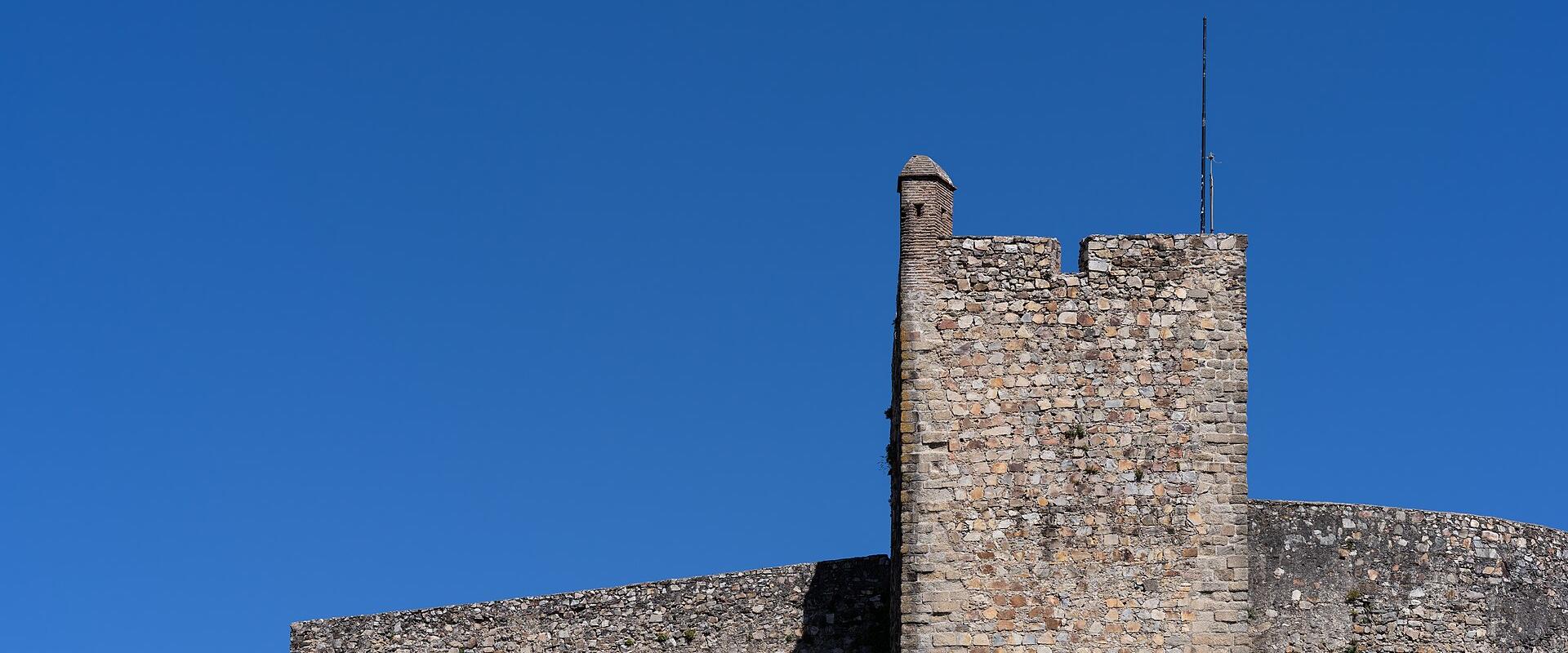
The castle of Marvão occupies the highest part of a granite ridge in the Serra de São Mamede, at around 850 to 900 metres above sea level, and its position makes it one of the most commanding fortresses in Portugal. Spain is only a few kilometres away, and from the walls you can look across the frontier into Extremadura. The crag on which the castle stands is steep on almost every side, so the builders used the natural rock as part of the defences.
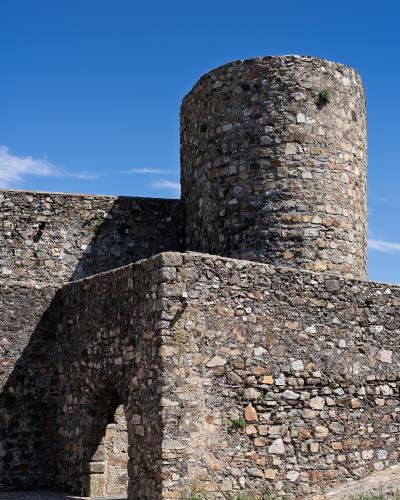
The site was fortified in the Muslim period, and the name is linked to Ibn Marwan, a ninth-century leader who held the area. After the Christian conquest in the 12th century, the fortress became a frontier post of the Portuguese crown. It was greatly rebuilt under King Dinis, who began work in 1299 and gave the castle its present medieval, Gothic character. The keep was begun around 1300, and its tall walls dominate the highest point. The walls themselves are irregular, because they follow the contours of the rock rather than a regular plan, and this gives the circuit an organic, wandering shape.
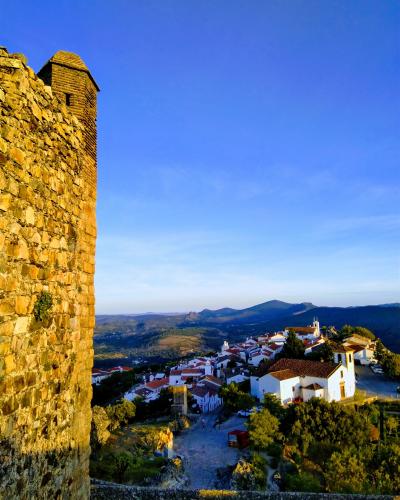
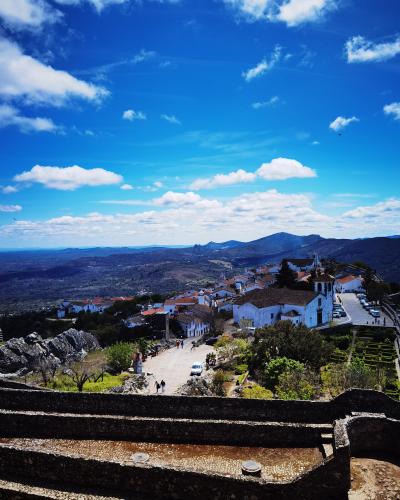
The castle has also been adapted over time. In the 17th century, during the war that followed the restoration of Portuguese independence in 1640, thicker outer bastions were added to withstand artillery, as gunpowder weapons made older walls vulnerable. Inside the walls a large vaulted cistern collected rainwater, a vital supply for a garrison on a dry height. A parade ground and stairways lead up to the battlements, and walking the wall-walk gives views in every direction: cork oak woods, scattered farms, the plain of the Alentejo, and, on clear days, a long way into Spain.
Below the castle the village lies within the outer walls, and the two form one unit. The lanes are steep, so sturdy shoes are essential, and the wind at the top can be strong even in summer. Early morning gives the best light and the quietest atmosphere, and in autumn mist often fills the valleys so that the castle seems to float above cloud.
The castle suits history lovers, photographers, and walkers interested in frontier fortresses. Combine it with a stroll in the village, the municipal museum, and the Serra de São Mamede Natural Park for a day in the high Alentejo.
Categories
More photos coming soon
Nearby Attractions
Other places to visit in Marvão
Frequently Asked Questions
Quick Facts
Best Time to Visit
Spring (March-May) and autumn (September-November) offer mild weather, lush scenery, and ideal conditions for exploring Marvão’s historic sites.