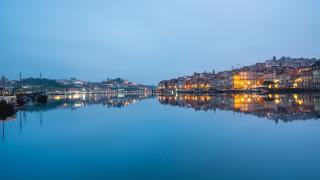
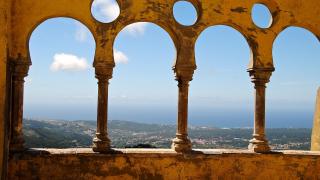
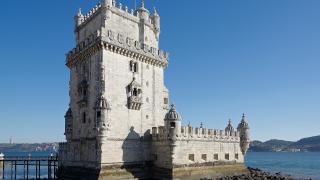
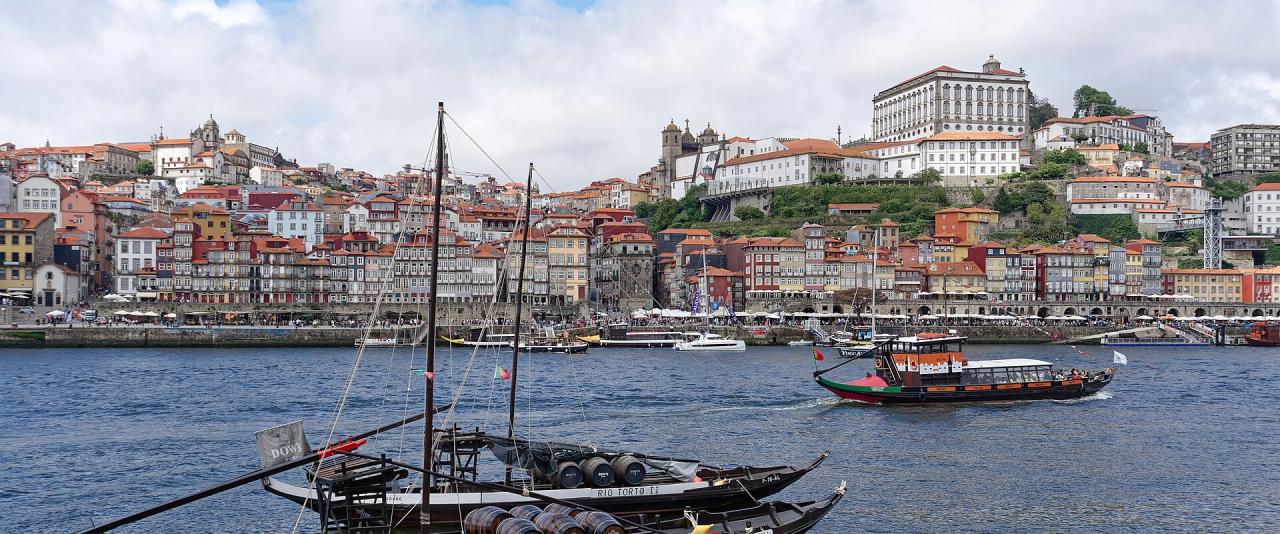
The Douro River divides Porto's most visited riverside from its neighbour, Vila Nova de Gaia. On the north bank, the Ribeira district climbs steeply from the quay in a stack of narrow houses and lanes. On the south bank, Gaia's waterfront is lined with the lodges where port wine has been aged and shipped for centuries. The two sides are best seen together, and a day spent crossing between them covers much of what makes Porto memorable.
Ribeira: Porto's Old Riverside
Ribeira is part of the Historic Centre of Porto, listed by UNESCO in 1996. Its heart is the Cais da Ribeira, a quay of cafés and restaurants with arcades at street level and tall, tiled houses above. Behind it, Praça da Ribeira opens onto the river, and lanes such as Rua da Fonte Taurina and the stairs of the Escadas do Codeçal lead uphill into the old town.
Two buildings stand out nearby:
- Igreja de São Francisco, a Gothic church whose interior is almost entirely covered in gilded baroque woodwork. Entry is paid and includes the catacombs beneath the adjoining museum.
- Palácio da Bolsa, the 19th-century stock exchange, known for its Arab Room; it is visited on guided tours.
The quay is busiest from late morning to evening. Come early for quiet streets and for the light on the Gaia side of the river.
The Dom Luís I Bridge
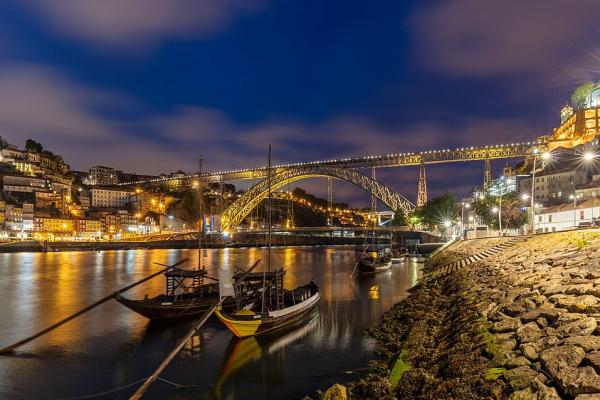
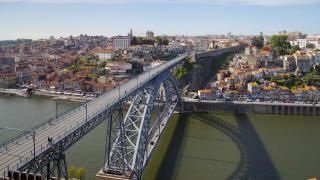
The iron arch of the Dom Luís I Bridge links the two banks and opened in 1886. It was designed by Théophile Seyrig, a German-born engineer who had earlier been a partner of Gustave Eiffel; Eiffel's own Porto bridge is the Maria Pia railway bridge further upstream. Dom Luís I has two decks. The lower deck links Ribeira and the Gaia quay for pedestrians, cyclists, public transport and taxis; private cars have been barred since 2023. The upper deck carries metro line D and a pedestrian walkway between the Batalha area near the cathedral and the Jardim do Morro in Gaia. Walking across the top is free and gives the best views of both riversides, but the path is shared with trams, so keep to the walkway and expect vertigo-inducing drops.
Gaia's Port Wine Lodges
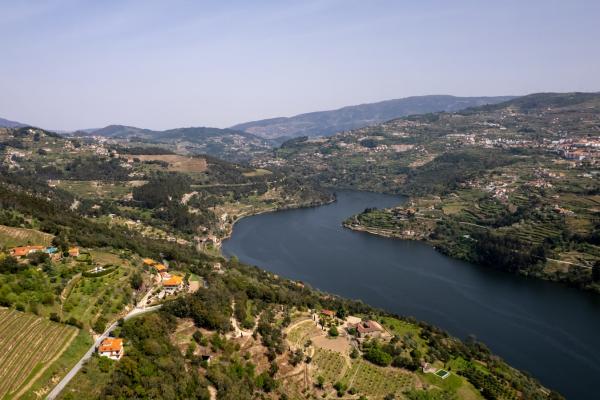
Port is made from grapes grown in the Douro Valley, upriver, but for centuries it was brought down to Gaia to age in large lodges near the water, where it could be blended and shipped. Many of the big names still have lodges here and offer tours with tastings, including Sandeman, Cálem, Taylor's, Graham's, Ferreira and Cockburn's. Some sit right on the riverside; others, such as Taylor's and Graham's, are up the hill and reward the climb with views over Porto. Tours vary from short visits with two or three wines to longer tastings of older tawnies and vintage ports. Book ahead in summer, as popular time slots fill up. Ports differ widely in style, so a tasting that compares ruby, tawny and white port is a good introduction.
More to See in Gaia
- Mosteiro da Serra do Pilar, a round-cloistered monastery on the hill at the southern end of the bridge's upper deck, has one of the best viewpoints over Ribeira. It is part of the UNESCO-listed area.
- Jardim do Morro, the park beside the upper deck station, is a popular place to watch the sunset.
- Teleférico de Gaia, a short cable car, runs between the top of the hill near the bridge and the riverside, saving a steep walk.
- WOW (World of Wine), a cultural quarter of museums, shops and restaurants in restored port lodges, covers wine, cork and the history of the city.
River Cruises and Rabelo Boats
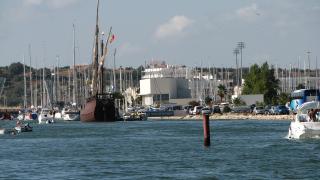
On both quays, operators sell short "six bridges" cruises that pass under all the bridges of central Porto in about an hour. Many use replicas of the rabelo, the flat-bottomed wooden boats that once carried barrels of wine down the Douro. Several of these boats are moored along the Gaia waterfront. For a longer trip, day cruises and trains run upriver into the Douro Valley, where the wine is made.
A Day on Both Sides
Start in the morning at the Igreja de São Francisco and wander through Ribeira before the crowds. Cross the lower deck of the bridge to Gaia for a late-morning lodge tour, then have lunch on the Gaia waterfront. Take a river cruise in the early afternoon, ride the cable car up the hill, and walk to the Serra do Pilar viewpoint. Return across the upper deck at sunset and finish with dinner back in Ribeira or in the streets above it.
Practical Tips
Porto is hilly and its cobbles are uneven, so wear comfortable shoes. The São Bento train station and metro line D's São Bento and Jardim do Morro stops are the most useful for this area. Riverside restaurants on both quays are convenient but tend to cost more than places a few streets back. In June, the São João festival on the night of 23–24 June draws huge crowds to the river for fireworks, so book accommodation early if you are visiting then.